

Choosing the right solar system for your home is one of the most important decisions to make before going solar. For many Kerala homeowners, the question often comes down to 3kW vs 5kW solar: Which capacity is suitable for the house? How much electricity can it generate? Can it run a 1.5-ton AC? And how much will the system cost?
With growing interest in solar panel installation in Kerala, homeowners are also searching for information about solar panel prices, electricity consumption, rooftop requirements, KSEB procedures, solar subsidy and the different types of solar systems available.
Whether you are considering a solar panel for home, a complete home solar power system, or a larger system for higher electricity consumption, understanding your requirements before purchasing is essential.
Why Is Solar Becoming Popular for Kerala Homes?
Rooftop solar allows homeowners to generate electricity from their own property and potentially reduce their dependence on grid electricity.
Today, solar panels for homes are available in different technologies, capacities and price ranges. However, choosing the Best Solar Panels is only one part of the decision.
A complete solar project involves:
- Solar panels
- Inverter
- Mounting structure
- Electrical protection
- Cables and earthing
- Installation
- Testing and commissioning
- Applicable KSEB procedures
This means homeowners should evaluate the complete solar panels and installation solution rather than comparing panel prices alone.
How Much Solar Power Does a Kerala Home Need?
The correct solar capacity depends on your electricity consumption. Before choosing a solar panel system for home, check your recent KSEB electricity bills and look at your average monthly unit consumption.
You should also consider appliances such as:
- Air conditioners
- Refrigerators
- Water heaters
- Washing machines
- Water pumps
- Televisions
- Kitchen appliances
- Computers and work-from-home equipment
- Electric vehicles
Future requirements should also be considered. If you are planning to purchase an additional AC or an electric vehicle, your electricity consumption may increase.
Tip: The ideal Home Solar Installation should be based on both your current and expected future electricity requirements, not just the size of your rooftop.
Is a 3kW Solar System Enough for a Kerala Home?
A 3kW solar system can be suitable for homes with moderate electricity consumption. It may work well for households with moderate monthly electricity usage, limited rooftop space, fewer high-power appliances and a primary objective of reducing grid electricity consumption.
However, a 3kW system may not be sufficient for every household. If your home regularly uses multiple ACs, water heaters, pumps and other high-consumption appliances, you may need a larger Home Solar Panel System.
Is a 5kW Solar System Better for a Kerala Home?
A 5kW system can be considered for homes with higher electricity consumption. It may be appropriate for larger homes with one or more air conditioners, water heaters, multiple refrigerators, water pumps, washing machines and other high-consumption loads.
A 5kW Solar Panel System for Home provides more generation capacity than a 3kW system, but bigger does not automatically mean better.
The right system should balance electricity consumption + rooftop space + investment + future requirements.
Can a 5kW Solar System Run a 1.5-Ton AC?
Yes, a properly designed 5kW solar system can generally support a 1.5-ton AC during periods of adequate solar generation.
However, the actual electricity consumption of an AC varies depending on AC efficiency, inverter technology, outdoor temperature, room size, insulation, desired temperature and compressor operating conditions.
A 5kW system does not continuously generate 5kW throughout the day. Solar generation changes according to sunlight, weather, shading, panel orientation and other conditions.
Therefore, you should also consider the other appliances operating at the same time. If the AC, water heater, induction cooker and water pump are all running simultaneously, your total household demand can become considerably higher.
Can Solar Panels Run an AC During a Power Cut?
This depends on the type of solar system.
On Grid Solar System
An On Grid Solar System works with the electricity grid and is commonly selected by homeowners who primarily want to reduce grid electricity consumption. A standard grid-connected system does not automatically provide backup during a grid outage.
Hybrid Solar System
A Hybrid Solar System combines solar generation with battery storage. This can provide backup power when grid electricity is unavailable, depending on the system configuration and battery capacity.
Off Grid Solar System
An Off Grid Solar System operates independently of the electricity grid and requires suitable battery storage and system design.
Important for AC Backup
If you want to run an AC during an outage, battery capacity and inverter specifications should be calculated according to the AC load and required backup duration.
3kW vs 5kW: Which Solar System Should You Choose?
| Factor | 3kW Solar | 5kW Solar |
|---|---|---|
| Electricity consumption | Moderate | Higher |
| Rooftop requirement | Lower | Higher |
| Initial investment | Generally lower | Generally higher |
| Multiple heavy appliances | More limited | More suitable |
| AC usage | Depends on total load | Better suited to higher loads |
| Future electricity demand | Limited headroom | More headroom |
The right choice depends on your home's actual electricity consumption. Instead of choosing a system based only on the number of panels, ask a professional to evaluate your Solar Panel System for Home requirements.
What Is the Solar Panel Price in Kerala?
One of the most common questions homeowners ask is: “What is the solar panel price in Kerala?”
There is no single price that applies to every project. The total cost of a solar system can vary according to system capacity, panel technology, panel efficiency, inverter type, mounting structure, roof type, electrical work, cable requirements, earthing and protection, installation complexity, battery storage and applicable subsidy.
For this reason, homeowners should compare the complete solar system price, rather than comparing only the price of individual panels.
How to Choose the Best Solar Panels for Your Home
When comparing the Best Solar Panels, don't look only at wattage or price.
- Efficiency: Higher-efficiency panels can generate more power from a given rooftop area.
- Warranty: Check the applicable product and performance warranty terms.
- Technology: Compare the available panel technologies for your project.
- Brand and availability: Choose equipment from established manufacturers with reliable support.
- Installation quality: Good panels still require correct system design and installation.
Homeowners should therefore evaluate the panels, inverter, mounting structure and installation as a complete package.
Solar Panel for Home: What Should You Consider?
When choosing a Solar Panel for Home, consider more than just the panel. Your complete system should be planned around:
Home electricity consumption → Solar capacity → Rooftop area → Panel selection → Inverter → Installation → Grid connection
A household with moderate electricity consumption may need a different Solar Panel System for Home than a villa with several ACs and other high-power appliances.
Solar Panels for Homes: 5 Things to Check
- Electricity consumption: Review your recent KSEB bills.
- Rooftop area: Make sure there is sufficient usable roof space.
- Shading: Check trees, buildings, water tanks and other structures.
- Future requirements: Consider additional ACs, EV charging and other appliances.
- Installation company: Choose a company that can handle system design, installation and support.
What About Solar Subsidy in Kerala?
Eligible residential rooftop solar consumers may be able to receive Central Financial Assistance under the applicable PM Surya Ghar: Muft Bijli Yojana guidelines.
| Residential System | Applicable CFA Structure |
|---|---|
| First 2kW | ₹30,000 per kW |
| Additional 1kW | ₹18,000 |
| 3kW and above | Maximum CFA of ₹78,000 under the published structure |
Note: Subsidy eligibility, application procedures and implementation rules can change. Verify the latest official requirements before making a purchase or calculating your final project cost.
The subsidy should not be the only reason for selecting a particular system capacity. Your solar system should first match your electricity requirements.
How Does KSEB Affect Your Solar System?
For grid-connected rooftop solar, KSEB-related procedures are an important part of the project. Homeowners should understand the applicable process for application, technical feasibility, installation, documentation, testing, metering and grid connection.
Your electricity consumption and the type of system you choose can influence the planning process. This is why a professional Solar Installation in Kerala should include guidance on the applicable grid-connection requirements.
Before installing a system, you can also learn more about the KSEB solar feasibility process .
What Is Included in Professional Solar Panel Installation?
Professional Solar Panel Installation involves several stages.
- Site Assessment: The roof, shading, electricity consumption and installation area are evaluated.
- System Design: The required capacity and equipment are determined.
- Panel Selection: Suitable solar modules are selected based on project requirements.
- Mounting Structure: The solar mounting structure is installed securely.
- Electrical Installation: Panels, inverter, cables, protection equipment and earthing are installed.
- Testing: The completed system is tested before commissioning.
- Documentation: Applicable grid-connection and project documentation is completed.
This is why choosing experienced Solar Companies is important.
Solar Equipment Suppliers and Solar Panel Distributors
When purchasing a complete solar system, homeowners may encounter different types of suppliers, including Solar Equipment Suppliers and Solar Panel Distributors.
However, a homeowner usually needs more than equipment. You also need:
- Proper system design
- Correct equipment selection
- Professional installation
- Electrical protection
- Testing and commissioning
- Service and support
What About Industrial Solar Panels?
The requirements of a home and an industrial facility are very different. Industrial Solar Panels and larger commercial solar systems require consideration of higher electricity loads, installation area, structural requirements, system capacity, inverter configuration, electrical infrastructure, energy consumption patterns and grid requirements.
What About EV Charging and Solar?
Electric vehicles are becoming increasingly common, and homeowners are also considering solar-powered EV charging. If you are planning an EV in the future, include its expected electricity consumption when calculating your solar requirement.
Adding an EV charger to a home can increase electricity demand compared with a household without an electric vehicle. Therefore, when planning your Home Solar Power System, consider both current electricity consumption and future EV charging requirements.
The exact EV Charging Stations Cost depends on the charger type, electrical capacity, installation requirements and other project-specific factors.
How to Choose Among Solar Companies in Kerala
When comparing Solar Companies in Kerala, don't select a company based only on the lowest quotation.
Experience
Review previous residential and commercial solar projects.
Equipment
Check panel, inverter and protection equipment specifications.
Installation
Evaluate system design and installation quality.
KSEB Support
Ask whether the company assists with applicable grid procedures.
Warranty
Understand product and installation warranty terms.
After-Sales Service
Check local maintenance and service support.
If you are searching for the best solar company in Kerala, look beyond marketing claims and evaluate actual project experience, product quality, installation standards and customer support.
Is Solar Worth It for a Kerala Home?
For many homeowners, solar can be a useful long-term energy investment when the system is appropriately designed.
- Reduced grid electricity consumption
- Better use of rooftop space
- Renewable electricity generation
- Greater energy independence
- Potential long-term electricity savings
However, the financial benefit depends on system cost, electricity consumption, solar generation, tariff structure, applicable subsidy and how much of the generated electricity is effectively utilised.
Final Checklist Before Buying Solar for Your Home
- Recent KSEB electricity consumption
- Required solar capacity
- Rooftop space
- Shading conditions
- Panel technology
- Inverter capacity
- Mounting structure
- Electrical protection
- KSEB requirements
- Applicable solar subsidy
- Warranty
- Installation quality
- After-sales service
- Future AC requirements
- EV charging requirements
Choosing the right solar system is an important long-term decision for your home. At Allsun Nature, we help homeowners evaluate their electricity consumption, rooftop conditions and future energy requirements to identify a solar solution that fits their property and lifestyle.
Frequently Asked Questions
Recent Blogs

Best Solar System for a 2BHK, 3BHK or 4BHK Home in Calicut
Sep 17, 2026
Why Is My Solar Panel Generating Less Power in Kerala?
Sep 16, 2026
Not All Solar Systems Are the Same: Find the Right One for Your Calicut Property
Sep 15, 2026
Kerala’s Power Crisis: Can Solar Help Homes Cope With Rising Power Cuts?
Sep 14, 2026
Solar Panel Installation in Kerala: Cost, Process, Subsidy & How to Choose the Right Company
Sep 11, 2026
How to Choose the Right Solar System Size for Your Home in Calicut
Sep 10, 2026
Solar Panel Maintenance in Kerala: A Homeowner's Guide for Coastal Cities
Sep 09, 2026
On-Grid Solar System in Kerala: How It Works, Cost, Benefits & KSEB Connection
Sep 08, 2026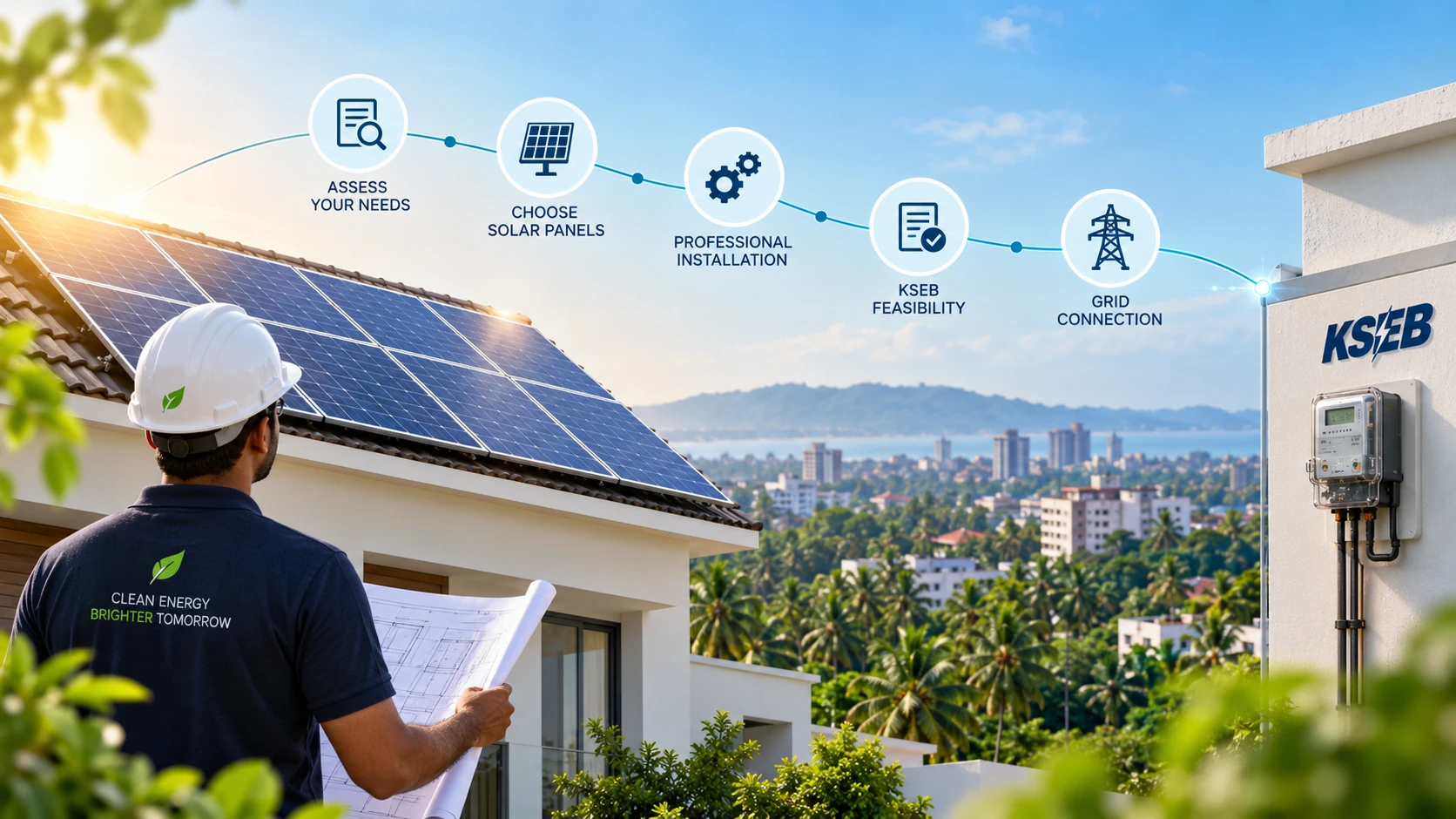
Solar Installation in Calicut: From Panel Selection to KSEB Connection
Sep 08, 2026
Best Solar Panels for Kerala Homes: What Should You Actually Compare?
Sep 05, 2026Switch to Solar Today!
Save up to 90% on electricity bills with Allsun Nature's customized rooftop solar solutions.
Get Free Quote