
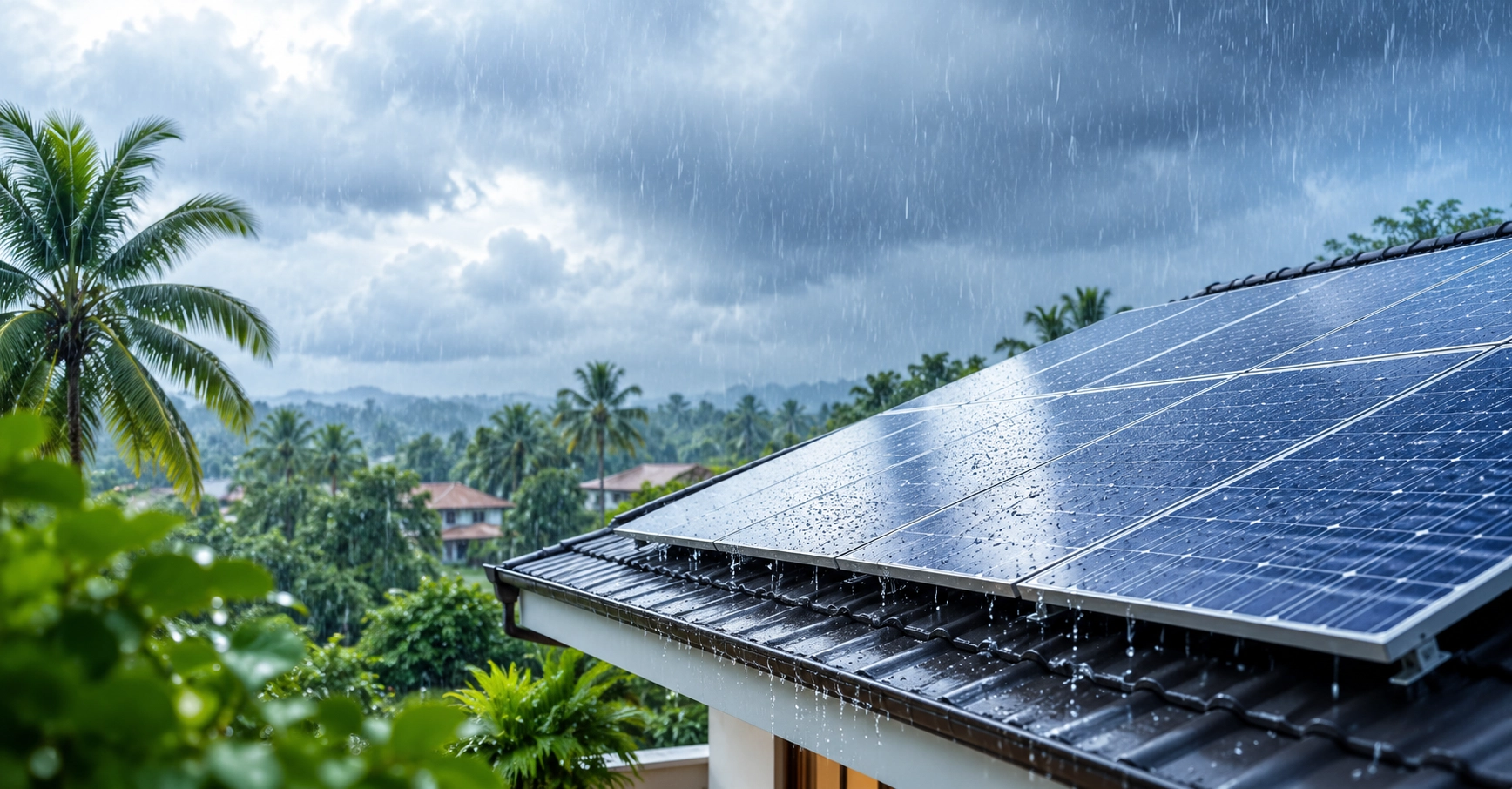
Kerala is known for its beautiful green landscapes, heavy rainfall, and long monsoon season. While rain is essential for the environment, it can raise an important question for homeowners considering solar energy: Can solar panels continue to work efficiently during heavy rainfall?
The good news is that solar panels are designed to operate outdoors and can withstand normal rain when properly manufactured and installed. However, electricity generation depends on the amount of sunlight reaching the panels. During cloudy days and prolonged rainfall, solar power production may decrease.
Understanding how monsoon weather affects solar systems can help homeowners make better decisions about installation, maintenance, and long-term energy savings.
1. Do Solar Panels Work During Heavy Rain?
Yes, solar panels can still generate electricity during rainy weather, provided there is some available daylight. However, their output is generally lower than on bright, sunny days.
Solar panels use photovoltaic cells to convert sunlight into electricity. When thick clouds cover the sky, less sunlight reaches these cells, reducing the amount of electricity generated.
During Kerala's monsoon season, the amount of sunlight can change significantly from one day to another. A bright morning followed by heavy rain may produce a different result from a full day of dark clouds.
This does not mean solar panels stop being useful during the rainy season. Their performance should be evaluated over time, considering seasonal weather variations rather than judging the system based on a single rainy day.
2. How Does Kerala's Monsoon Affect Solar Electricity Generation?
Rainfall itself does not prevent solar panels from generating electricity. The main challenge is the reduction in sunlight caused by cloud cover.
Several weather conditions can influence solar power production during the monsoon:
Heavy cloud cover: Thick clouds reduce the sunlight reaching the panels, which can lower electricity generation.
Continuous rainfall: Prolonged periods of rain may mean fewer hours of useful sunlight throughout the day.
Short periods of sunshine: When sunlight appears between rain showers, the panels can generate more electricity during those intervals.
Shading from trees and nearby buildings: Existing shading can further reduce output, particularly when sunlight is already limited.
When planning a solar installation, homeowners should consider the property's location, roof orientation, shading, and electricity consumption. A properly designed system takes local weather conditions into account when estimating expected energy production.
3. Are Solar Panels Waterproof?
Solar panels intended for outdoor use are designed to protect their internal electrical components from rain and moisture under their specified operating conditions.
However, the quality of the entire installation matters just as much as the panels themselves. Mounting structures, connectors, cables, junction boxes, and other electrical components must be suitable for outdoor exposure and installed according to the manufacturer's instructions.
Poor installation, damaged components, or incorrectly sealed connections can increase the risk of water-related problems.
Professional Solar Panel Installation should include suitable equipment, secure mounting, appropriate cable routing, and electrical protection. Installers should also consider how rainwater flows across the roof to avoid unnecessary drainage problems.
Homeowners should never assume that every component is waterproof simply because the panels are designed for outdoor use.
4. Can Heavy Rain Damage a Solar System?
Solar panels are generally built to withstand normal outdoor weather, including rain. Nevertheless, severe weather conditions can create risks for the overall installation.
Strong winds, flying debris, falling branches, lightning-related electrical surges, and water entering poorly protected electrical equipment may cause damage.
To reduce these risks, the installation should use appropriate mounting structures and weather-suitable electrical components. The roof should also be inspected to ensure it can safely support the system.
During the monsoon, homeowners should watch for visible signs of damage, unusual system alerts, or unexpected changes in electricity generation.
If you suspect electrical damage or water leakage around the installation, contact a qualified solar technician. Avoid touching electrical equipment or climbing onto a wet roof to inspect the panels yourself.
5. Does Rain Help Keep Solar Panels Clean?
Rain can wash away some loose dust and surface dirt, which may help maintain panel cleanliness. This can be useful in areas where dust accumulates between periods of rainfall.
However, rain is not a complete cleaning solution.
Bird droppings, sticky deposits, accumulated grime, and other stubborn dirt may remain on the surface. In some situations, rainwater can also leave mineral deposits as it dries.
Dirty panels may produce less electricity because less sunlight reaches the photovoltaic cells. Regular visual checks and appropriate maintenance can help identify problems before they significantly affect performance.
Cleaning should follow the manufacturer's recommendations. Homeowners should avoid walking on panels or cleaning them from unsafe positions, especially during wet weather.
6. Which Solar System Is Suitable for Kerala's Monsoon?
The most suitable solar system depends on your electricity usage, budget, property conditions, and whether you need backup power during grid outages.
An on-grid system works alongside the electricity grid. It can help reduce electricity purchased from the grid when solar generation is available, but standard grid-connected systems generally shut down during a grid outage for safety unless specifically designed with backup capability.
A hybrid system combines solar generation with battery storage and grid connectivity. Depending on its configuration, it may provide backup power during outages, subject to battery capacity, available energy, and supported loads.
An off-grid system is designed to operate independently of the electricity grid and usually relies on batteries to supply power when solar generation is insufficient.
For homeowners exploring a Hybrid Solar System, it is important to understand that battery storage can help manage periods of low sunlight, but it cannot create additional energy. Battery capacity and household electricity demand must be considered carefully, particularly during several consecutive cloudy days.
Choosing the right system requires a professional assessment rather than relying on the system type alone.
7. How Can You Maintain Your Solar System During the Monsoon?
Good maintenance helps protect your investment and supports reliable system performance throughout the year.
Here are some practical precautions for Kerala's rainy season:
Check your monitoring system: Review generation data periodically to identify unusual changes in performance.
Inspect the roof before installation: Repair existing leaks and address structural issues before mounting solar panels.
Keep drainage paths clear: Ensure rainwater can flow away without obstruction.
Trim nearby vegetation safely: Prevent overhanging branches from creating excessive shade or posing a risk during storms.
Arrange professional inspections: Have qualified technicians examine damaged cables, mounting structures, or electrical components when necessary.
Review your electricity consumption: Understanding your household's usage can help you plan for days when solar generation is lower.
A well-maintained system can operate through different seasons, although its daily output will naturally vary with weather conditions.
8. Is Solar Power Still Worth It in Kerala?
Solar power can remain a practical long-term investment in Kerala despite seasonal rainfall. The key is to evaluate expected annual electricity generation rather than assuming that every day will produce the same amount of power.
During sunnier periods, the system may generate more electricity. During prolonged monsoon conditions, production may decrease. Your actual savings will depend on system capacity, household consumption, installation quality, applicable electricity tariffs, and the rules governing your grid connection.
Homeowners should request realistic generation estimates that consider local weather patterns and the property's specific conditions.
When comparing the best solar company in Kerala, look for transparent performance estimates, quality equipment, proper installation practices, warranty support, and reliable after-sales service.
The goal is not simply to install as many panels as possible. It is to choose a system that suits your electricity requirements and performs reliably throughout the year.
Conclusion
Kerala's heavy monsoon season does not make solar power unsuitable for homes. Solar panels can continue generating electricity during rainy weather, although prolonged cloud cover generally reduces their output.
With proper system design, weather-appropriate components, safe installation, and regular maintenance, homeowners can prepare their solar systems for seasonal weather changes.
Understanding the difference between daily generation and long-term performance is essential when deciding whether solar power is right for your property.
Planning to install solar panels in Kerala?
Allsun Nature can help you explore solar solutions suited to your property, electricity requirements, and installation conditions. Make an informed decision and take the next step towards cleaner energy with Allsun Nature.
Frequently Asked Questions
Recent Blogs
Solar Panel For Home: A Complete Rooftop Solar Guide for Homeowners
Oct 31, 2026
Solar Panel in Kerala: Cost, Benefits, and Installation Guide
Oct 30, 2026
Solar System in Kozhikode: Can Solar Panels Power Air Conditioners and Other Heavy Appliances?
Oct 28, 2026
How to Read Solar Monitoring Data and Understand Your System's Performance
Oct 27, 2026
Off Grid Solar System with Battery Backup: Everything Homeowners Should Know
Oct 26, 2026
Solar Panel Distributors: Understanding Quality, Pricing, and Product Reliability
Oct 24, 2026
Solar Panels for Houses: Can an Older Home Support a Rooftop Solar System?
Oct 23, 2026
EV Charging Stations Cost: What Factors Affect the Total Price?
Oct 22, 2026
Home Solar Installation: How to Maintain Your System for Long-Term Performance
Oct 21, 2026
Solar Companies: What Homeowners Should Know Before Going Solar
Oct 17, 2026Switch to Solar Today!
Save up to 90% on electricity bills with Allsun Nature's customized rooftop solar solutions.
Get Free Quote