


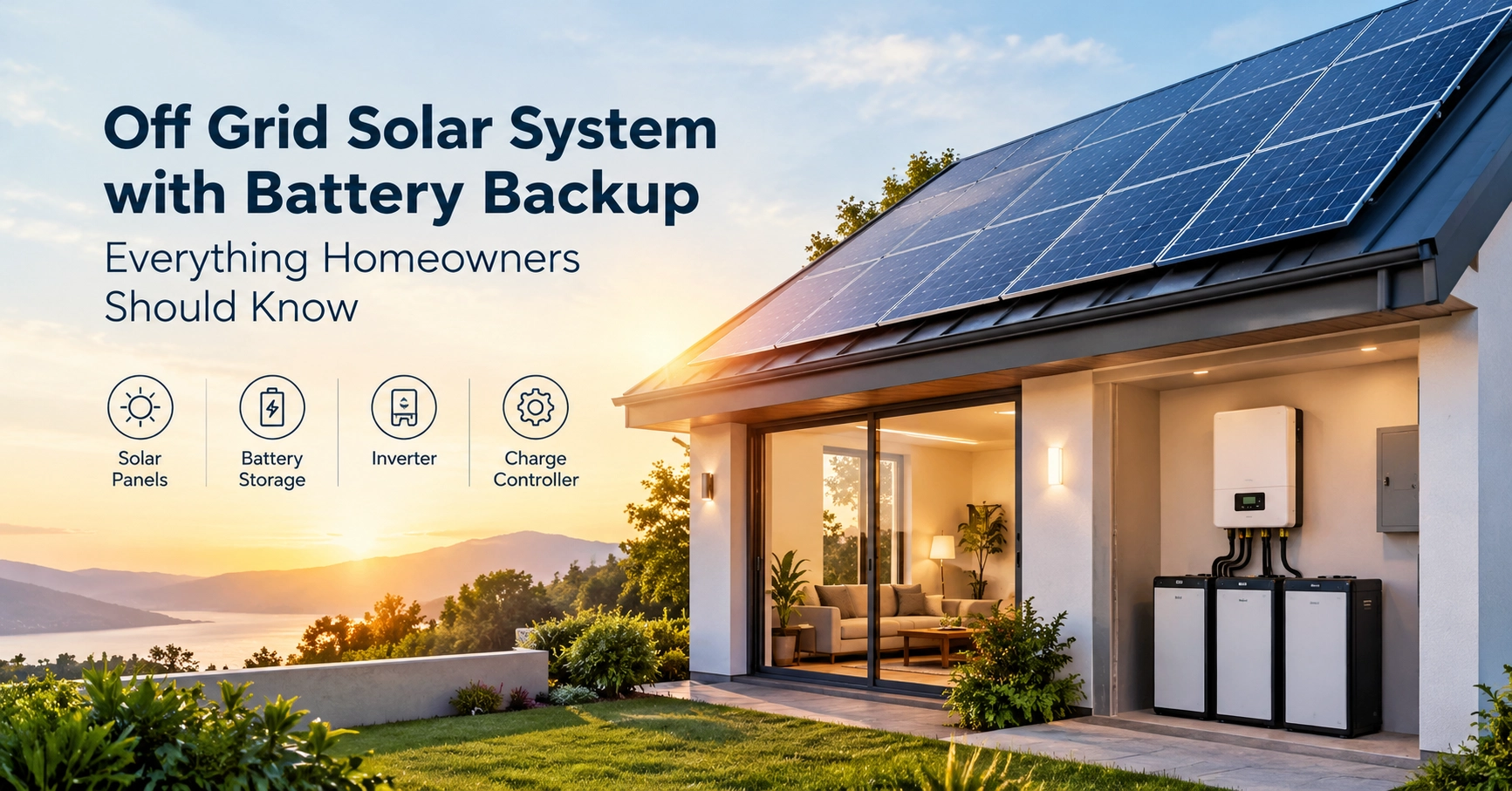
Electricity is an essential part of everyday life. From lighting and fans to refrigerators, washing machines, and other household appliances, modern homes depend on a reliable power supply. However, power cuts can interrupt daily activities, especially in areas where electricity supply is inconsistent. This is one reason why many homeowners are exploring solar energy as an alternative source of power.
A solar power system with battery backup offers a practical way to store electricity for use when sunlight is unavailable. It allows households to generate energy during the day and use the stored power at night or during a power outage. Understanding how this technology works, its benefits, and its installation requirements can help homeowners make an informed decision.
What Is an Off Grid Solar System?
An Off Grid Solar System is designed to generate electricity from sunlight without depending on the conventional electricity grid. It uses solar panels to capture sunlight and convert it into electrical energy. The electricity can power household appliances, while excess energy is stored in batteries for later use.
Unlike a grid-connected solar setup, this arrangement relies on its own generation and storage capacity to meet electricity requirements. This makes it particularly useful for properties in remote locations or areas that experience frequent power interruptions.
However, the system must be carefully planned according to the household's daily electricity consumption. The number of appliances, their power ratings, and the duration of their usage all influence the required system capacity.
How Does Battery Backup Work?
Battery storage is an important component of an independent solar power setup. Solar panels generate electricity during daylight hours, and a charge controller or compatible inverter manages how energy is supplied to the batteries.
When sunlight is available, the system can power connected appliances while charging the batteries. Once the sun sets or solar generation becomes insufficient, the stored electricity can be used to operate selected appliances.
The main components generally include:
Solar panels: Capture sunlight and generate electricity.
Solar inverter: Converts the electricity into a form suitable for household appliances.
Battery storage: Stores excess energy for use when solar generation is low.
Charge controller: Regulates battery charging where required by the system design.
Mounting structures and wiring: Support the panels and connect the system components safely.
The exact configuration depends on the equipment selected and whether the inverter includes an integrated charge controller.
Key Benefits of Battery-Backed Solar Power
1. Reliable Electricity During Power Cuts
One of the biggest advantages of battery storage is the ability to supply electricity when the regular grid is unavailable. Depending on the system design, essential appliances such as lights, fans, Wi-Fi routers, and selected household equipment can continue operating during an outage.
This can be particularly helpful for families who work from home, students attending online classes, and households that need a dependable source of backup power.
The available backup duration depends on battery capacity, the appliances connected, and their electricity consumption.
2. Better Use of Solar Energy
Solar panels generally generate the most electricity during daylight hours. However, many households consume a significant amount of electricity in the evening and at night.
A battery allows surplus daytime generation to be stored and used later. This helps homeowners make better use of the electricity their panels produce instead of depending entirely on immediate solar generation.
3. Greater Energy Independence
An Off Grid Solar System can reduce dependence on conventional electricity infrastructure when it is designed to meet the property's energy requirements.
This can be valuable for farmhouses, rural homes, holiday properties, and locations where grid access is limited. However, achieving reliable energy independence requires appropriate system sizing, sufficient battery storage, and realistic expectations about electricity consumption during cloudy weather.
4. A Cleaner Source of Energy
Solar power generates electricity without directly burning fossil fuels during operation. Using solar energy can help households reduce their reliance on conventional electricity sources and support a more sustainable approach to energy consumption.
The environmental benefits depend on factors such as equipment manufacturing, battery lifespan, system maintenance, and how the electricity would otherwise have been generated.
How to Choose the Right Battery Capacity
Selecting the right battery is essential for achieving dependable backup power. A battery that is too small may run out of stored energy quickly, while an unnecessarily large battery can increase the initial investment.
Start by identifying the appliances you want to operate during a power cut. Calculate their combined electricity consumption and estimate how many hours they need to run.
For example, a household that wants to operate a few lights, fans, and a Wi-Fi router will generally have different storage requirements from a home that also needs to run a refrigerator, water pump, or air conditioner.
When choosing a battery, consider these factors:
Usable capacity: The amount of stored electricity available for use.
Battery technology: Lithium-based batteries and lead-acid batteries differ in cost, maintenance, lifespan, and usable capacity.
Backup duration: How long the battery needs to power the selected appliances.
Charging requirements: Whether the solar panels can recharge the battery sufficiently during available sunlight hours.
Future requirements: Whether additional appliances may be connected later.
Professional load calculations help ensure that the battery and inverter are compatible with the household's needs.
Is This Solar Setup Suitable for Homes in Kerala?
Kerala receives sunlight throughout the year, making solar energy a useful option for many residential properties. However, monsoon rainfall, cloudy days, roof shading, and seasonal variations can affect electricity generation.
Before installing an Off Grid Solar System, homeowners should assess their available roof space, average electricity consumption, expected backup duration, and the amount of sunlight the panels are likely to receive.
It is also important to understand that several consecutive cloudy days can reduce solar generation and affect battery charging. A properly planned system should account for these conditions rather than relying only on ideal sunny-day performance.
Homeowners should also compare the practical requirements of an independent solar setup with those of a grid-connected system. The right choice depends on electricity availability, backup needs, budget, and applicable technical requirements.
How Much Does Installation Cost?
The total cost of a solar installation depends on the system's capacity, the type and number of batteries, inverter specifications, mounting requirements, wiring, and installation complexity.
Battery storage can represent a significant portion of the initial investment. For this reason, homeowners should compare quotations based on the complete system rather than choosing a solution solely because it has a lower starting price.
Ask the installer to explain the equipment specifications, battery warranty, expected backup performance, maintenance requirements, and after-sales support. A detailed quotation should clearly identify the included components and any additional charges.
Comparing proposals from established Solar Companies can help homeowners understand the available technologies and choose equipment that suits their property.
Why Professional Installation Matters
Solar panels and battery storage must work together safely and efficiently. Incorrect wiring, unsuitable equipment, poor ventilation, or inadequate protection can affect system performance and create safety risks.
Professional installers assess the property's energy requirements, select compatible components, determine the appropriate panel arrangement, and install suitable electrical protection. They can also explain battery care, system monitoring, and routine maintenance.
If you are searching for the best solar company in kerala, look for a provider that offers transparent pricing, suitable equipment, professional installation, and dependable after-sales assistance.
Conclusion
Battery-backed solar power can be a practical solution for homeowners who want reliable electricity during power cuts and greater control over their energy use. By storing surplus daytime generation, an appropriately designed system can help operate essential appliances after sunset and during periods when the regular electricity supply is unavailable.
The key is to select the right combination of solar panels, inverter capacity, and battery storage based on actual household requirements. Careful planning and professional installation can improve reliability, safety, and long-term value.
For homeowners considering a home solar power system, understanding these factors is the first step towards making a confident investment in solar energy.
Choose Allsun Nature for Your Solar Energy Needs
Looking for a solar solution that suits your home or business? Allsun Nature helps customers explore solar energy options based on their electricity requirements and property conditions.
Frequently Asked Questions
Recent Blogs
Solar Panel For Home: A Complete Rooftop Solar Guide for Homeowners
Oct 31, 2026
Solar Panel in Kerala: Cost, Benefits, and Installation Guide
Oct 30, 2026
Can Solar Panels Handle Kerala’s Heavy Monsoon Season?
Oct 29, 2026
Solar System in Kozhikode: Can Solar Panels Power Air Conditioners and Other Heavy Appliances?
Oct 28, 2026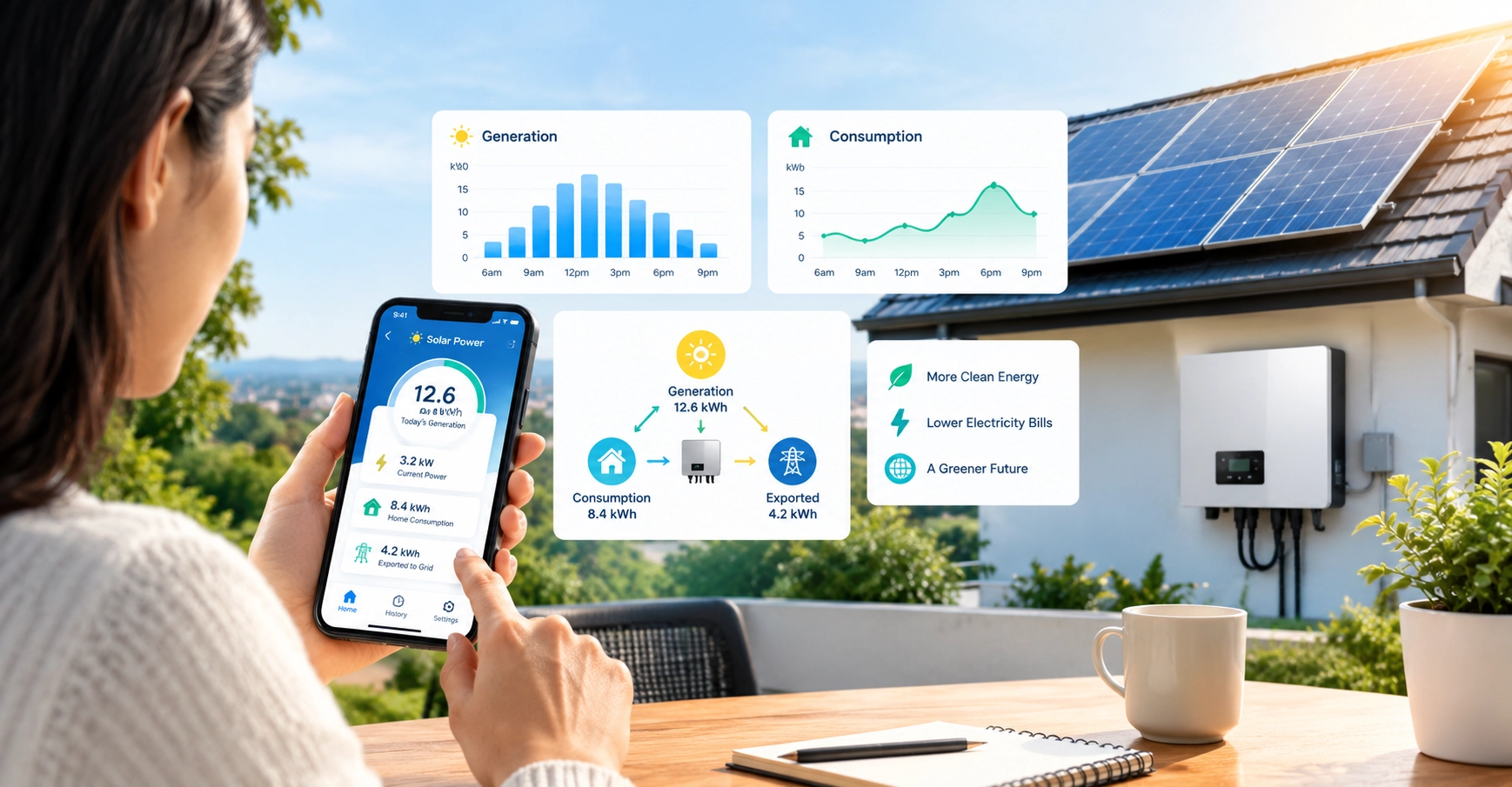
How to Read Solar Monitoring Data and Understand Your System's Performance
Oct 27, 2026
Solar Panel Distributors: Understanding Quality, Pricing, and Product Reliability
Oct 24, 2026
Solar Panels for Houses: Can an Older Home Support a Rooftop Solar System?
Oct 23, 2026
EV Charging Stations Cost: What Factors Affect the Total Price?
Oct 22, 2026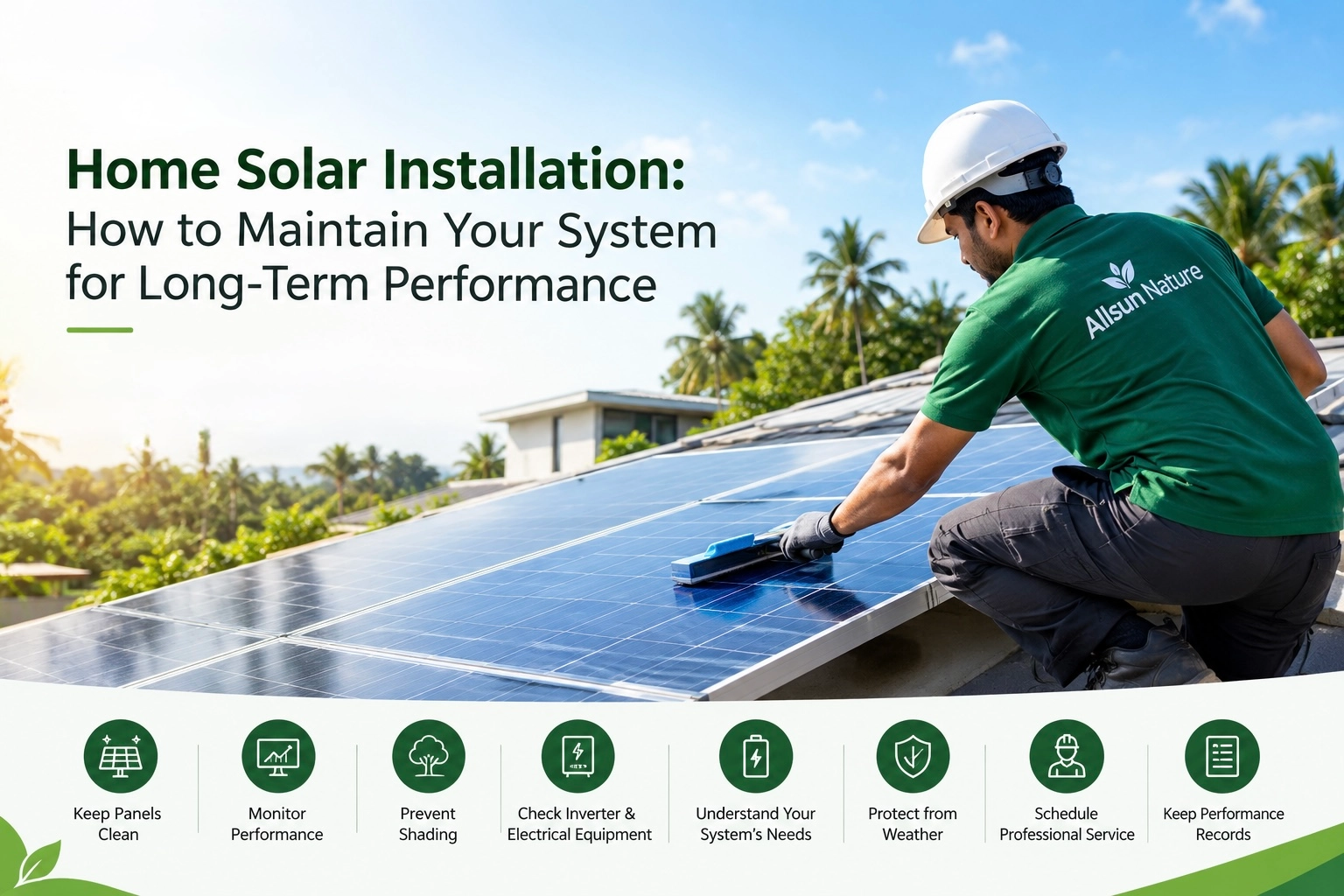
Home Solar Installation: How to Maintain Your System for Long-Term Performance
Oct 21, 2026
Solar Companies: What Homeowners Should Know Before Going Solar
Oct 17, 2026Switch to Solar Today!
Save up to 90% on electricity bills with Allsun Nature's customized rooftop solar solutions.
Get Free Quote