

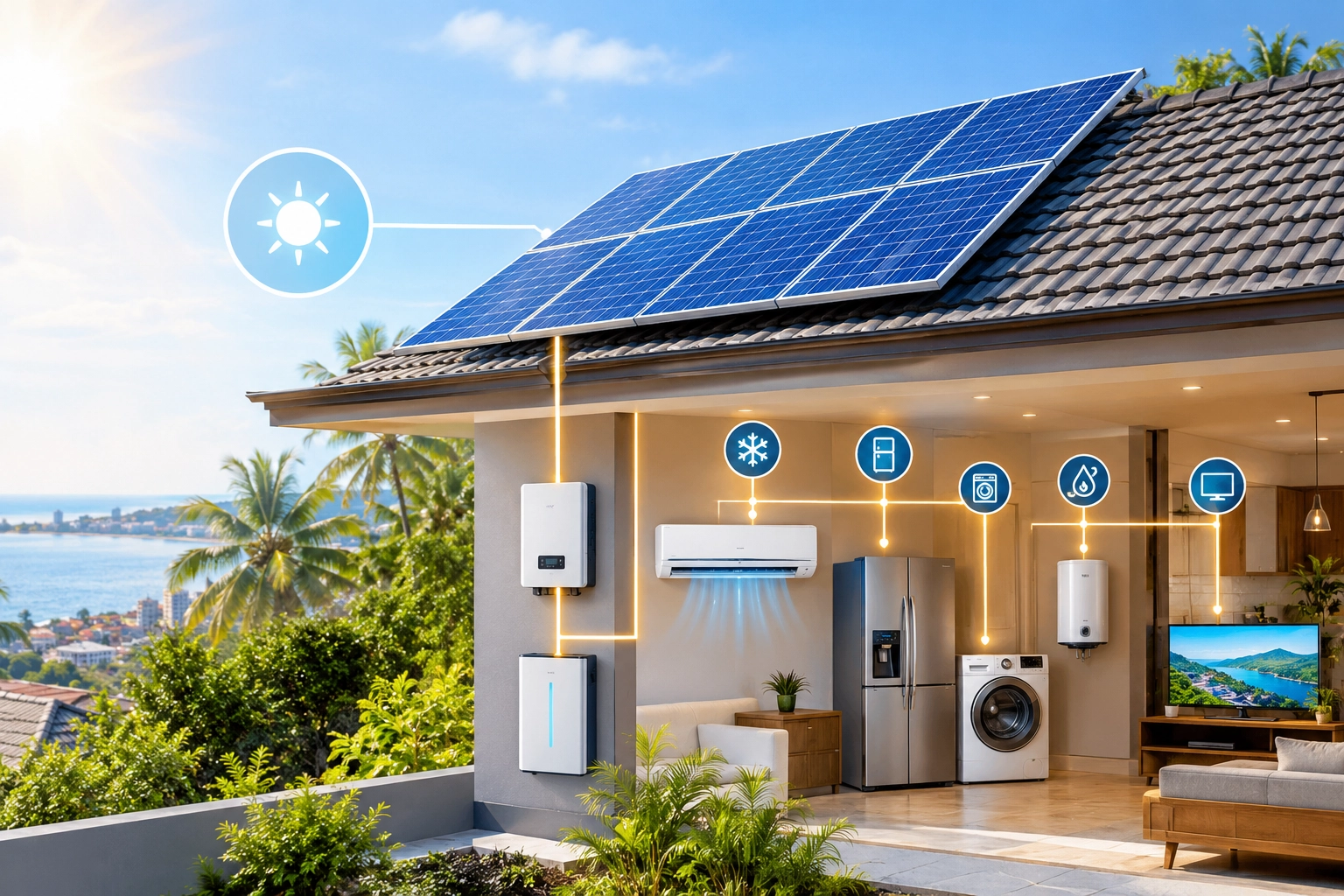
Air conditioners, refrigerators, washing machines, water heaters, and other heavy appliances contribute significantly to household electricity consumption. As electricity bills continue to be a concern for many homeowners, solar energy has become a practical option for reducing dependence on grid electricity. However, one common question remains: can a Solar System in Kozhikode generate enough power to operate these appliances comfortably?
The answer is yes, provided the system is designed according to the home's electricity consumption, appliance requirements, and available rooftop space. Understanding how solar power works, selecting suitable equipment, and planning the installation carefully can help homeowners make informed decisions.
Can Solar Panels Run Air Conditioners and Heavy Appliances?
Solar panels convert sunlight into electricity, which can be used to operate household appliances. Modern solar systems can support air conditioners and other high-consumption equipment when their capacity, inverter rating, and electrical configuration are appropriate.
However, not every solar installation can handle every appliance. A small system designed for lighting, fans, and basic electronics may not provide sufficient power for an air conditioner operating alongside several other appliances.
Before choosing a Solar System in Kozhikode, homeowners should evaluate their daily electricity usage and identify which appliances they want to operate using solar energy. This helps determine the appropriate system capacity and reduces the risk of installing an undersized system.
How Much Solar Capacity Does an Air Conditioner Need?
The electricity consumption of an air conditioner depends on its capacity, energy efficiency, operating temperature, usage duration, and compressor technology.
For example, a modern inverter air conditioner may consume approximately 0.7–1.5 kW while operating under certain conditions. Actual consumption can be lower or higher depending on the model and workload.
Consider a household that operates a 1.5 kW air conditioner for six hours daily. At that average power consumption, the appliance would use approximately 9 kWh of electricity per day.
This estimate does not include other household appliances or system losses. The solar installation must also account for the home's total energy requirements, available sunlight, and variations in solar generation.
When planning a Solar System in Kozhikode, it is important to calculate both daily energy consumption and the maximum power required when multiple appliances operate simultaneously. These two measurements help determine the appropriate solar panel capacity and inverter size.
Can One Solar System Run an AC, Refrigerator, and Washing Machine?
Yes. A properly designed solar installation can support several appliances, including air conditioners, refrigerators, washing machines, computers, and televisions.
However, the number of appliances that can operate simultaneously depends on the system's available power and the appliances' combined electricity demand.
For example, a household might operate an air conditioner, refrigerator, lighting, fans, and a washing machine during the same day. The system designer must consider the running power of each appliance and any temporary starting-power requirements.
Refrigerators and some motor-driven appliances can draw additional power when their compressors or motors start. Modern inverter-based appliances often manage their power demand more efficiently, but compatibility should still be checked.
A well-planned Solar System in Kozhikode should be based on actual appliance specifications rather than assumptions about how many devices a particular system can operate.
Choosing the Right Solar Panel System for Home
Selecting the correct system involves more than counting rooftop panels. Homeowners should consider electricity bills, appliance usage patterns, rooftop conditions, and whether battery backup is required.
A suitable solar panel system for home should be designed around the household's daily energy consumption and peak power requirements.
The main components generally include:
Solar panels: Convert sunlight into electrical energy.
Solar inverter: Converts the panels' direct-current electricity into usable alternating-current electricity.
Mounting structure: Secures the panels to the rooftop.
Protection equipment: Helps protect the electrical installation against relevant faults and electrical hazards.
Battery storage, if required: Stores electricity for later use, depending on the system configuration.
Choosing quality components and ensuring compatibility between the panels, inverter, and other equipment can improve reliability and support long-term performance.
On-Grid, Off-Grid, or Hybrid: Which System Is Suitable?
Different solar configurations serve different household requirements.
On-Grid Solar System
An on-grid system connects to the electricity grid. Solar energy can power household appliances during generation hours, while the grid supplies additional electricity when required. Eligible systems may also export surplus electricity according to applicable regulations and the approved connection arrangement.
Standard grid connected inverters generally shut down during a grid outage for safety reasons. Therefore, an ordinary on grid system should not be assumed to provide backup power during a power cut.
Off-Grid Solar System
An off-grid system operates independently of the electricity grid and generally uses batteries to store energy. Its design must account for nighttime consumption, cloudy weather, and the power requirements of heavy appliances.
Battery capacity and inverter specifications are particularly important when air conditioners need to operate for extended periods.
Hybrid Solar System
A hybrid system combines solar generation with battery storage and a grid connection, depending on the selected configuration. It can provide backup for designated loads when designed and configured appropriately.
When evaluating a Solar System in Kozhikode, homeowners should compare these options based on their electricity consumption, backup requirements, budget, and local connection conditions.
Why Inverter Capacity and Battery Backup Matter
Solar panels generate energy, but the inverter determines how that electricity is converted and delivered to household appliances. An undersized inverter may struggle when an air conditioner and other heavy appliances operate simultaneously.
The inverter must be selected according to continuous power requirements, surge capacity where applicable, and the system's electrical configuration.
Battery storage is another important consideration. If homeowners want to operate an air conditioner at night or during a power outage, they need a suitable battery and compatible inverter. The required battery capacity depends on the appliances' consumption, the intended backup duration, and the usable battery capacity.
For a Solar System in Kozhikode, professional load assessment can help determine whether battery storage is necessary or whether a grid-connected setup better suits the household.
How Kozhikode's Weather Affects Solar Performance
Solar panels generate electricity from sunlight, so their output varies with weather conditions, shading, rooftop orientation, and panel temperature. Kozhikode experiences sunny periods as well as monsoon rainfall and cloudy days.
During strong sunlight, solar generation may be sufficient to operate several household appliances. On cloudy days, output can decrease, and the home may need electricity from the grid or stored energy.
Correct panel positioning, suitable equipment, and periodic maintenance help support reliable performance. Homeowners should avoid sizing a system based only on its best possible output on a sunny day.
A carefully planned Solar System in Kozhikode should account for seasonal variations and the household's expected electricity demand throughout the year.
Practical Tips to Improve Solar Energy Usage
Homeowners can make better use of the electricity their solar systems generate by following a few practical steps:
Run appliances during daylight: Where practical, operate washing machines and other flexible loads when solar generation is higher.
Choose energy-efficient appliances: Efficient air conditioners and refrigerators can reduce overall electricity demand.
Set suitable AC temperatures: Avoid unnecessarily low thermostat settings and keep doors and windows closed while cooling.
Maintain solar panels: Remove accumulated dirt when necessary and arrange appropriate inspections.
Monitor electricity consumption: Review inverter data and electricity bills to understand energy production and usage patterns.
Avoid overloading circuits: Ensure electrical connections and protective devices are suitable for the intended loads.
These habits can help households use generated electricity more effectively and manage their dependence on grid power.
Why Professional Solar Planning Matters
Installing solar panels without evaluating the household's electrical requirements can lead to disappointing results. A professional assessment should consider electricity bills, appliance ratings, rooftop space, shading, inverter capacity, battery requirements, and applicable electrical standards.
Reliable Solar Panels and Installation practices also involve suitable mounting structures, safe wiring, electrical protection, and proper system commissioning.
Before choosing a provider, homeowners should ask about equipment specifications, warranties, expected generation, maintenance requirements, and after-sales support. They should also clarify whether the proposed system can operate selected appliances during a power outage.
For homeowners comparing a Solar System in Kozhikode, these checks help ensure that the recommended configuration matches their actual needs rather than relying on general capacity estimates.
Conclusion
Solar panels can power air conditioners, refrigerators, washing machines, and other heavy appliances when the installation is properly designed. The most important factors are daily electricity consumption, simultaneous power demand, inverter capacity, battery requirements, and seasonal solar generation.
Choosing the right Solar System in Kozhikode starts with understanding how your household uses electricity. With appropriate system sizing, quality components, and professional installation, solar energy can help reduce grid dependence and support more efficient household electricity management.
Allsun Nature can help homeowners explore solar solutions suited to their energy requirements, rooftop conditions, and long-term goals. Assess your household's electricity consumption before selecting a system to determine the configuration that best meets your needs.
Frequently Asked Questions
Recent Blogs
Solar Panel For Home: A Complete Rooftop Solar Guide for Homeowners
Oct 31, 2026
Solar Panel in Kerala: Cost, Benefits, and Installation Guide
Oct 30, 2026
Can Solar Panels Handle Kerala’s Heavy Monsoon Season?
Oct 29, 2026
How to Read Solar Monitoring Data and Understand Your System's Performance
Oct 27, 2026
Off Grid Solar System with Battery Backup: Everything Homeowners Should Know
Oct 26, 2026
Solar Panel Distributors: Understanding Quality, Pricing, and Product Reliability
Oct 24, 2026
Solar Panels for Houses: Can an Older Home Support a Rooftop Solar System?
Oct 23, 2026
EV Charging Stations Cost: What Factors Affect the Total Price?
Oct 22, 2026
Home Solar Installation: How to Maintain Your System for Long-Term Performance
Oct 21, 2026
Solar Companies: What Homeowners Should Know Before Going Solar
Oct 17, 2026Switch to Solar Today!
Save up to 90% on electricity bills with Allsun Nature's customized rooftop solar solutions.
Get Free Quote