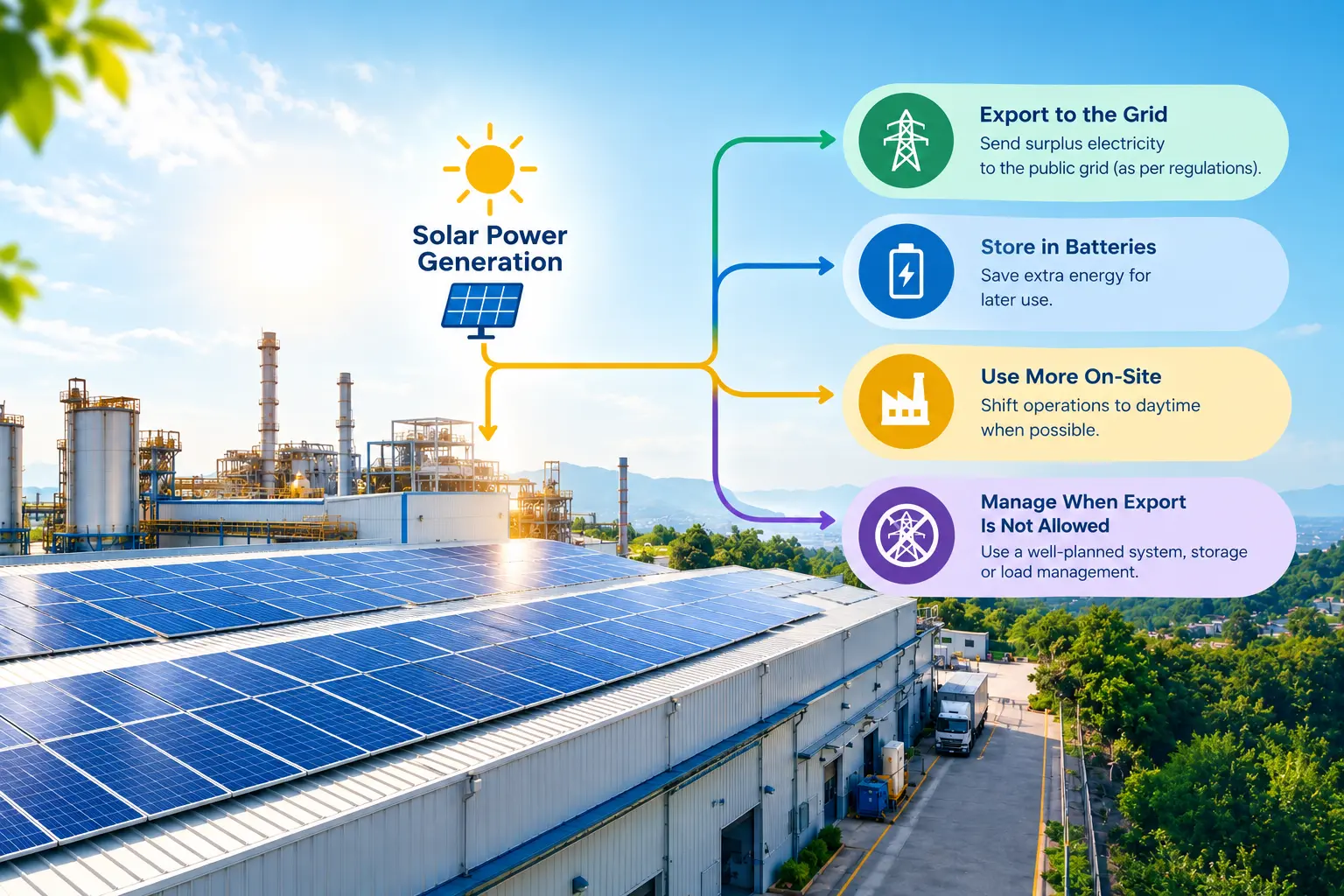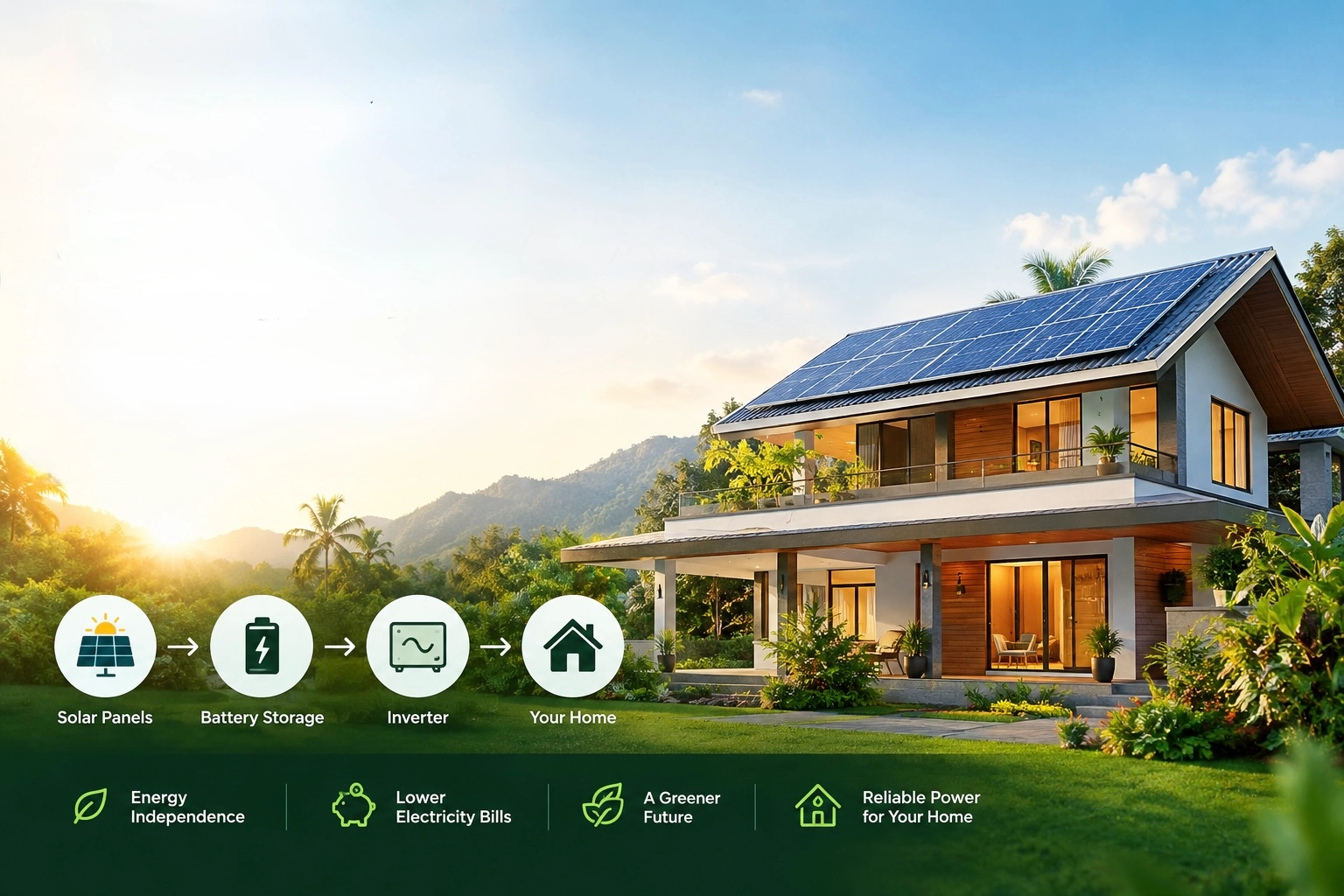

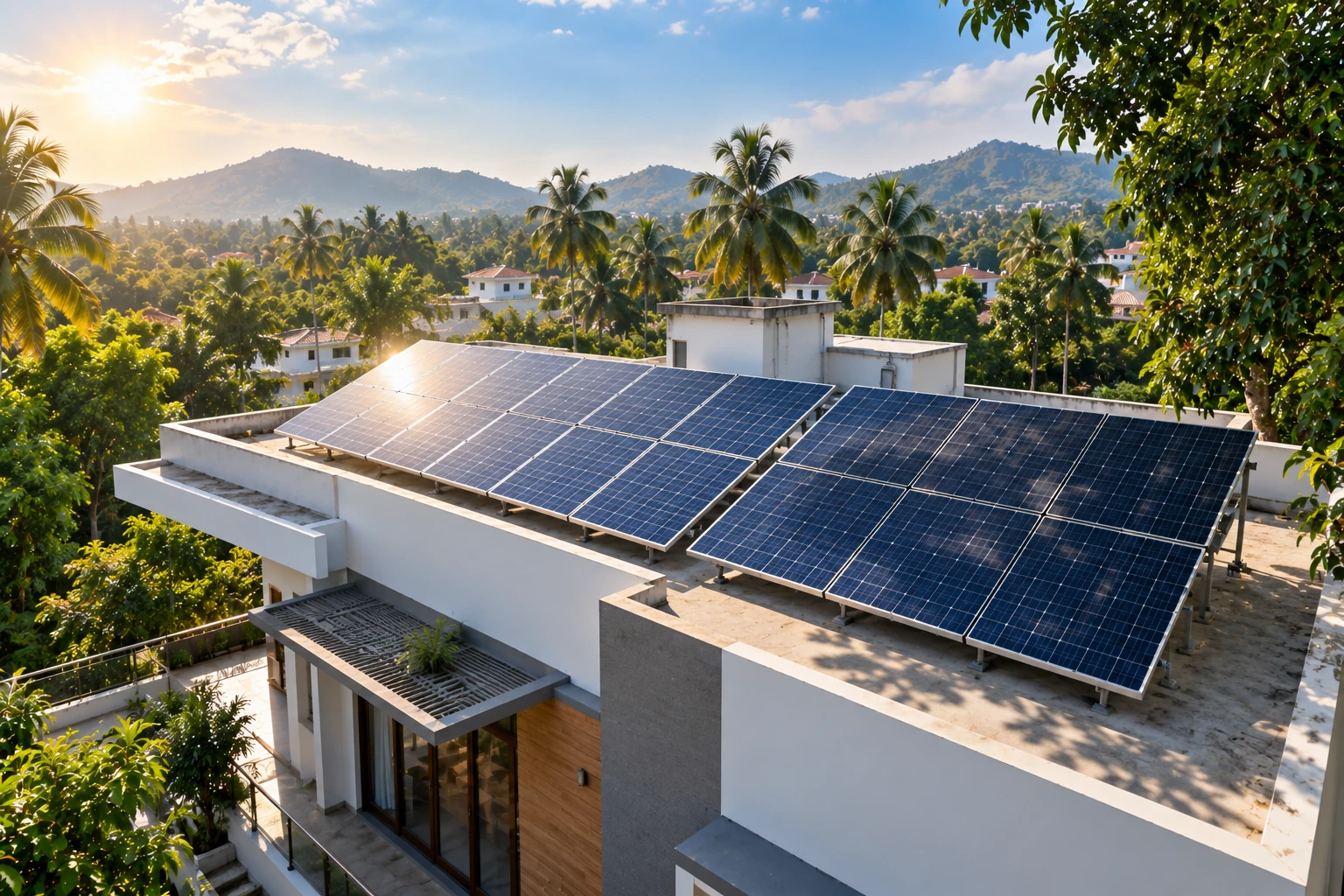
A 5 kW solar system installed on one property may not generate exactly the same amount of electricity as another 5 kW system installed somewhere else. The difference is not necessarily the system capacity. Factors such as roof orientation, shading, panel technology, temperature, inverter performance, installation quality and weather conditions can all influence actual solar generation.
For anyone considering solar panel installation in Kerala, understanding these factors is important when comparing solar systems and evaluating expected performance.
The Simple Answer
Solar system capacity tells you the rated size of the system. It does not guarantee that two systems of the same capacity will produce exactly the same amount of electricity.
What Does a 5 kW Solar System Actually Mean?
When a solar system is described as a 5 kW solar system, the 5 kW figure generally represents the rated capacity of the solar panel array under specified test conditions.
It does not mean that the system will continuously generate 5 kW from morning to evening. Solar generation changes throughout the day as sunlight intensity, temperature and weather conditions change.
| Factor | How It Can Affect Generation |
|---|---|
| Sunlight | The amount and intensity of sunlight available to the panels. |
| Roof Orientation | Influences how much sunlight reaches the panels during the day. |
| Shading | Can reduce the output of affected panels. |
| Temperature | Panel electrical performance changes with operating temperature. |
| Weather | Clouds and rain can reduce available sunlight. |
| System Components | Panel and inverter characteristics influence overall system performance. |
| Installation | System design, wiring and installation quality can influence losses. |
8 Factors That Can Make the Same-Sized Solar Systems Perform Differently
Roof Orientation and Tilt
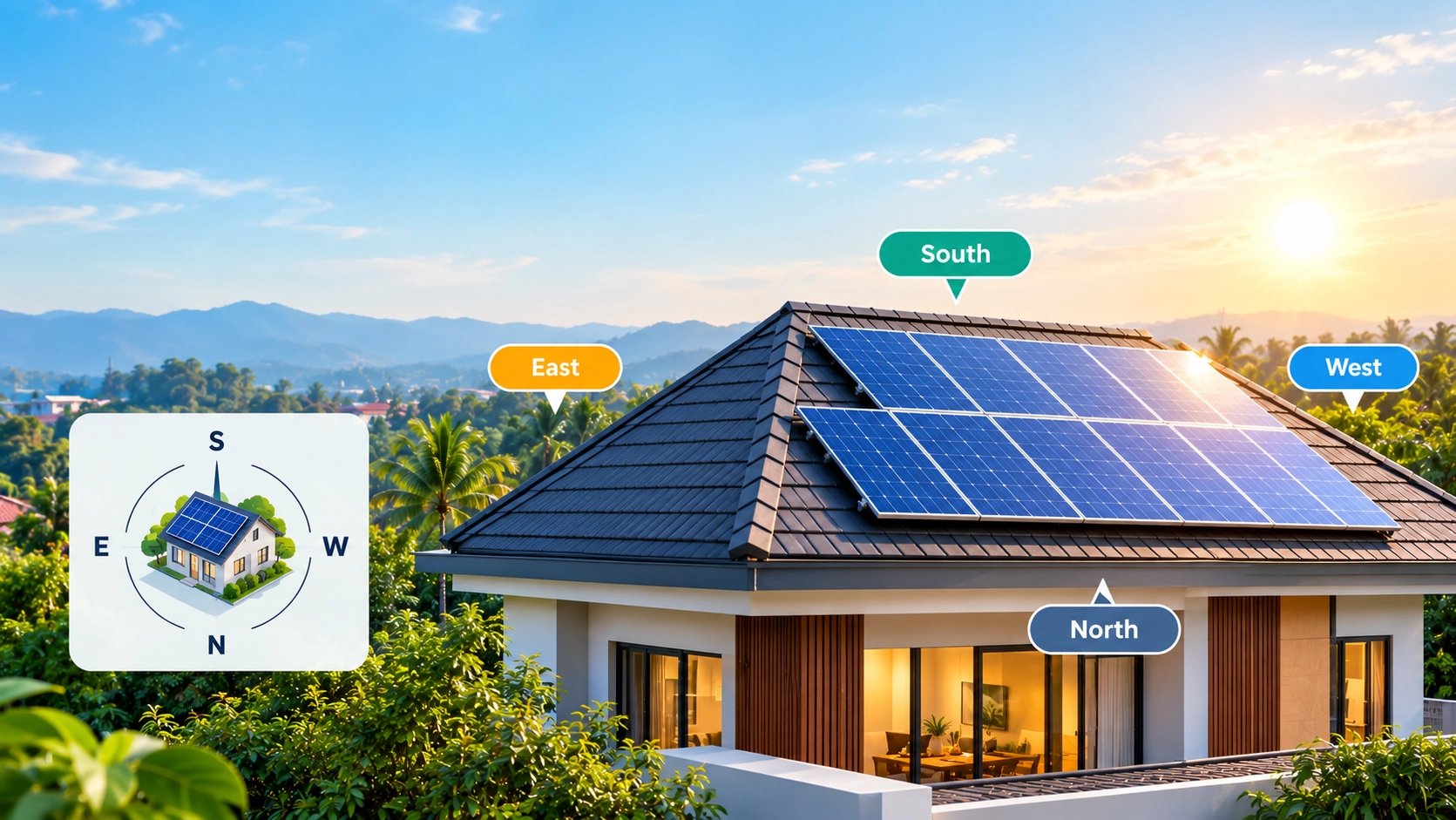
The direction and angle of a rooftop can influence how much sunlight reaches the solar panels throughout the day. A proper site assessment helps determine how the available roof area can be used for the installation.
Shading Around the Property
Trees, neighbouring buildings, water tanks, parapet walls and other structures can create shade. Even partial shading at certain times can influence solar generation.
Panel Characteristics
Solar panels can differ in efficiency, temperature characteristics, technology and degradation performance. Two systems with the same kW capacity may therefore use panels with different specifications.
Panel Temperature
Solar panels operate outdoors and their temperature changes with environmental conditions. Higher operating temperatures can affect electrical performance.
Inverter Performance
The inverter converts DC electricity from the solar panels into AC electricity used by the property. Its efficiency and system configuration can influence the amount of usable electricity available.
Installation Quality
Mounting structures, cables, connectors, protection equipment, earthing and electrical connections all form part of a complete solar installation.
Weather Conditions
Clear, cloudy and rainy conditions provide different levels of sunlight. This naturally causes solar generation to change from day to day and month to month.
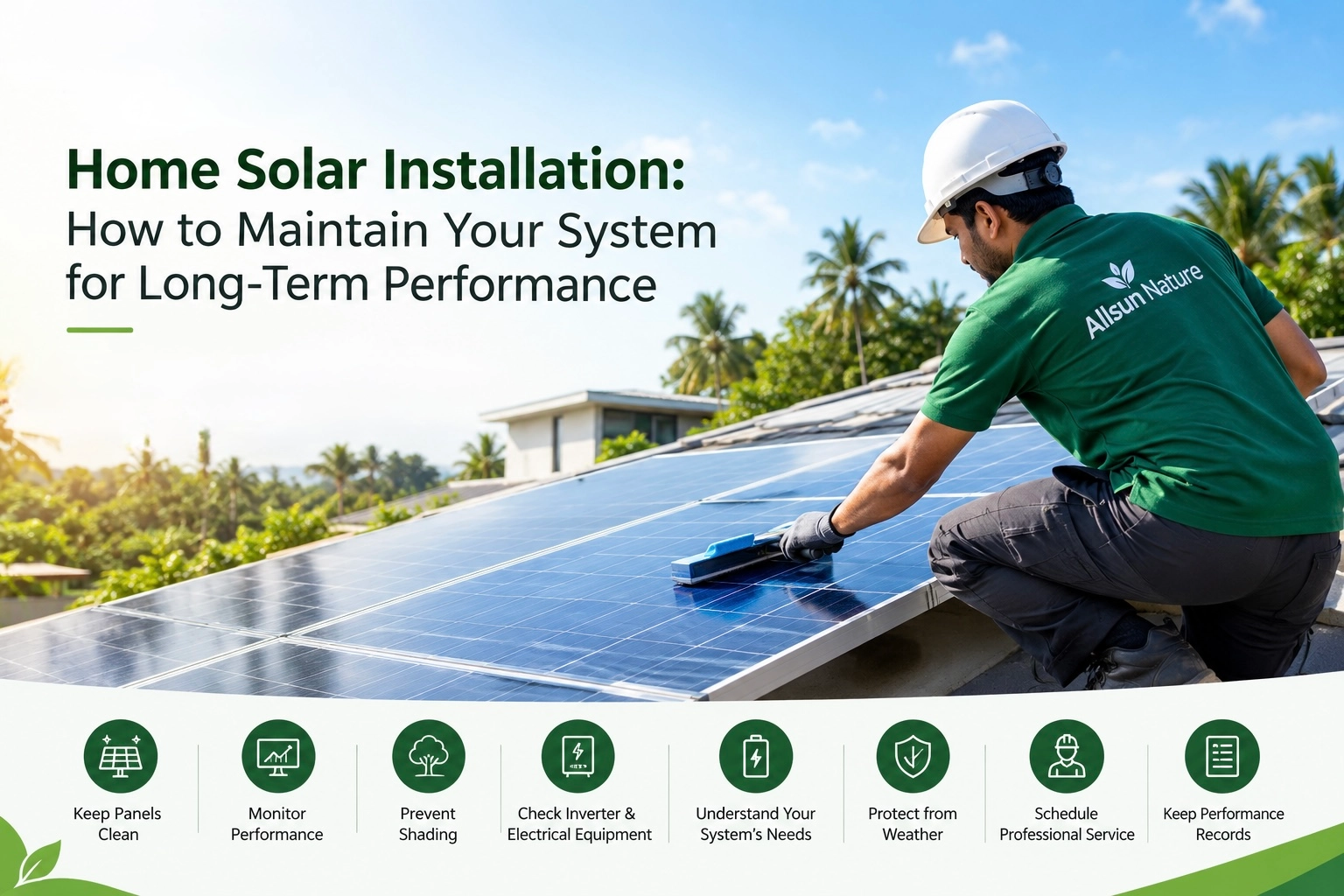
Cleaning and Maintenance
Dust, leaves, bird droppings and other deposits can reduce the sunlight reaching the photovoltaic cells. Regular inspection and suitable cleaning can help maintain system performance.
Does Roof Design Really Matter for Solar Installation?
Yes. Every property presents a different installation environment.
The available roof area, orientation, tilt, shading and surrounding structures should be considered before designing a solar system. Two homes may both have enough space for a 5 kW system, but the usable solar conditions may not be identical.
A Proper Site Assessment Looks Beyond Roof Size
A good assessment considers the available installation area, possible shading, electrical requirements, equipment placement and other site-specific conditions. This helps create a solar system design suited to the property rather than relying only on a standard system size.
How Shading Can Change Solar Generation
Shading is particularly important because the effect depends on where the shade falls, when it occurs and how the solar array is configured.
A tree that creates shade over a few panels in the morning can affect the system differently from a nearby building that creates shade for several hours each afternoon.
This is why shading should be considered before finalising the layout for Solar Panels and Installation.
How Does Kerala Weather Affect Solar Generation?
Solar generation naturally follows available sunlight. Kerala experiences bright sunny periods as well as cloudy and rainy weather, particularly during the monsoon season.
During cloudy conditions, the panels can still generate electricity, but the available solar energy may be lower than during strong sunshine.
Therefore, comparing one day's generation with another day's generation does not always provide a complete picture of system performance.
Think in Terms of Long-Term Generation
A solar system should be evaluated using generation trends over time rather than expecting identical output every day.
Why Installation Quality Matters
A solar project involves much more than installing panels on a roof. The complete system includes structural, electrical and protection components that need to work together.
- Solar panels
- Inverter
- Mounting structure
- DC cables
- AC cables
- Connectors
- Protection devices
- Earthing
- Electrical connections
- System monitoring
The design and installation of these components can influence the overall performance, reliability and maintainability of the solar system.
Why Two 5 kW Solar Systems Can Produce Different Amounts
Consider two properties where both systems have a rated capacity of 5 kW.
- 5 kW solar system
- Good access to sunlight
- Minimal shading
- Suitable roof orientation
- Appropriate system components
- Proper installation
- 5 kW solar system
- Partial shading
- Different roof orientation
- Different operating conditions
- Different equipment configuration
- Different surrounding environment
Both systems are rated at 5 kW, but their actual electricity generation can differ because the conditions surrounding each installation are different.
Solar Capacity vs Actual Solar Generation
| Solar Capacity | Actual Generation |
|---|---|
| Rated system size | Electricity actually generated over time |
| Specified in kW | Changes according to sunlight and operating conditions |
| Helps define system scale | Depends on the property and system performance |
| Does not describe daily output | Can vary throughout the day and across seasons |
Why Solar Quotations Should Not Be Compared Only by Price
Two solar quotations may show the same system capacity while containing different equipment, installation specifications and service provisions.
A meaningful comparison should therefore look at the complete proposal rather than only the final price or the number of panels.
What to Check in a Solar Proposal
- Solar panel specifications
- Inverter specifications
- Expected generation
- Roof and shading assessment
- Mounting structure specifications
- Cabling and protection components
- Installation scope
- Warranty details
- Monitoring arrangements
- After-sales support
What Should You Look for in Solar Companies?
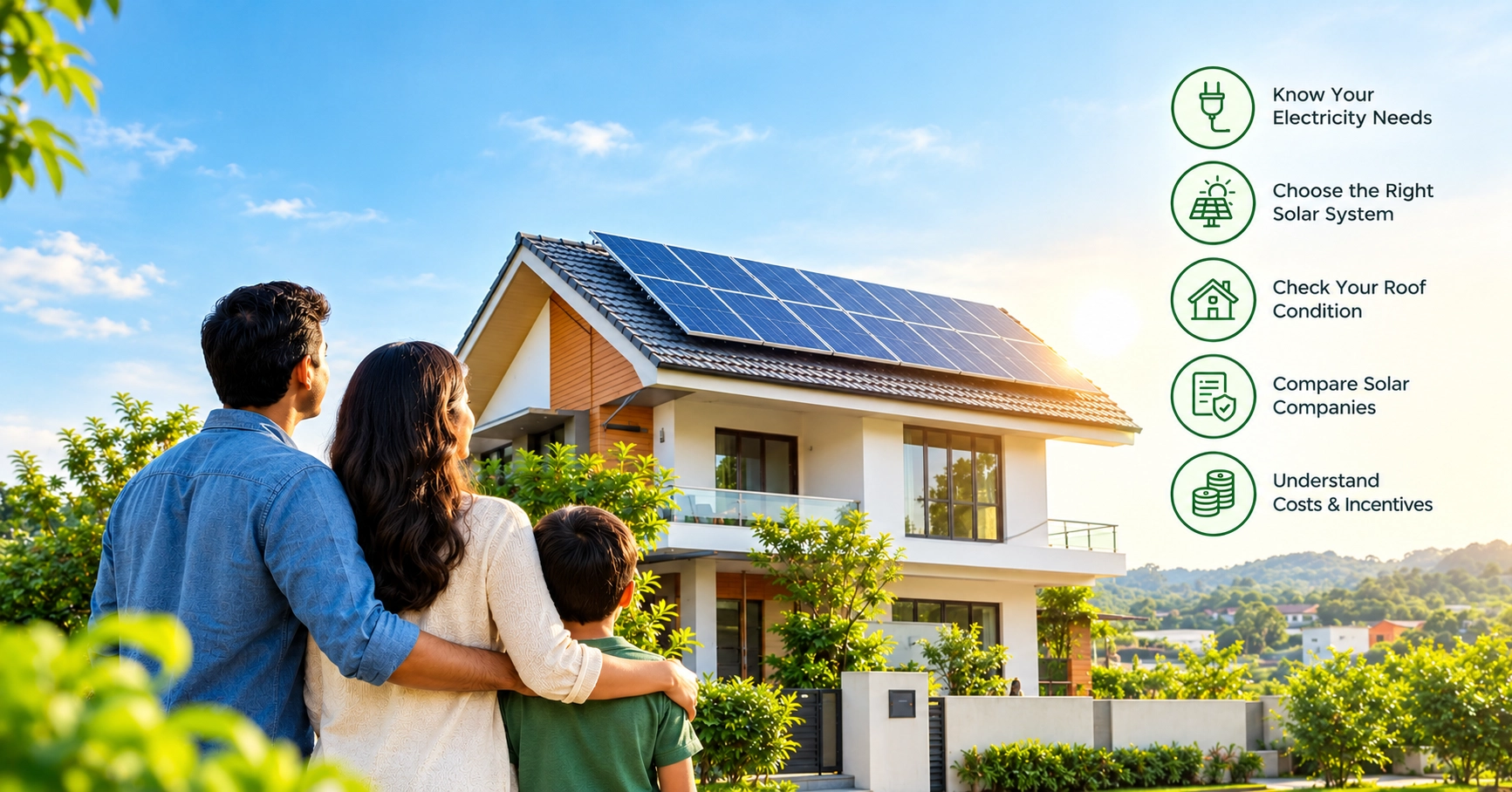
Choosing among Solar Companies is not simply about finding the lowest quotation. The design, equipment selection, installation process, documentation, warranty and service support are all important parts of a solar project.
A solar provider should be able to explain why a particular system capacity is suitable for the property and what factors may influence its expected generation.
Solar Companies in Calicut, Kochi and Trivandrum
Solar requirements can vary from one property to another, even within the same city. Customers looking for solar companies in Calicut, solar companies in Kochi or solar companies in Trivandrum should consider the actual requirements of their property rather than selecting a system based only on its advertised capacity.
Calicut
For properties in Calicut, roof conditions, surrounding buildings, shading and site-specific installation requirements should be considered when planning a solar system.
Kochi
Residential and commercial properties in Kochi can have different rooftop layouts and electricity requirements, making property-specific solar system design important.
Trivandrum
For properties in Trivandrum, solar system planning should take into account available roof space, sunlight exposure, shading and the property's electricity consumption.
Can Maintenance Affect Solar Generation?
Solar panels are designed for outdoor use, but their performance can be influenced by their operating environment.
Dust, leaves, bird droppings and other deposits can accumulate on the panel surface. Monitoring system performance and addressing visible issues can help identify potential problems.
Maintenance requirements can vary depending on the property's surroundings and the environmental conditions at the installation site.
Common Mistakes When Comparing Solar Systems
Comparing Only kW Capacity
Two systems may have the same capacity but different site conditions and equipment specifications.
Comparing Only the Price
The lowest quotation does not necessarily describe the same equipment, installation scope or service package as another quotation.
Ignoring Shading
Trees, buildings and rooftop structures can affect sunlight reaching the panels.
Looking at Only One Day's Output
Weather and sunlight change daily, so long-term generation trends provide more useful information.
Final Takeaway
Two solar systems with the same capacity can produce different amounts of electricity because system capacity is only one part of overall solar performance.
Roof orientation, shading, sunlight, panel characteristics, temperature, inverter performance, installation quality, weather and maintenance can all influence actual generation.
Also ask:
“How is this system designed for my property, and what generation can I reasonably expect?”
Planning Solar Panels and Installation With Allsun Nature?
Whether you are planning a residential or commercial solar project, understanding your property's requirements is the first step towards designing a suitable solar system.
Compare system specifications, expected generation, installation scope, warranty and service support before making your decision.
Get a Solar Consultation