

For many homeowners, solar power is becoming an attractive way to reduce dependence on conventional electricity and manage long-term energy costs. But one common question is: Can an Off Grid Solar System power an entire home?
The short answer is yes, it can. However, whether a solar system can meet all of a home's electricity needs depends on several factors, including daily energy consumption, available sunlight, solar panel capacity, battery storage, and the type of electrical appliances used.
An off-grid setup is designed to work independently from the electricity grid. This means the home generates its own electricity through solar panels and stores excess energy in batteries for use when solar generation is low or unavailable.
What Is an Off-Grid Solar System?
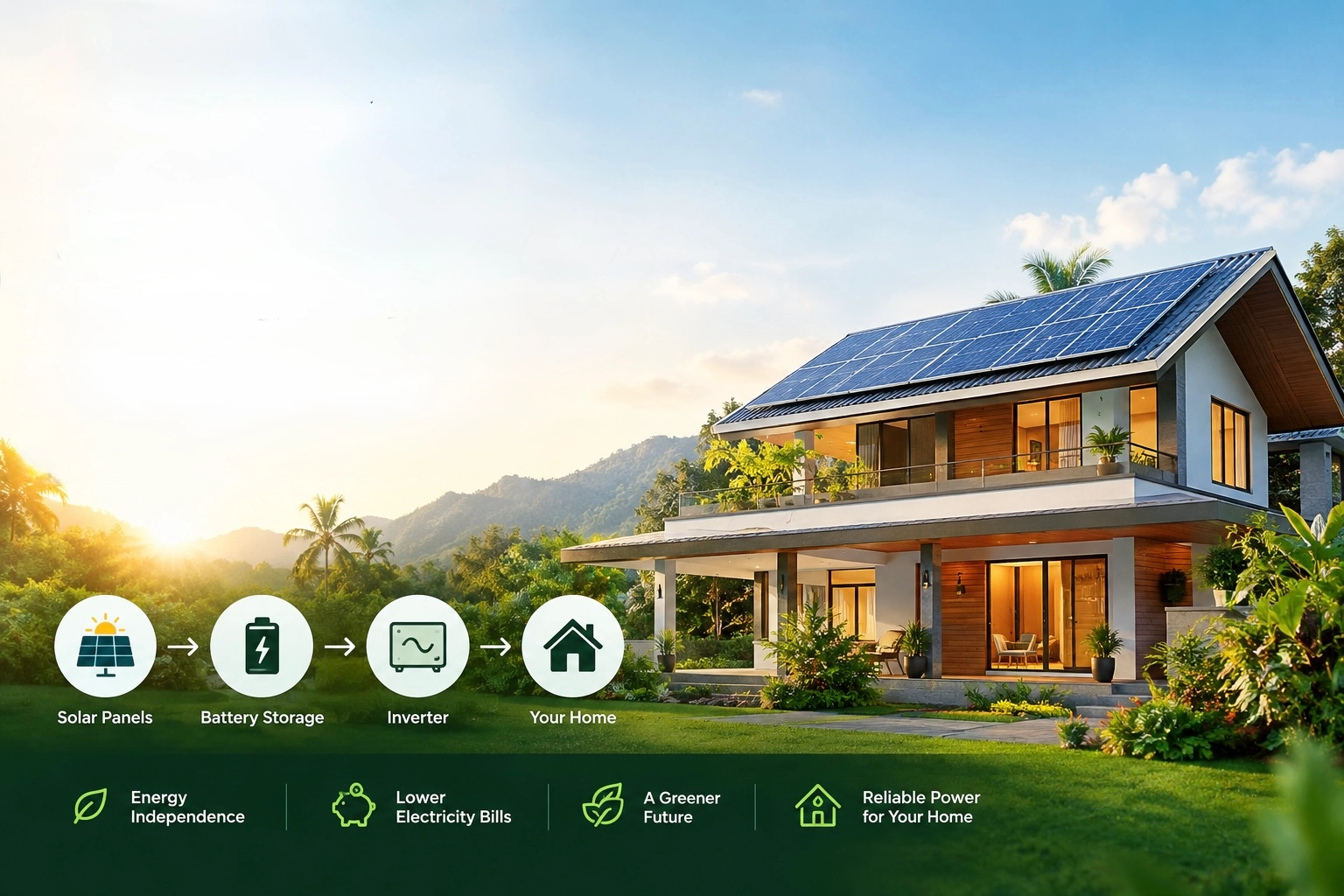
An off-grid solar setup is a complete energy system that allows a property to generate and use electricity without relying on the main power grid. It normally consists of solar panels, an inverter, batteries, mounting structures, and other necessary electrical components.
During the daytime, solar panels convert sunlight into electricity. The generated power can be used immediately by appliances such as lights, fans, refrigerators, televisions, pumps, and other household equipment. When the panels produce more electricity than the home needs, the extra energy can be stored in batteries.
At night or during periods of low sunlight, the stored energy can be used to operate the home.
This makes an off-grid setup particularly useful for locations where grid electricity is unavailable, unreliable, or difficult to access.
Can It Really Power an Entire Home?
Yes, an appropriately designed system can power an entire home. The important word is appropriately designed.
A small house with limited electricity consumption will naturally require a smaller system than a large home with several air conditioners, water heaters, washing machines, refrigerators, pumps, computers, and other high-power appliances.
Before installing a system, the home's electricity consumption should be carefully assessed. This helps determine the required solar panel capacity, inverter size, and battery storage.
For example, essential loads such as lights, fans, refrigerators, televisions, Wi-Fi routers, and small appliances may require considerably less energy than a home that operates multiple heavy appliances for several hours every day.
Understanding Your Home's Electricity Requirements
The first step towards designing a reliable solar solution is understanding how much electricity the home actually uses.
Homeowners can start by looking at their previous electricity bills and identifying the appliances that consume the most power. The number of hours each appliance is used every day also matters.
Some common household loads include:
Lighting
Ceiling and table fans
Refrigerator
Television
Washing machine
Water pump
Computers and laptops
Air conditioners
Microwave ovens
Water heaters
Kitchen appliances
Not every appliance needs to operate at the same time. A proper system design considers both total energy consumption and peak power demand.
This is why choosing a system simply based on the number of solar panels is not enough.
The Role of Solar Panels
Solar panels are the primary source of electricity in an off-grid setup. Their capacity needs to be selected according to the home's energy requirements and the amount of sunlight available at the location.
A professional Solar Panel Installation should consider factors such as roof space, roof direction, shading, panel orientation, and local weather conditions.
Kerala receives good solar potential in many areas, but cloudy and rainy periods can reduce solar generation. Therefore, an off-grid system should not be designed only around ideal sunny-day conditions.
A correctly planned system needs to account for seasonal changes so that the home has a better chance of receiving sufficient electricity throughout the year.
Why Battery Storage Is Important
Battery storage is one of the most important parts of an off-grid setup.
Unlike a grid-connected solar system, an independent solar system cannot simply depend on the electricity grid when solar production is low. Batteries provide stored energy for nighttime use and periods when solar generation is insufficient.
For example, solar panels may generate plenty of electricity during the afternoon while household consumption is relatively low. Instead of wasting the excess energy, it can be stored in batteries and used later.
The required battery capacity depends on factors such as daily electricity consumption, backup requirements, and the number of hours the homeowner wants the system to operate without sunlight.
What Happens During Rainy or Cloudy Days?
This is an important consideration, especially in Kerala.
Solar panels can still generate electricity during cloudy weather, but their output may be lower than on bright sunny days. During such periods, the battery becomes especially important.
If the home consumes more electricity than the panels are producing, the system can use stored battery energy. However, several consecutive days of poor sunlight can put additional pressure on battery reserves.
For this reason, system sizing should consider local weather conditions and the homeowner's expectations for backup.
In some cases, homeowners may also choose a backup source depending on their specific requirements.
Can You Use High-Power Appliances?
An off-grid system can operate high-power appliances, but the system needs to be designed accordingly.
Air conditioners, electric water heaters, induction cookers, pumps, and other high-consumption appliances can significantly increase both energy usage and peak power demand.
If a home regularly uses several of these appliances, it may require a larger solar array, a suitable inverter, and greater battery capacity.
A professional assessment can help homeowners understand which appliances can comfortably operate on the planned system and whether changes to usage patterns could improve overall efficiency.
Choosing the Right System for Your Home
Every home has different electricity requirements. There is no single solar system size that works for every property.
The right solution depends on:
Daily electricity consumption
Number and type of appliances
Peak electricity demand
Available roof space
Local sunlight conditions
Required backup duration
Battery capacity
Future electricity requirements
A properly designed home solar power system should also leave some room for changing energy needs. For example, a homeowner may plan to purchase an electric vehicle, add another air conditioner, or install additional appliances in the future.
Considering these possibilities during the initial design can make the system more practical in the long term.
Is Off-Grid Solar Suitable for Every Home?
Not necessarily.
For homes with reliable grid electricity and relatively high energy consumption, a grid-connected or hybrid solar solution may sometimes be more practical.
An independent system can be especially attractive for remote properties, locations with unreliable grid supply, or homeowners who want greater energy independence.
The best choice depends on the property's location, electricity requirements, budget, and backup expectations.
Why Professional Installation Matters
Solar panels are only one part of a complete energy solution. The performance of the entire system depends on how well its different components work together.
Working with experienced Solar Companies can help homeowners evaluate their energy requirements, select suitable equipment, plan the installation, and understand battery storage requirements.
A professional installation also helps ensure that the panels, inverter, batteries, wiring, protection systems, and other components are properly integrated.
Before choosing a provider, homeowners should look at the company's experience, product quality, installation standards, after-sales support, and ability to provide a solution suited to the property.
Making the Most of an Off-Grid System
Even a well-designed system can perform better when electricity is used efficiently.
Homeowners can reduce unnecessary consumption by choosing energy-efficient appliances, switching off devices when they are not needed, and using high-power appliances during periods of strong solar generation whenever possible.
Regular maintenance is also important. Keeping panels reasonably clean and ensuring that the system is checked periodically can help maintain reliable performance.
Conclusion
So, can an Off Grid Solar System power your entire home? Yes, it can, provided the system is correctly sized and designed around the home's actual electricity requirements.
Solar panel capacity, battery storage, inverter capacity, appliance usage, roof conditions, and local weather all play a role in determining how well the system performs.
For homeowners considering solar in Kerala, taking the time to assess energy consumption before installation can make a significant difference. Rather than choosing a system based only on price or panel count, it is better to focus on the complete energy requirement of the home.
If you are planning a solar solution and want to understand which setup is suitable for your property, consult a trusted best solar company in Kerala for a professional assessment and system recommendation.
Frequently Asked Questions
Recent Blogs
EV Charging Stations Cost: What Factors Affect the Total Price?
Oct 22, 2026
Home Solar Installation: How to Maintain Your System for Long-Term Performance
Oct 21, 2026
Solar Companies: What Homeowners Should Know Before Going Solar
Oct 17, 2026
Can a Home Solar Panel System Reduce Your Electricity Bill to Zero?
Oct 15, 2026
Can You Upgrade an Existing On-Grid Solar System to a Hybrid System?
Oct 14, 2026
Does Roof Direction Affect Solar Panel Performance?
Oct 13, 2026
Best Solar Panels for Small Rooftops: How to Maximise Solar Power
Oct 12, 2026
Solar Energy for Home: How Everyday Appliance Habits Influence Solar Savings
Oct 10, 2026
What Happens to Excess Solar Power Generated by an Industrial Solar System?
Oct 09, 2026
Is a Hybrid Solar System Worth the Investment in Kerala?
Oct 07, 2026Switch to Solar Today!
Save up to 90% on electricity bills with Allsun Nature's customized rooftop solar solutions.
Get Free Quote