

Installing solar panels is a practical way to reduce electricity expenses and make better use of renewable energy. However, the amount you save depends not only on the capacity of your solar system but also on how you use electricity throughout the day. Simple changes in everyday habits can help you make better use of the power generated by your rooftop panels.
For households in Kerala, where air conditioners, refrigerators, washing machines, water pumps, and other appliances contribute to daily electricity consumption, understanding when and how electricity is used can make a difference. By aligning certain activities with daylight hours, homeowners can improve their use of solar power and reduce their dependence on electricity from the grid.
1. Understand When Your Home Uses the Most Electricity
Every household has a different electricity consumption pattern. Some families use more power in the morning, while others consume most of their electricity during the evening. Identifying these patterns is a useful first step towards improving solar savings.
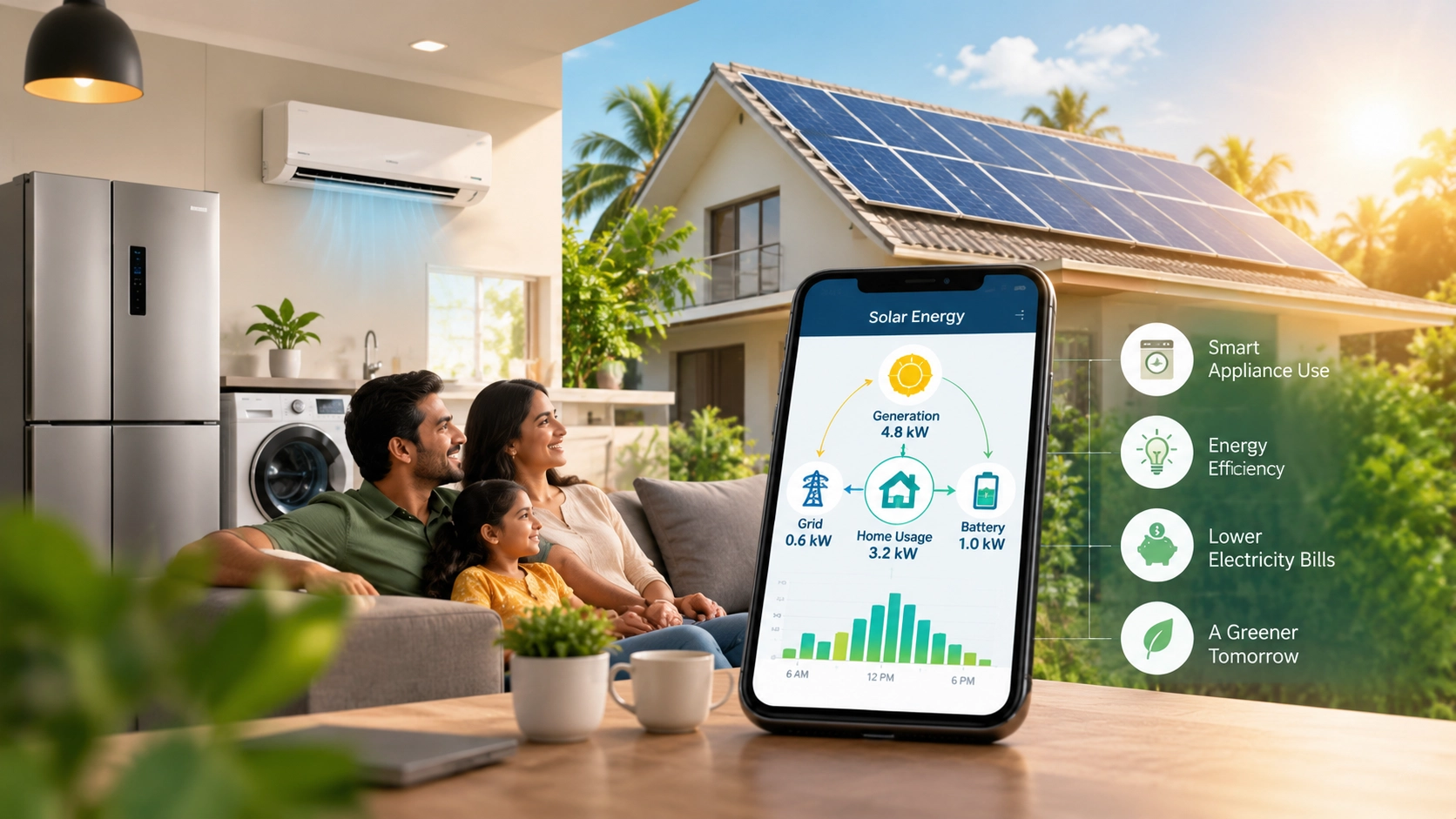
For example, running a washing machine, water pump, or dishwasher during the day may allow you to use solar electricity directly, provided your system is generating enough power at that time. On the other hand, using several high-power appliances after sunset may increase the amount of electricity you need from the grid or battery.
Reviewing your electricity bills can help you understand your overall consumption. If your electricity meter or solar monitoring application provides detailed usage information, you can also identify periods of higher demand.
The goal is not to change your entire routine. It is to find practical opportunities to use available solar power more efficiently.
2. Run High-Energy Appliances During Daylight Hours
Solar panels generally generate the most electricity when sunlight is strong, although actual production varies with weather, shading, and system design. Taking advantage of these hours can help households use more of the electricity they generate.
Consider scheduling suitable household activities during the day:
Washing machines: Run laundry cycles when sufficient solar generation is available.
Water pumps: Schedule water pumping during productive sunlight hours, where practical.
Dishwashers: Use delayed-start settings to run cycles during the day.
Electric water heaters: Schedule heating during suitable solar production periods if the equipment and system allow it.
Electric vehicle charging: Where available, use daytime charging to make better use of surplus solar power.
These changes are particularly helpful for homes with daytime solar generation but limited battery storage. Instead of sending surplus electricity to the grid, you may be able to use more of it directly in your household.
However, appliance scheduling should always follow manufacturer instructions and electrical safety requirements.
3. Use Air Conditioners More Efficiently
Air conditioners can account for a considerable share of household electricity consumption, especially during Kerala's warmer months. Their impact on your electricity bill depends on the unit's efficiency, room conditions, operating temperature, and duration of use.
If your home has solar panels, operating an air conditioner during periods of good solar generation may help you use more solar electricity directly.
You can also improve efficiency through a few simple habits:
Set the thermostat to a comfortable temperature rather than an unnecessarily low setting.
Keep doors and windows closed while the air conditioner is running.
Clean filters regularly according to the manufacturer's recommendations.
Use curtains or blinds to reduce unwanted indoor heat.
Choose appropriately sized, energy-efficient equipment when replacing an older unit.
Avoid repeatedly switching appliances on and off simply to match changing solar production. Maintaining comfort and following sensible operating practices are more important than trying to use every unit of solar electricity immediately.
4. Understand the Difference Between Solar Generation and Household Consumption
One of the most important aspects of managing a rooftop system is understanding that solar generation and electricity consumption do not always happen at the same time.
Your panels might produce more electricity than your home needs around midday. Later in the evening, when the panels generate little or no power, your household may require electricity from the grid or a battery.
This is why solar monitoring can be useful. Depending on your equipment, the monitoring application may show energy generation, household consumption, grid imports, battery charging, and exported electricity.
These details help you identify whether your solar panels for homes are supplying most of your household's daytime electricity needs or sending a substantial amount of surplus electricity to the grid.
The available benefits of exporting electricity depend on your connection type, applicable electricity regulations, metering arrangement, and utility policy. Therefore, it is important to understand your local arrangements instead of assuming that every exported unit will provide the same financial benefit.
5. Make Better Use of Refrigerators and Other Everyday Appliances
Not every appliance can be scheduled around sunlight. Refrigerators, for example, need to operate throughout the day to preserve food safely. The better approach is to reduce unnecessary electricity consumption while allowing essential appliances to function normally.
Keep refrigerator doors closed whenever possible, maintain appropriate temperature settings, and ensure adequate ventilation around the unit. Avoid placing hot food inside unless the manufacturer's guidance permits it to be cooled appropriately first.
For televisions, computers, chargers, and other electronic devices, switch off equipment when it is not needed. Standby consumption may seem small, but reducing unnecessary usage across multiple devices can contribute to overall energy efficiency.
These habits help lower household demand, allowing the electricity generated by your solar system to cover a greater proportion of your needs.
6. Choose a Solar System That Matches Your Lifestyle
Changing appliance habits can improve solar utilisation, but the system itself must also be suitable for your household.
Before installation, consider your average electricity consumption, daytime activities, roof space, shading, future appliance purchases, and whether battery backup is important to you. A home where people are present throughout the day may use more solar electricity directly than a home that remains empty until evening.
Professional Home Solar Installation planning should take these factors into account. A properly assessed system can help you avoid choosing a capacity that is poorly matched to your electricity needs.
It is also worth comparing system options. An on-grid system may suit households looking to offset grid electricity consumption, while a hybrid system may offer battery storage for compatible installations. The right choice depends on your budget, backup requirements, utility rules, and consumption pattern.
Rather than selecting a system based on roof size alone, evaluate how your household actually uses electricity.
7. Why Professional Guidance Matters
Solar technology involves more than installing panels on a roof. System design, inverter selection, electrical protection, installation quality, monitoring, and after-sales support all influence long-term performance.
When comparing solar companies, ask for a clear explanation of the proposed system capacity, expected generation assumptions, warranties, maintenance requirements, and applicable grid connection arrangements. A reliable provider should also explain the difference between estimated savings and guaranteed outcomes.
Homeowners researching the best solar company in Kerala should compare technical expertise, product quality, installation standards, service support, and the suitability of the proposed system rather than relying on price alone.
A professional assessment can also help you understand which appliance habits are likely to make a meaningful difference in your particular home.
8. Build Simple Habits for Long-Term Solar Savings
Making the most of rooftop solar does not require a complete lifestyle change. Start by checking your solar generation, identifying flexible appliance usage, and shifting a few suitable activities to daylight hours.
Review your electricity bills regularly and compare them with your system's monitoring data, if available. If your household consumption changes because of a new appliance, electric vehicle, or change in occupancy, reassess whether your existing system still matches your needs.
Remember that solar savings depend on several factors, including system performance, electricity tariffs, weather conditions, maintenance, and how much generated electricity your household uses directly. No single appliance habit guarantees a particular level of savings, but informed decisions can improve energy management over time.
Conclusion
Solar power works best when the system and your everyday electricity habits complement each other. Scheduling flexible appliances during daylight, operating air conditioners efficiently, reducing unnecessary consumption, and monitoring energy usage can help households make better use of available solar generation.
With a suitable system design and practical energy management, solar can become a more effective part of your home's electricity plan. Allsun Nature can help homeowners explore suitable solar solutions based on their property, energy requirements, and long-term goals.
Plan your solar journey with Allsun Nature and discover a system that fits the way your home uses energy.
Frequently Asked Questions
Recent Blogs
EV Charging Stations Cost: What Factors Affect the Total Price?
Oct 22, 2026
Home Solar Installation: How to Maintain Your System for Long-Term Performance
Oct 21, 2026
Solar Companies: What Homeowners Should Know Before Going Solar
Oct 17, 2026
Can a Home Solar Panel System Reduce Your Electricity Bill to Zero?
Oct 15, 2026
Can You Upgrade an Existing On-Grid Solar System to a Hybrid System?
Oct 14, 2026
Does Roof Direction Affect Solar Panel Performance?
Oct 13, 2026
Best Solar Panels for Small Rooftops: How to Maximise Solar Power
Oct 12, 2026
What Happens to Excess Solar Power Generated by an Industrial Solar System?
Oct 09, 2026
Can an Off-Grid Solar System Power Your Entire Home?
Oct 08, 2026
Is a Hybrid Solar System Worth the Investment in Kerala?
Oct 07, 2026Switch to Solar Today!
Save up to 90% on electricity bills with Allsun Nature's customized rooftop solar solutions.
Get Free Quote