

Installing solar panels is a practical way to reduce electricity expenses and make better use of renewable energy. However, choosing the right solar panels is only one part of the process. The direction and angle of your roof can also influence how much electricity your solar system generates.
Many homeowners focus on the number of panels, system capacity, and installation cost before considering roof orientation. Yet, the direction in which panels face determines how much sunlight they receive at different times of the day. Understanding this factor can help you make a more informed decision when planning a rooftop solar system.
In this blog, we will explore how roof direction affects solar power generation, which direction generally works best in Kerala, and what homeowners should consider before installing solar panels.
Why Does Roof Direction Matter for Solar Panels?
Solar panels generate electricity when sunlight reaches their photovoltaic cells. The amount of energy produced depends on several factors, including sunlight intensity, weather conditions, shading, panel angle, and the direction in which the panels face.
Roof direction influences the timing and amount of sunlight received throughout the day. A roof that receives strong sunlight for several hours may support better electricity generation than one that remains shaded or receives limited direct sunlight.
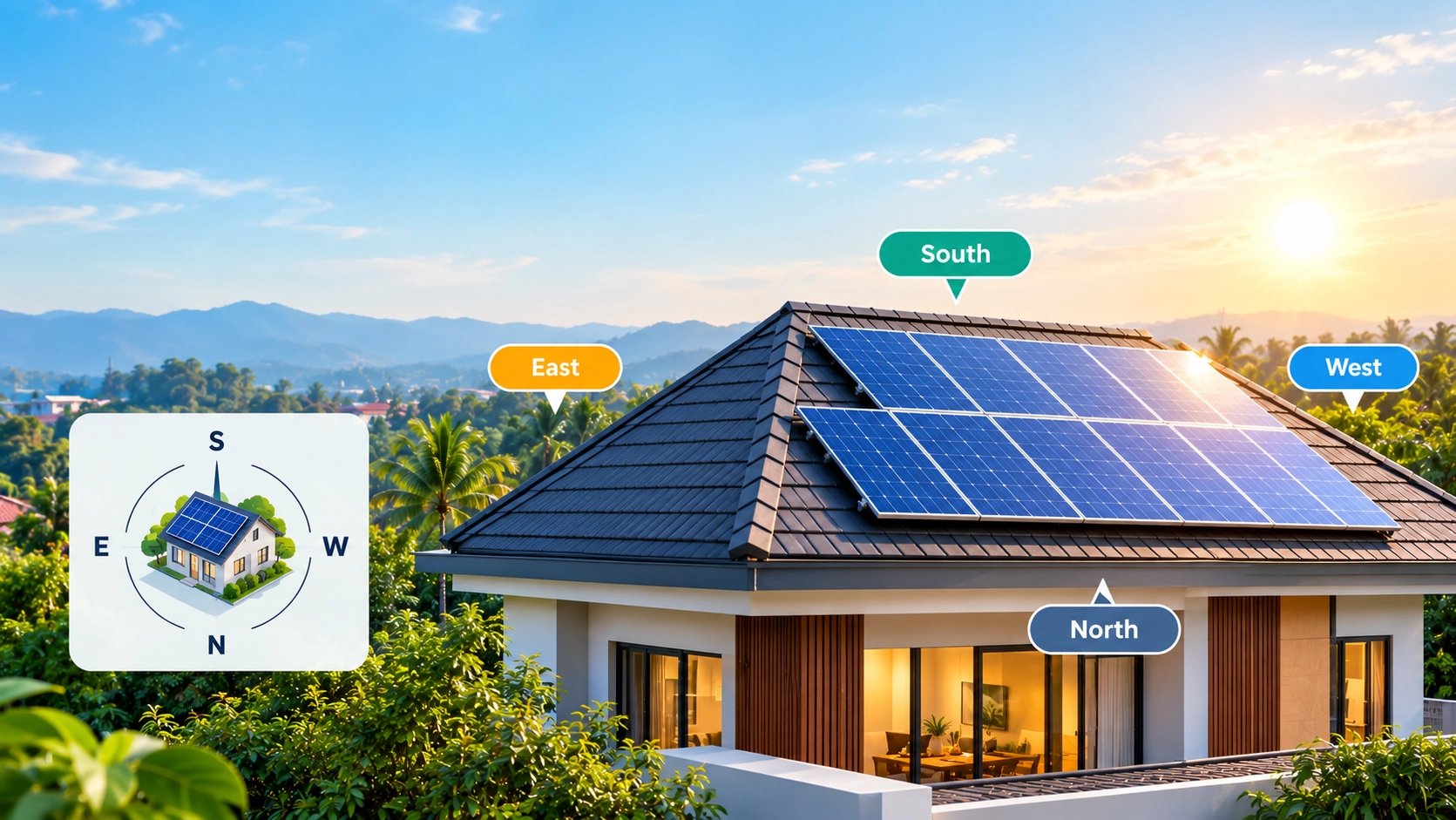
For example, an east-facing roof receives more sunlight during the morning, while a west-facing roof generally receives more sunlight during the afternoon. A south-facing roof in Kerala can often provide favourable exposure across the day, depending on the roof angle and surrounding conditions.
Therefore, checking the roof's orientation is an important step before planning a Solar Panel Installation for a home or commercial property.
Which Roof Direction Is Best for Solar Panels in Kerala?
Kerala is located in the Northern Hemisphere, where south-facing solar panels can often achieve good annual energy production. However, the best orientation depends on the property's location, roof structure, shading, and the solar system's design.
Here is how different roof directions may influence solar generation.
1. South-Facing Roofs
South-facing panels are often a suitable option in Kerala because they can receive sunlight over much of the day when installed at an appropriate angle.
This direction may help achieve balanced electricity production across different hours. It can be particularly useful for households that consume electricity throughout the day.
However, south-facing orientation is not automatically the best choice for every property. Nearby buildings, trees, roof obstructions, and seasonal sun movement can influence actual performance.
2. East-Facing Roofs
East-facing panels receive more sunlight during the morning. This arrangement may suit homes where electricity consumption is higher early in the day.
For example, households that use water pumps, kitchen appliances, or other electrical equipment in the morning may benefit from solar generation during these hours.
Although east-facing panels may generate less electricity during the late afternoon, they can still be a practical option when the roof layout or household consumption pattern supports this arrangement.
3. West-Facing Roofs
West-facing panels generally receive more sunlight during the afternoon. This may be beneficial for homes that use air conditioners, cooling equipment, and other appliances later in the day.
In some cases, west-facing panels can help align solar generation with afternoon electricity demand. Their overall energy production depends on shading, roof angle, weather, and other installation factors.
4. North-Facing Roofs
In Kerala, north-facing panels may receive less direct sunlight during parts of the year compared with well-positioned south-facing panels. However, their performance depends on the roof's slope and the sun's seasonal path.
North-facing roof sections should be assessed carefully before installation. If another roof section offers better sunlight exposure, it may provide a more suitable location for the panels.
Does Roof Angle Also Affect Solar Power Generation?
Yes. Roof direction is important, but the angle at which solar panels are installed also influences their performance.
Solar panels receive sunlight more effectively when their orientation and tilt are suitable for the sun's position. The ideal tilt depends on geographical location, seasonal sunlight, roof design, and the objectives of the solar installation.
In Kerala, heavy rainfall, strong winds, and changing weather conditions should also be considered when selecting the mounting structure and panel angle.
On sloping roofs, panels can sometimes be installed parallel to the existing roof. On flat roofs, mounting structures may allow installers to adjust the tilt and direction.
The final design should balance sunlight exposure, structural safety, water drainage, wind resistance, and maintenance access.
What If Your Roof Does Not Face the Ideal Direction?
Not every home has a south-facing roof, and that does not mean solar energy is unsuitable for the property.
A properly planned solar system can work effectively on east-facing and west-facing roofs, depending on the available sunlight and electricity requirements. In some situations, installing panels across two roof directions can distribute electricity generation more evenly throughout the day.
Before deciding on the layout, consider these factors:
Available roof space: Check whether enough unobstructed space is available for the required system capacity.
Shade from trees and buildings: Shadows can reduce output, particularly when they fall across multiple panels.
Household electricity usage: Consider when your home consumes the most electricity.
Roof condition: Make sure the roof can safely support the installation.
Future maintenance: Leave suitable access for inspection and cleaning.
A professional assessment can help determine whether your existing roof is suitable or whether an alternative panel arrangement would improve the results.
How Does Shading Affect Solar Panel Performance?
Even a well-oriented solar panel can produce less electricity if it is regularly shaded.
Trees, nearby buildings, water tanks, chimneys, and other rooftop structures can block sunlight during important parts of the day. Depending on the system design and electrical configuration, shading on one panel may also affect the output of connected panels.
Before installation, the roof should be checked for shadows at different times of the day. Trees may also grow over time, so future shading should be considered.
In addition to orientation, proper panel spacing, suitable equipment, and careful system design can help reduce avoidable losses.
Why Is Professional Solar Installation Important?
Choosing the correct panel direction requires more than simply identifying which side of the roof faces south. Installers must assess the roof's layout, available sunlight, electrical requirements, and potential obstructions before recommending a system.
If you are researching solar installation kerala, look for a provider that considers the property's actual conditions rather than recommending the same panel layout for every building.
A suitable solar design should account for expected energy consumption, roof structure, inverter compatibility, safety requirements, and future maintenance. These factors help homeowners understand the likely performance of their system before making an investment.
For anyone planning a solar panel for home, a site assessment can clarify which roof sections are suitable and how the proposed layout may affect electricity generation.
Final Thoughts
Roof direction can influence solar panel performance, but it is only one part of a successful solar installation. South-facing panels often provide favourable annual production in Kerala, while east-facing and west-facing arrangements may also work well depending on household energy usage and roof conditions.
The most suitable design considers sunlight exposure, shading, roof angle, structural safety, and the property's electricity requirements together.
Before making a decision, compare system designs and ask for a clear explanation of the expected energy output. Choosing the best solar company in kerala should involve looking beyond the initial price and considering installation quality, technical guidance, system design, and after-sales support.
With proper planning, homeowners can make better use of their available roof space and get more value from their solar power system.
Plan Your Solar Installation with Allsun Nature
Allsun Nature helps homeowners and businesses explore solar solutions suited to their energy needs and property conditions. Evaluate your roof, understand your options, and choose a system designed around your requirements.
Frequently Asked Questions
Recent Blogs
EV Charging Stations Cost: What Factors Affect the Total Price?
Oct 22, 2026
Home Solar Installation: How to Maintain Your System for Long-Term Performance
Oct 21, 2026
Solar Companies: What Homeowners Should Know Before Going Solar
Oct 17, 2026
Can a Home Solar Panel System Reduce Your Electricity Bill to Zero?
Oct 15, 2026
Can You Upgrade an Existing On-Grid Solar System to a Hybrid System?
Oct 14, 2026
Best Solar Panels for Small Rooftops: How to Maximise Solar Power
Oct 12, 2026
Solar Energy for Home: How Everyday Appliance Habits Influence Solar Savings
Oct 10, 2026
What Happens to Excess Solar Power Generated by an Industrial Solar System?
Oct 09, 2026
Can an Off-Grid Solar System Power Your Entire Home?
Oct 08, 2026
Is a Hybrid Solar System Worth the Investment in Kerala?
Oct 07, 2026Switch to Solar Today!
Save up to 90% on electricity bills with Allsun Nature's customized rooftop solar solutions.
Get Free Quote