


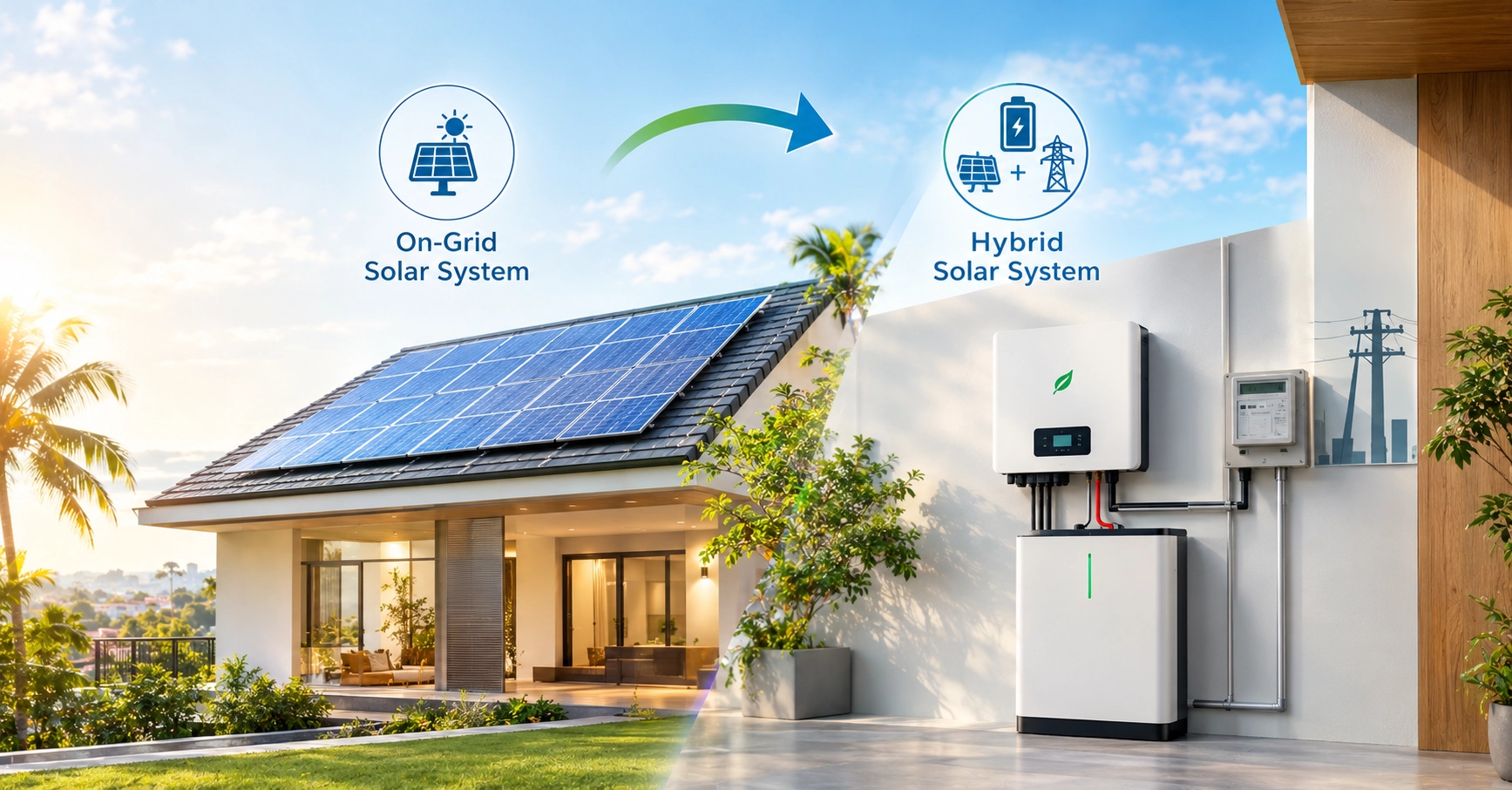
Installing solar panels is a practical way to reduce electricity bills and make use of renewable energy. Many homeowners begin with a grid-connected solar setup because it helps generate electricity during daylight hours while remaining connected to the local electricity network. However, after using solar power for some time, their energy requirements may change. Power cuts, the need for backup electricity, and an increase in household appliance usage can encourage homeowners to consider a different solar solution.
This raises an important question: can you upgrade an existing On Grid Solar System to a hybrid setup without replacing the entire installation?
In many cases, an upgrade is possible. However, the process depends on the existing equipment, system configuration, battery compatibility, and electrical requirements. Understanding these factors can help you decide whether upgrading is a practical option for your home.
Understanding the Difference Between On-Grid and Hybrid Solar Systems
Before planning an upgrade, it is useful to understand how these two systems operate.
An on-grid solar system is connected to the electricity grid. Its solar panels generate electricity during daylight hours, and the generated power is used to meet household consumption. Depending on the system configuration and applicable net-metering arrangements, surplus electricity may be exported to the grid.
A conventional grid-connected solar inverter generally shuts down during a grid outage to protect utility workers and comply with electrical safety requirements. This means that even when sunlight is available, a standard on-grid system usually cannot supply electricity during a power cut.
A hybrid solar system, on the other hand, combines solar generation with battery storage and grid connectivity. Depending on its design, it can store surplus solar energy in batteries and use that stored energy when solar generation is insufficient or the grid supply is unavailable.
For households that want backup power alongside solar savings, this additional capability can make a hybrid system worth considering.
Can an Existing On-Grid Solar System Be Upgraded?
Yes, many existing installations can be upgraded, but there is no single solution suitable for every property. Some systems may support the addition of a compatible hybrid inverter and battery bank, while others may require changes to the inverter, wiring, protection devices, or overall system design.
The first step is to assess the existing installation. A qualified solar professional should examine the inverter model, solar panel specifications, current electrical connections, system capacity, and available space for batteries.
The assessment should also establish which household circuits need backup power. Supporting essential appliances such as lights, fans, Wi-Fi routers, and selected refrigeration equipment may require a different configuration from powering an entire home.
A professional inspection helps determine whether the existing equipment can be retained or whether certain components need replacement.
1. Check Whether Your Existing Inverter Supports Battery Storage
The inverter is one of the most important components to evaluate during an upgrade.
Some grid-connected inverters are designed only for on-grid operation and cannot directly manage battery storage. Others may support specific upgrade options, but compatibility depends on the manufacturer, model, firmware, and approved configuration.
If the existing inverter cannot support the required functions, replacing it with a suitable hybrid inverter may be necessary. In some installations, an approved AC-coupled battery system may provide another option without replacing the original solar inverter.
The best choice depends on equipment compatibility, installation cost, system performance, and the backup features you need.
Avoid purchasing batteries or an inverter before checking compatibility. Selecting the right equipment at the beginning can help prevent unnecessary expenses and technical difficulties later.
2. Choose the Right Battery Capacity
Battery storage determines how much electricity can be saved for later use. The appropriate capacity depends on your household's electricity consumption, the appliances you want to operate during a power cut, and the expected backup duration.
For example, a household that needs backup for lights, fans, and internet equipment may require a smaller battery than a home that also wants to operate a refrigerator or other higher-power appliances.
Battery selection should consider usable capacity, inverter output, charging requirements, and the battery manufacturer's operating limits. It is also important to account for periods of low solar generation, particularly during cloudy or rainy weather.
During a Home Solar Installation or upgrade assessment, discuss your daily electricity usage and backup expectations with the installer. This makes it easier to select a system that matches your actual requirements rather than paying for unnecessary capacity.
3. Evaluate Your Solar Panels and Existing Wiring
The existing solar panels may be suitable for continued use, but their compatibility with the proposed hybrid configuration must be verified.
A professional should check the panels' voltage and current specifications, string arrangement, condition, and connection requirements. The hybrid inverter must operate safely within the panels' electrical limits.
The installation may also require changes to DC isolators, AC protection devices, earthing, cabling, or other electrical components. Battery placement should provide appropriate ventilation, protection, and access for maintenance according to the manufacturer's instructions and applicable standards.
A properly planned Solar Panel Installation upgrade should prioritise electrical safety, equipment compatibility, and reliable operation. Reusing existing components can sometimes reduce costs, but only when those components remain suitable for the new configuration.
4. Understand the Cost of Upgrading
The cost of converting an existing on-grid installation to a hybrid system varies from one property to another. It depends on whether the existing inverter can be retained, the battery capacity required, additional protection equipment, wiring changes, labour, and commissioning.
A smaller upgrade designed for essential backup circuits may cost less than a system intended to supply most household appliances during an outage.
Before approving the work, request an itemised quotation that identifies the equipment, installation charges, warranty coverage, and any additional electrical modifications. Ask the installer to explain the expected backup duration and the limitations of the proposed system.
It is also worth comparing the cost of upgrading with that of installing a new hybrid system. If much of the existing equipment is incompatible or nearing the end of its useful life, a new installation may offer better long-term value.
5. Check Grid Connection Rules and Safety Requirements
Adding battery storage can affect how your solar installation interacts with the electricity grid. The upgraded configuration must comply with applicable utility requirements, electrical safety standards, and any relevant metering or interconnection conditions.
Homeowners should confirm whether approval, inspection, documentation, or metering changes are required before modifying their existing system. Requirements may vary depending on the local electricity distribution company and the equipment being installed.
Never assume that an existing grid connection automatically authorises every type of hybrid upgrade. A qualified installer can help identify the necessary steps and ensure that the system is commissioned correctly.
When Is Upgrading to a Hybrid System Worth Considering?
An upgrade may be useful if your home experiences frequent power interruptions, you need backup for essential appliances, or you want to use stored solar energy outside daylight hours.
However, the benefits depend on your electricity consumption, battery cost, grid reliability, and the way your system is configured. Batteries also require appropriate maintenance and eventually need replacement.
If your electricity supply is reliable and your main objective is reducing daytime electricity costs, the existing on-grid arrangement may still meet your needs. If backup power has become a priority, exploring a hybrid upgrade may be worthwhile.
Experienced Solar Companies can assess your current installation, compare available upgrade options, and recommend a configuration based on your household's requirements. Look for a provider that explains both the benefits and limitations instead of recommending equipment without a proper assessment.
Conclusion
Upgrading an existing on-grid solar installation to a hybrid system is possible in many situations, but the right approach depends on the equipment already installed and the backup power you want to achieve.
Before making a decision, check inverter compatibility, determine the required battery capacity, assess the existing panels and wiring, compare upgrade costs, and confirm applicable grid connection requirements. Professional evaluation helps you make an informed choice while protecting the safety and performance of your solar installation.
If you are considering a hybrid upgrade for your home, Allsun Nature can help you explore suitable solar solutions based on your energy needs.
Frequently Asked Questions
Recent Blogs
EV Charging Stations Cost: What Factors Affect the Total Price?
Oct 22, 2026
Home Solar Installation: How to Maintain Your System for Long-Term Performance
Oct 21, 2026
Solar Companies: What Homeowners Should Know Before Going Solar
Oct 17, 2026
Can a Home Solar Panel System Reduce Your Electricity Bill to Zero?
Oct 15, 2026
Does Roof Direction Affect Solar Panel Performance?
Oct 13, 2026
Best Solar Panels for Small Rooftops: How to Maximise Solar Power
Oct 12, 2026
Solar Energy for Home: How Everyday Appliance Habits Influence Solar Savings
Oct 10, 2026
What Happens to Excess Solar Power Generated by an Industrial Solar System?
Oct 09, 2026
Can an Off-Grid Solar System Power Your Entire Home?
Oct 08, 2026
Is a Hybrid Solar System Worth the Investment in Kerala?
Oct 07, 2026Switch to Solar Today!
Save up to 90% on electricity bills with Allsun Nature's customized rooftop solar solutions.
Get Free Quote