

Choosing solar panels for your home is not simply about finding the highest-wattage panel or the largest solar system you can fit on your rooftop.
The right system should match your electricity consumption, available roof space, sunlight exposure, budget, and future energy requirements.
For homeowners in Calicut, choosing the right solar system size before starting solar panel installation can help you make better use of your rooftop and avoid installing a system that is either too small or unnecessarily large.
This guide explains how to determine a suitable solar system size for your home and what to consider before starting a residential solar installation in Calicut.
The right solar system size depends on your electricity consumption, available rooftop space, shading, future energy requirements, and the type of solar system you choose. Before investing in solar panels and installation, a proper assessment can help you select a system that suits your home and energy needs.
Check Your Electricity Usage
Review your recent KSEB electricity bills to understand your monthly consumption and future energy requirements.
Assess Your Rooftop
Available roof space, sunlight, shading, orientation, and roof condition all influence the suitable solar system size.
Choose the Right System
Select the appropriate capacity and system type based on your electricity needs, backup requirements, and long-term plans.
Why Is Solar System Size Important?
The capacity of a solar system is usually expressed in kilowatts, such as 2kW, 3kW, 5kW, 6kW, or 10kW. The capacity you need depends primarily on how much electricity your household consumes and how much of that consumption you want your solar system to offset.
Choosing a system only based on your roof size can result in an unsuitable installation. A better approach is to consider your electricity consumption, rooftop area, sunlight exposure, future energy requirements, and the type of solar system you prefer.
Start With Your KSEB Electricity Bills
Your electricity bill is one of the most useful starting points when planning a solar system for your home in Calicut .
Instead of looking at only one month's consumption, review several recent KSEB bills. This helps you understand your normal electricity usage and identify seasonal changes.
You should also consider major appliances currently used in your home and any appliances you may add in the future. Air conditioners, electric water heaters, additional refrigerators, and electric vehicle charging can increase your electricity consumption.
How Much Solar Capacity Does a Home Need?
There is no single solar system size that is suitable for every home in Calicut. A smaller household may require a smaller system, while a larger home with higher electricity consumption may need a higher-capacity installation.
Common residential solar system capacities include 2kW, 3kW, 5kW, 6kW, and 10kW. The actual requirement should always be determined from your electricity consumption, rooftop conditions, and energy goals.
2kW
May suit homes with relatively lower electricity consumption.
3kW
Can suit households with moderate electricity requirements.
5kW
May suit larger homes with higher electricity consumption.
6kW
May suit homes with relatively higher energy requirements.
10kW+
Can suit high-consumption homes and larger properties.
Check Your Rooftop Before Choosing the System
Your electricity consumption tells you how much solar power you may need, while your rooftop determines how much solar capacity you can practically install.
Before starting solar panel installation in Calicut, the roof should be assessed for available area, shading, orientation, roof condition, structural suitability, and maintenance access.
How Many Solar Panels Do You Need?
The number of panels required depends on the selected system capacity and the wattage of the solar panels being used.
For example, the number of panels required for a 5kW system will depend on whether the selected panels are 540W, 550W, 580W, or another suitable capacity.
Therefore, it is better to determine the required system capacity first and then select the appropriate panel configuration.
When comparing solar panels and installation , do not compare quotations only by the number of panels. Look at the complete system specification.
Which Solar System Is Right for Your Home?
Once you understand your required capacity, the next decision is choosing the type of solar system that matches your electricity and backup requirements.
On-Grid Solar System
An on-grid solar system works alongside the electricity grid. It can be suitable for homes that have reliable grid connectivity and want to generate solar electricity while remaining connected to the grid.
Learn about on-grid solar →Hybrid Solar System
A hybrid solar system combines solar generation with battery storage and grid connectivity. It can be considered when backup power is an important requirement.
Explore hybrid solar →Off-Grid Solar System
An off-grid solar system is designed to operate independently from the conventional electricity grid and generally requires suitable battery storage.
Don't Choose a Solar System Only by Price
One common mistake homeowners make is selecting a solar system simply because it has the lowest quotation.
Two solar companies may provide different prices for systems that appear similar on paper. However, there can be significant differences in the quality and specifications of the components and installation work.
What About KSEB Feasibility?
If you are planning a grid-connected rooftop solar system, the applicable KSEB process is an important part of the project.
However, KSEB feasibility should not be confused with choosing the correct solar system size. Your energy requirement and system design should first be assessed, after which the applicable grid-connection process can be followed.
For a detailed explanation, read our guide to the KSEB solar feasibility check in Kerala .
Solar System Size Should Consider Your Future Needs
Your electricity consumption today may not remain the same over the next several years. When planning a solar installation, consider whether your household may add new appliances or increase its electricity consumption.
Why Professional Solar Assessment Matters
Selecting the right solar capacity involves more than calculating your monthly electricity consumption. A proper assessment should consider the property, rooftop, energy usage, system type, and installation requirements together.
Review current and expected future energy usage.
Check available space, shading, orientation, and roof condition.
Determine the suitable capacity and configuration.
Select suitable components based on the project requirements.
Complete the applicable installation and grid-connection procedures.
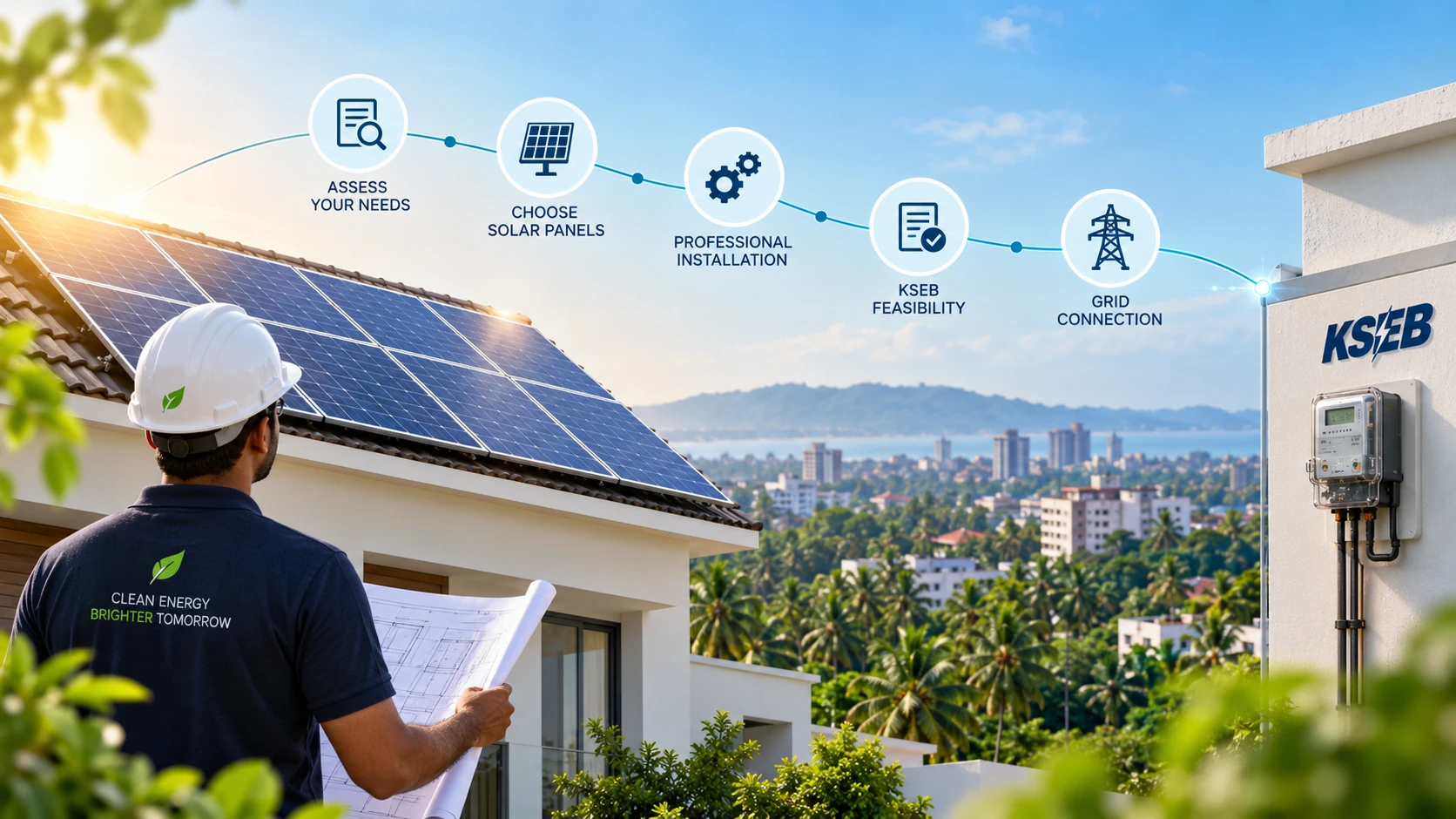
Solar Panel Installation in Calicut: What Happens Next?
Once the suitable system size has been determined, the project can move toward installation planning.
Energy Assessment
Review your electricity consumption and determine your energy requirements.
Site Assessment
Evaluate the rooftop, sunlight, shading, orientation, and available space.
System Design
Select the appropriate capacity, panels, inverter, and system configuration.
KSEB Process
Complete the applicable procedures for a grid-connected solar installation.
Installation
Install the mounting structure, solar panels, inverter, wiring, and protection systems.
Commissioning
Test the completed system and complete the applicable grid-connection requirements.
For a more detailed overview, read our guide on solar installation in Calicut from panel selection to KSEB connection .
How Do You Know Which Solar System Size Is Right for Your Home?
There is no universal answer such as every home needing a 5kW solar system. The right capacity depends on your electricity consumption, rooftop space, shading, property type, future electricity requirements, budget, backup needs, and preferred solar system type.
A professional assessment can help you understand which system capacity is appropriate for your property before you invest in solar panels and installation.
Don't select a solar system only because it is cheaper or has more panels. Start with your electricity consumption, assess your rooftop, consider future energy needs, and compare the complete system design before choosing a solar installation company in Calicut.
Before Choosing a Solar System for Your Home
Once you decide to install solar, the biggest question is usually not “Should I install solar?” but “What system is actually right for my home?” The answer depends on your electricity usage, rooftop, budget, and how you plan to use the system.
How do I know what size solar system I need?
Start by checking your recent KSEB electricity bills and identifying your average monthly consumption. Then consider your rooftop space, shading, future electricity needs, and whether you need battery backup.
Should I install 3kW, 5kW or 6kW solar?
There is no single capacity that suits every home. A 3kW system may suit a household with lower consumption, while homes using more electricity may require a larger system. Your actual consumption should guide the decision.
How much roof space is required for solar panels?
The required rooftop area depends on the system capacity and the wattage and dimensions of the selected panels. A site assessment can determine how many panels can be installed comfortably with suitable access and spacing.
What if my roof gets shade during the day?
Trees, nearby buildings, water tanks and other structures can reduce sunlight reaching the panels. Before installation, the rooftop should be checked for shading so the system layout can be planned appropriately.
Is an on-grid system enough for a home in Calicut?
An on-grid system can be suitable when your primary goal is to generate solar electricity while remaining connected to the grid. If backup power is also important, you may want to consider a hybrid solar system with battery storage.
What should I compare between solar companies?
Don't compare quotations only by price. Check the panel and inverter specifications, system capacity, mounting structure, electrical protection, warranties, installation quality, KSEB-related support, monitoring and after-sales service.
What Should You Do Before Installing Solar?
Instead of choosing a system based only on a neighbour's installation or the lowest quotation you receive, start with your own electricity usage and property conditions.
Check Your Bills
Understand your recent KSEB electricity consumption and identify your average usage.
Assess Your Roof
Check available space, sunlight, shading, roof condition and accessibility.
Compare Complete Systems
Compare the complete solar solution, not just the quoted price or number of panels.
Planning Solar for Your Home in Calicut?
Choosing the right system size is one of the most important steps before starting a residential solar project.
Allsun Nature provides solar solutions for homes, businesses, and industries in Calicut, with system planning based on electricity consumption, available rooftop space, property conditions, and energy requirements.
If you are unsure whether your home needs a 3kW, 5kW, 6kW, or larger solar system, get your electricity usage and rooftop assessed before making a decision.
Explore Solar Solutions in Calicut →