

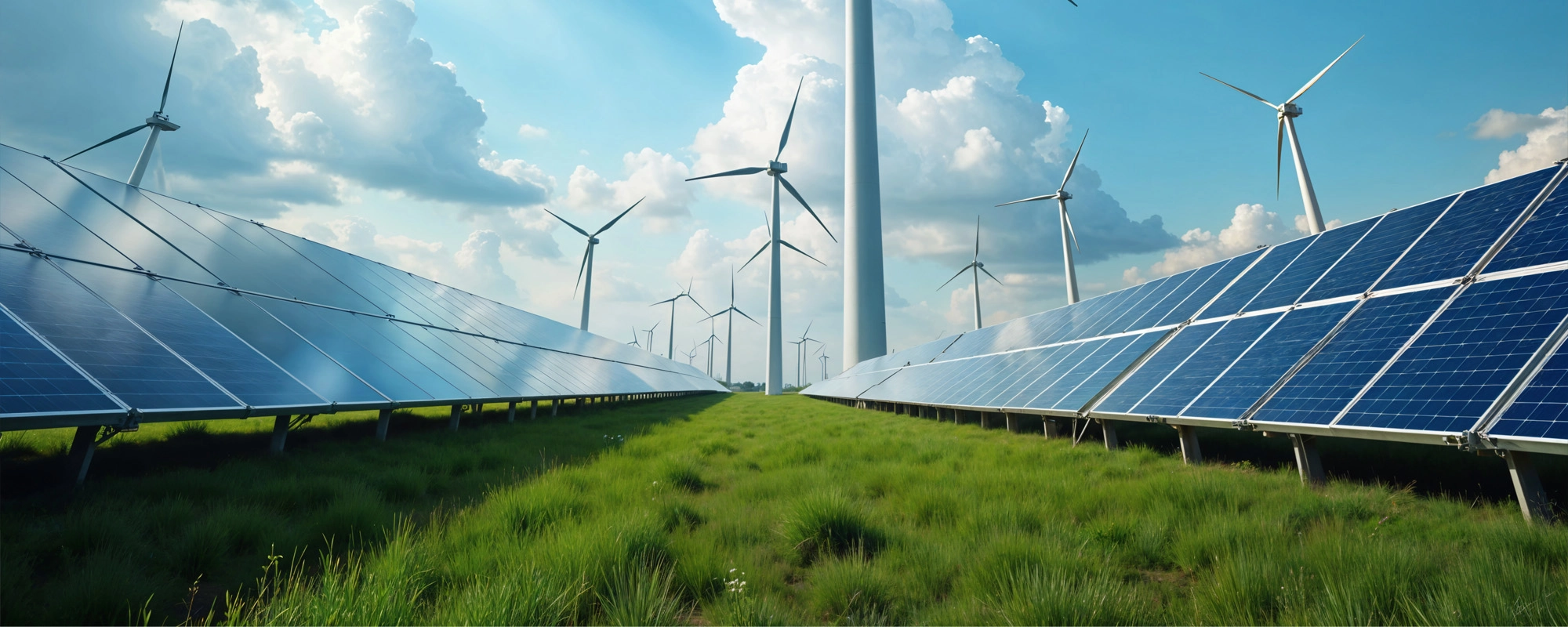
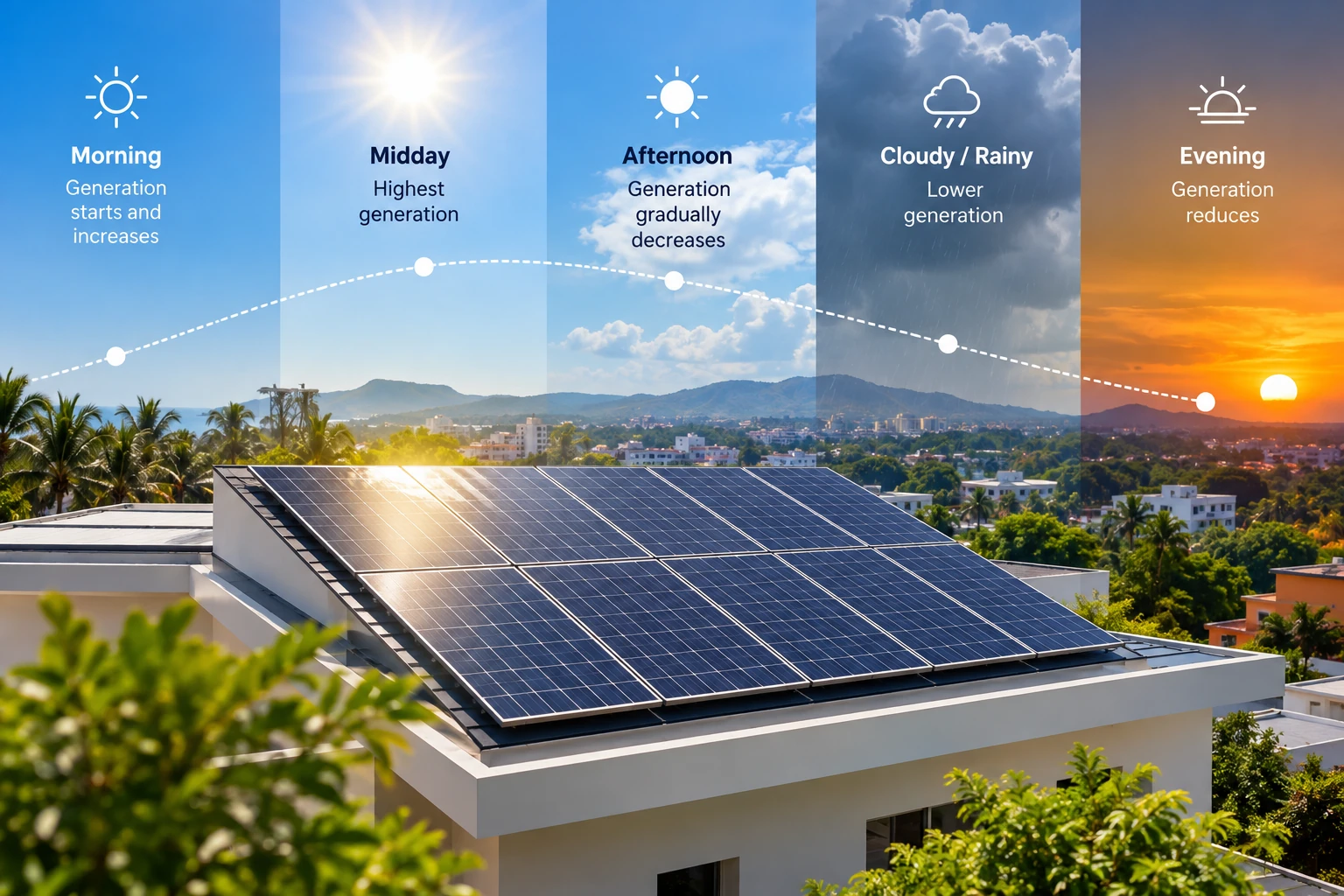
Solar panels are often the most visible part of a solar system, but they are only the beginning of the process. Once sunlight reaches the panels and electricity is generated, that power starts moving through a carefully designed system before it reaches the appliances in your home.
Understanding what happens after generation makes it easier to understand how a solar system actually works. The panels, inverter, electrical connections, meter, grid and battery, where applicable, all have different roles in managing the electricity produced by the rooftop.
It Starts With Sunlight on the Rooftop
Solar panels convert sunlight into electrical energy. The electricity produced by the panels is in DC form, while most household appliances operate using AC electricity.
This means the electricity cannot simply travel directly from the panel to every appliance. It first passes through the next important part of the system: the inverter.
The Basic Journey of Solar Electricity
Sunlight → Solar Panels → Inverter → Home → Grid or Battery
Each stage has a specific role, and together they determine how effectively the solar system supplies electricity to the property.
What Does the Inverter Actually Do?
The inverter is one of the most important components in a solar installation. It converts the DC electricity generated by the panels into AC electricity that can be used by electrical appliances.
Modern inverters can also monitor system performance and manage how generated electricity interacts with the property's electrical load and the grid. In a properly designed installation, the inverter acts as the link between solar generation and everyday electricity consumption.
A Small Component With an Important Role
The panels generate electricity, but the inverter helps make that electricity usable within the property's electrical system. Its performance and compatibility with the rest of the installation are therefore important when planning a solar system.
Your Home Can Use Solar Electricity as It Is Being Generated
During daylight hours, the electricity generated by the rooftop system can be used by appliances operating in the property.
For example, if solar panels are generating electricity while a refrigerator, washing machine, computer or air conditioner is running, part of the solar generation can be used by those loads.
This is one of the interesting aspects of rooftop solar: electricity can be generated at the same time that the property is consuming it.
What Happens When the Home Needs Less Power?
Solar generation and household consumption do not always match perfectly. There may be periods when the panels are producing more electricity than the property is using.
In a grid-connected system, surplus electricity can be sent to the electrical grid according to the applicable metering arrangement and local regulations. The electricity meter records the flow of energy, allowing the system to account for electricity imported from or exported to the grid.
When Solar Generation Is Higher Than Home Demand
The property uses the electricity it needs, while surplus generation may flow to the grid depending on the system configuration and applicable metering arrangement.
When Home Demand Is Higher Than Solar Generation
The property can draw additional electricity from the grid when solar generation is not sufficient for the current electrical load.
Where Does Net Metering Come In?
Net metering is part of the broader process that allows electricity imported from and exported to the grid to be accounted for through an approved metering arrangement.
This becomes particularly relevant for grid-connected rooftop solar because electricity production changes throughout the day. A property may consume electricity at one moment and export surplus electricity at another.
The exact eligibility, technical requirements and applicable rules can depend on the local electricity distribution authority and the type of connection.
And Where Does a Battery Fit?
A battery adds another layer to the system. Instead of relying only on immediate consumption or the grid, excess solar generation can be stored for later use in systems designed with battery storage.
This can be useful when electricity is needed at times when solar generation is low or unavailable. However, battery storage also adds equipment, cost, maintenance requirements and design considerations.
On-Grid and Hybrid Solar Systems
An on-grid solar system works alongside the electricity grid and is generally designed around solar generation and grid interaction.
A hybrid solar system can combine solar generation with battery storage and grid electricity, depending on the system design and the property's requirements.
The System Has to Match the Property
There is no single solar setup that works identically for every building. Electricity consumption, available roof area, shading, operating patterns, electrical infrastructure and future requirements can all influence system design.
A house with daytime air-conditioning use may have a different electricity profile from a property where most consumption happens in the evening. Similarly, a home planning to add an electric vehicle may have different future requirements from one with a smaller electrical load.
This is why Solar Panel Installation in Kerala is better viewed as a complete energy-system project rather than simply placing panels on a roof.
What This Means for Solar Panel Installation in Calicut
The same principles apply when looking at Solar Panel Installation in Calicut. The location may be the same, but the right system can differ considerably from one property to another.
Someone searching for solar panel Calicut may be looking for panels alone, an installer, a complete rooftop system or information about connecting solar to an existing electrical setup. Looking beyond the panels themselves helps in understanding what is actually included in a complete solar solution.
Look Beyond the Panel
Panels are only one part of the system. Inverter selection, mounting structure, wiring, protection equipment, monitoring, installation quality and electrical integration all contribute to how the finished system operates.
The Same Principle Applies to Larger Buildings
The journey of electricity is similar in larger commercial and industrial installations, although the scale and engineering requirements can be very different.
Factories, warehouses and other large facilities can use industrial solar panels to generate electricity across larger available roof areas or other suitable spaces. Their system design may need to account for higher electrical loads, operating schedules and more complex electrical infrastructure.
In both residential and industrial projects, the objective is not simply to generate electricity. The system needs to work effectively with the way the property actually consumes power.
Solar Is a Flow of Electricity, Not Just a Set of Panels
Once the complete process is understood, rooftop solar becomes easier to look at differently. The panels are the starting point, but the real system includes generation, conversion, consumption, storage where applicable and interaction with the grid.
That is why the quality of the overall design matters. A well-planned system considers how electricity moves through the property rather than focusing only on the number of panels installed.
Solar Solutions by Allsun Nature
Allsun Nature provides solar solutions for residential, commercial and industrial properties across Kerala. The approach can include understanding electricity consumption, available installation space and the role solar is expected to play before planning the system.
Whether the requirement is for Solar Panel Installation in Kerala, a residential rooftop in Calicut or a larger industrial project, understanding how electricity moves through the system is an important part of creating a practical solar solution.
Solar electricity does not simply stop at the panel. From sunlight and generation to the inverter, appliances, battery and grid, every part of the system has a role in moving that energy where it is needed.
Frequently Asked Questions
Recent Blogs
EV Charging Stations Cost: What Factors Affect the Total Price?
Oct 22, 2026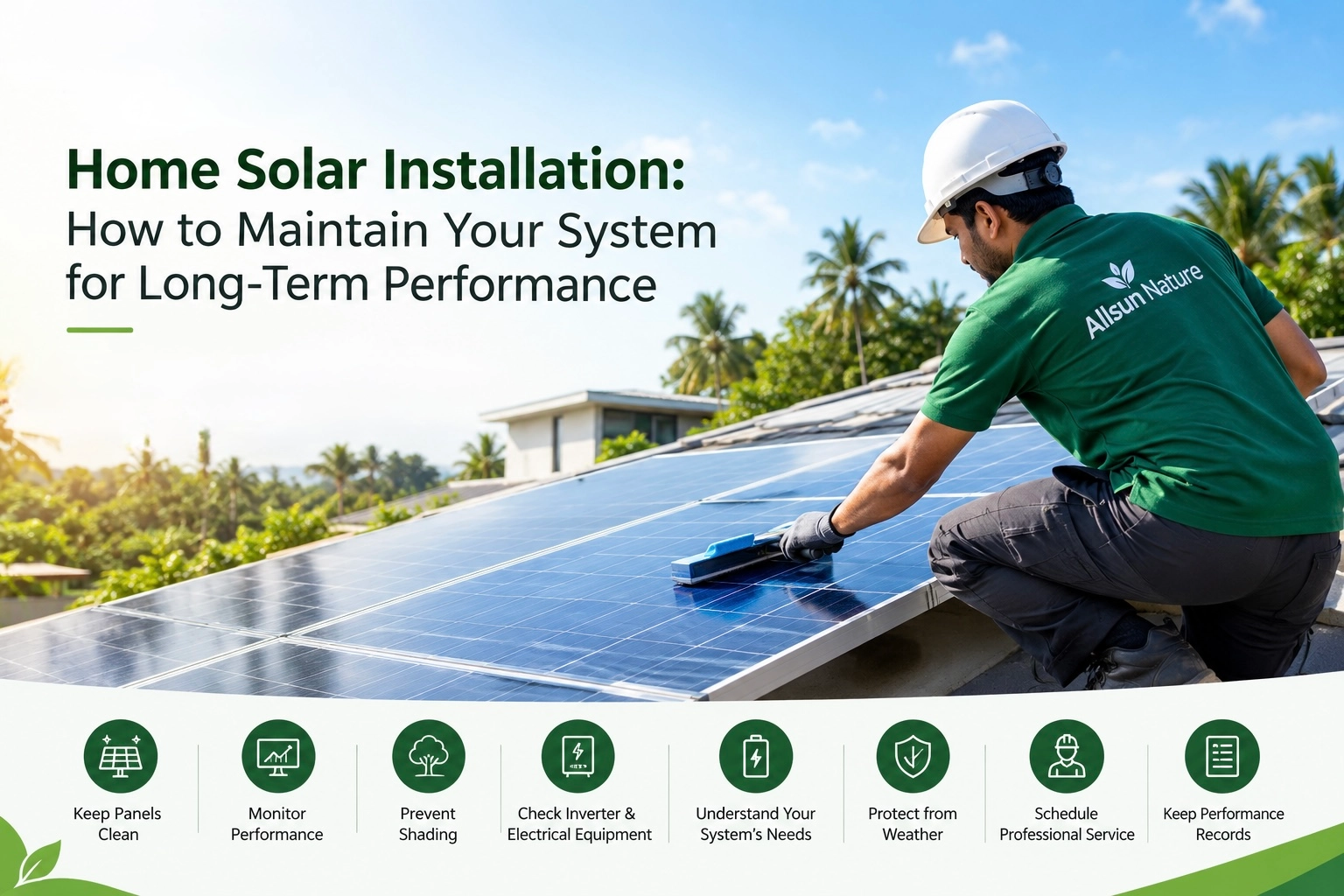
Home Solar Installation: How to Maintain Your System for Long-Term Performance
Oct 21, 2026
Solar Companies: What Homeowners Should Know Before Going Solar
Oct 17, 2026
Can a Home Solar Panel System Reduce Your Electricity Bill to Zero?
Oct 15, 2026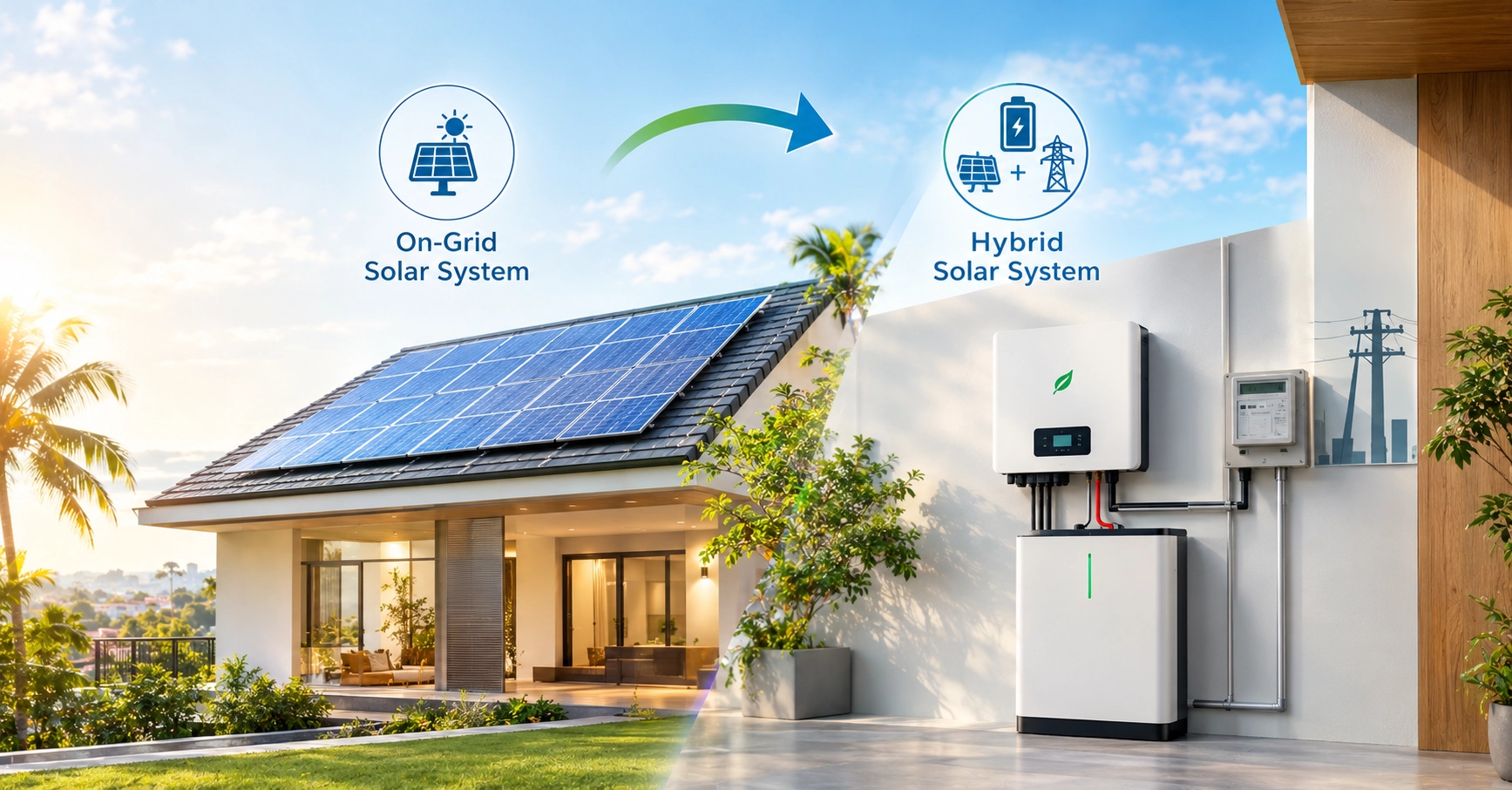
Can You Upgrade an Existing On-Grid Solar System to a Hybrid System?
Oct 14, 2026
Does Roof Direction Affect Solar Panel Performance?
Oct 13, 2026
Best Solar Panels for Small Rooftops: How to Maximise Solar Power
Oct 12, 2026
Solar Energy for Home: How Everyday Appliance Habits Influence Solar Savings
Oct 10, 2026
What Happens to Excess Solar Power Generated by an Industrial Solar System?
Oct 09, 2026
Can an Off-Grid Solar System Power Your Entire Home?
Oct 08, 2026Switch to Solar Today!
Save up to 90% on electricity bills with Allsun Nature's customized rooftop solar solutions.
Get Free Quote