

For many homeowners in Kerala, installing solar is no longer just about reducing the electricity bill. It is also about having better control over energy usage and preparing for changing electricity needs. While on-grid solar systems are popular, a hybrid system offers another option by combining solar generation, battery storage, and grid connectivity.
But is a hybrid solar system really worth the additional investment?
The answer depends on how much electricity your home uses, how important backup power is to you, your roof space, and how you plan to use electricity in the future. Understanding these factors can help you decide whether a hybrid setup makes sense for your property.
What Is a Hybrid Solar System?
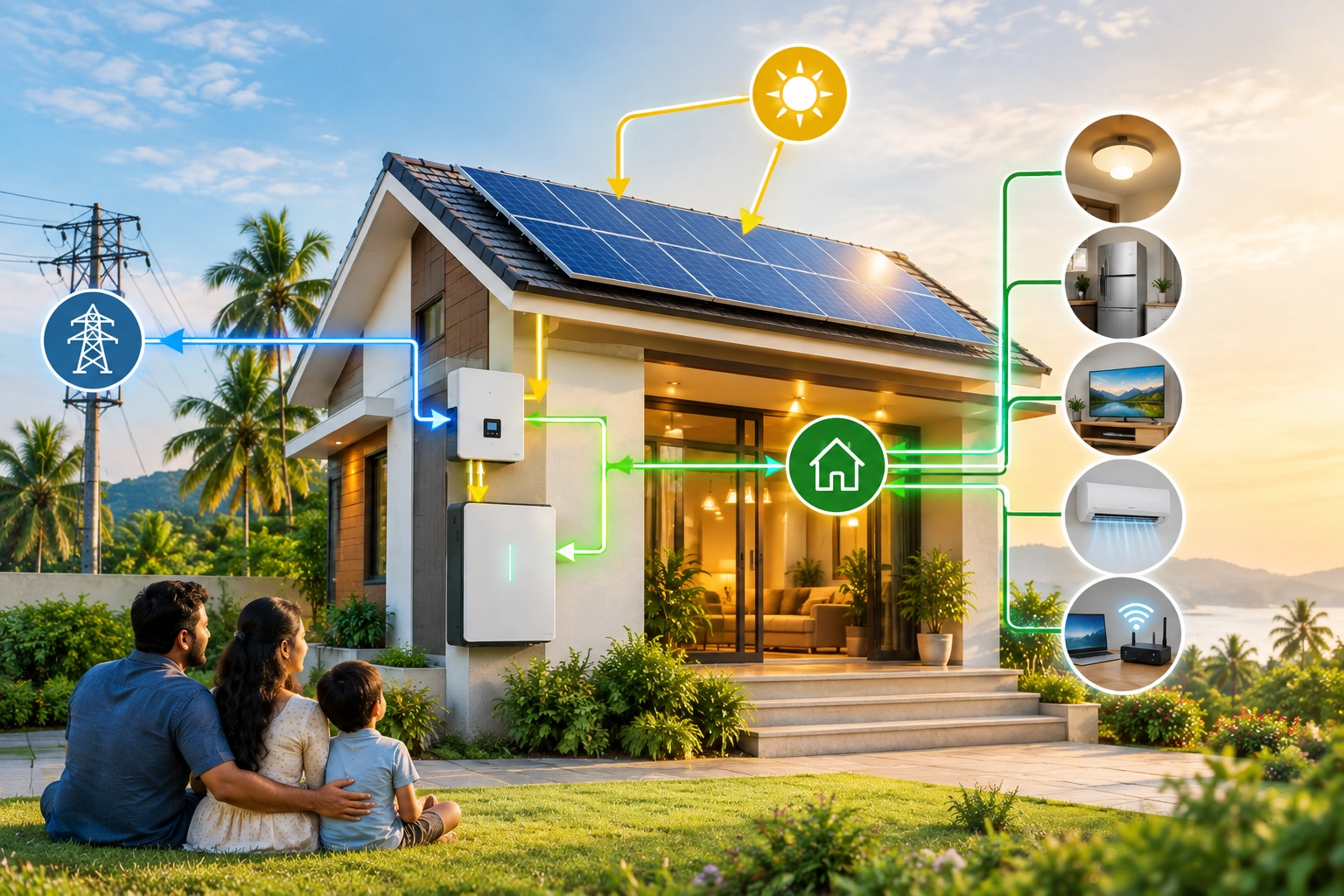
A hybrid solar system combines solar panels with battery storage while remaining connected to the electricity grid. During the day, the solar panels generate electricity for your home. Depending on the system configuration, excess energy can be stored in the battery or exported to the grid.
When solar production is low or unavailable, stored battery power can be used for selected appliances. The grid can also support your home when additional electricity is required.
This makes a hybrid system different from a conventional on-grid setup. Instead of depending entirely on solar generation and the grid, you have an additional energy storage option.
Why Are Hybrid Systems Becoming Interesting in Kerala?
Kerala has good potential for rooftop solar, but weather conditions can vary throughout the year. Cloudy days and monsoon periods can affect solar generation.
At the same time, many homes depend on electrical appliances such as refrigerators, water pumps, televisions, computers, Wi-Fi routers and air conditioners.
For some households, reducing the electricity bill is the main goal. For others, having backup power for essential appliances is equally important.
A hybrid system can address both requirements, depending on its design and battery capacity.
The Biggest Advantage: Battery Backup
One of the main reasons homeowners consider hybrid solar is battery backup.
With a properly sized battery, essential appliances can continue operating when grid power is unavailable, subject to the system's capacity and configuration.
For example, a homeowner may choose to keep lights, fans, Wi-Fi equipment, a refrigerator or other essential loads connected to the backup circuit.
However, it is important to understand that a battery does not provide unlimited electricity. Running multiple high-power appliances for several hours requires a significantly larger battery and suitable inverter capacity.
Therefore, the system should be designed around actual electricity requirements rather than simply choosing the largest battery available.
Lower Electricity Bills Over Time
Solar panels generate electricity from sunlight, which can reduce the amount of electricity a home needs from the grid.
The actual savings depend on several factors, including system size, household consumption, solar generation, electricity tariffs, system performance and how the generated energy is used.
A hybrid system can make better use of generated solar power by allowing suitable excess energy to be stored for later use.
This can be particularly useful for households whose electricity consumption extends into the evening, when rooftop solar panels are no longer generating power.
Is a Hybrid System More Expensive?
Usually, adding battery storage increases the initial investment compared with a basic solar setup.
The total cost can depend on:
Solar panel capacity
Inverter type and capacity
Battery technology and capacity
Mounting structure
Wiring and protection equipment
Installation requirements
Monitoring systems
Site conditions
Additional electrical work
This is why homeowners should not compare quotations based only on the final price.
When discussing Solar Panel Installation, check exactly what is included in the quotation. A low-cost quotation may not provide the same equipment, battery capacity, warranties, protection systems or installation standards as another proposal.
Choosing the Right System Size
One of the most important decisions is determining the right size for your home.
A system that is too small may not meet your expected energy requirements. On the other hand, installing a much larger system than you actually need can increase the initial investment without providing proportional benefits.
Before installation, consider your monthly electricity consumption and identify the appliances you use regularly.
Also think about future requirements. If you are planning to add an air conditioner, electric vehicle charger, additional refrigerator or other high-consumption equipment, this should be considered during system planning.
A proper site assessment can also help evaluate roof area, orientation, shading and structural conditions.
Hybrid vs On-Grid: Which One Makes More Sense?
An on-grid system can be suitable for homeowners who primarily want to reduce their electricity bills and are comfortable depending on the grid when solar generation is unavailable.
A hybrid system may be more attractive to homeowners who want both solar generation and battery backup.
Neither option is automatically better for every household.
For example, if your main priority is reducing electricity costs and you have reliable grid availability, an on-grid system may be sufficient. If backup power and greater energy flexibility are important priorities, a hybrid system may justify the additional investment.
The right decision should be based on your actual requirements rather than simply following what another homeowner has installed.
What About Kerala's Monsoon?
Kerala's monsoon season is another factor homeowners naturally consider.
Solar panels can continue generating electricity during cloudy weather, although production may be lower than during periods of stronger sunlight. The actual output depends on weather conditions, system design and other factors.
This is where battery storage can provide additional flexibility. Energy generated when solar production is available can potentially be stored and used later, depending on the battery's state of charge and system configuration.
Good installation practices and quality equipment are therefore important when planning a system for Kerala's climate.
Choosing the Right Solar Company
The quality of installation can have a major impact on long-term system performance.
When comparing Solar Companies, look beyond advertisements and installation prices. Check their experience, product specifications, installation practices, warranty terms, after-sales support and ability to handle documentation and system commissioning.
A reliable installer should also explain how the proposed system will work instead of simply recommending a particular capacity.
Choosing the best solar company in Kerala should therefore be based on suitability, technical knowledge, installation quality and long-term support—not just the lowest quotation.
Don't Forget Maintenance
Solar systems generally require limited routine maintenance, but that does not mean they should be ignored.
Dust, dirt, leaves and other deposits can affect panel performance. Electrical connections, inverter operation, monitoring systems and battery condition should also be checked according to the equipment manufacturer's recommendations.
Battery-based systems require particular attention because battery performance and lifespan depend on factors such as technology, operating conditions, usage patterns and temperature.
Understanding these requirements before installation can help you plan for the long-term ownership cost.
So, Is a Hybrid Solar System Worth It?
For the right homeowner, it can be.
A hybrid system can provide a combination of solar generation, potential electricity savings, battery storage and backup capability. However, the higher initial investment means it should be planned carefully.
Before making a decision, consider your electricity consumption, backup requirements, roof conditions, future energy needs and budget. Compare complete quotations rather than looking only at the headline price.
Most importantly, choose a system that matches your home instead of buying technology simply because it is available.
Final Thoughts
A hybrid solar system can be a practical long-term energy solution for Kerala homes, particularly for homeowners who want more than just lower electricity bills. The combination of solar generation and battery storage can provide greater flexibility and help households manage their energy usage more effectively.
The best system is not necessarily the biggest or most expensive one. It is the one that is properly designed around your home's actual requirements.
Frequently Asked Questions
Recent Blogs
EV Charging Stations Cost: What Factors Affect the Total Price?
Oct 22, 2026
Home Solar Installation: How to Maintain Your System for Long-Term Performance
Oct 21, 2026
Solar Companies: What Homeowners Should Know Before Going Solar
Oct 17, 2026
Can a Home Solar Panel System Reduce Your Electricity Bill to Zero?
Oct 15, 2026
Can You Upgrade an Existing On-Grid Solar System to a Hybrid System?
Oct 14, 2026
Does Roof Direction Affect Solar Panel Performance?
Oct 13, 2026
Best Solar Panels for Small Rooftops: How to Maximise Solar Power
Oct 12, 2026
Solar Energy for Home: How Everyday Appliance Habits Influence Solar Savings
Oct 10, 2026
What Happens to Excess Solar Power Generated by an Industrial Solar System?
Oct 09, 2026
Can an Off-Grid Solar System Power Your Entire Home?
Oct 08, 2026Switch to Solar Today!
Save up to 90% on electricity bills with Allsun Nature's customized rooftop solar solutions.
Get Free Quote