

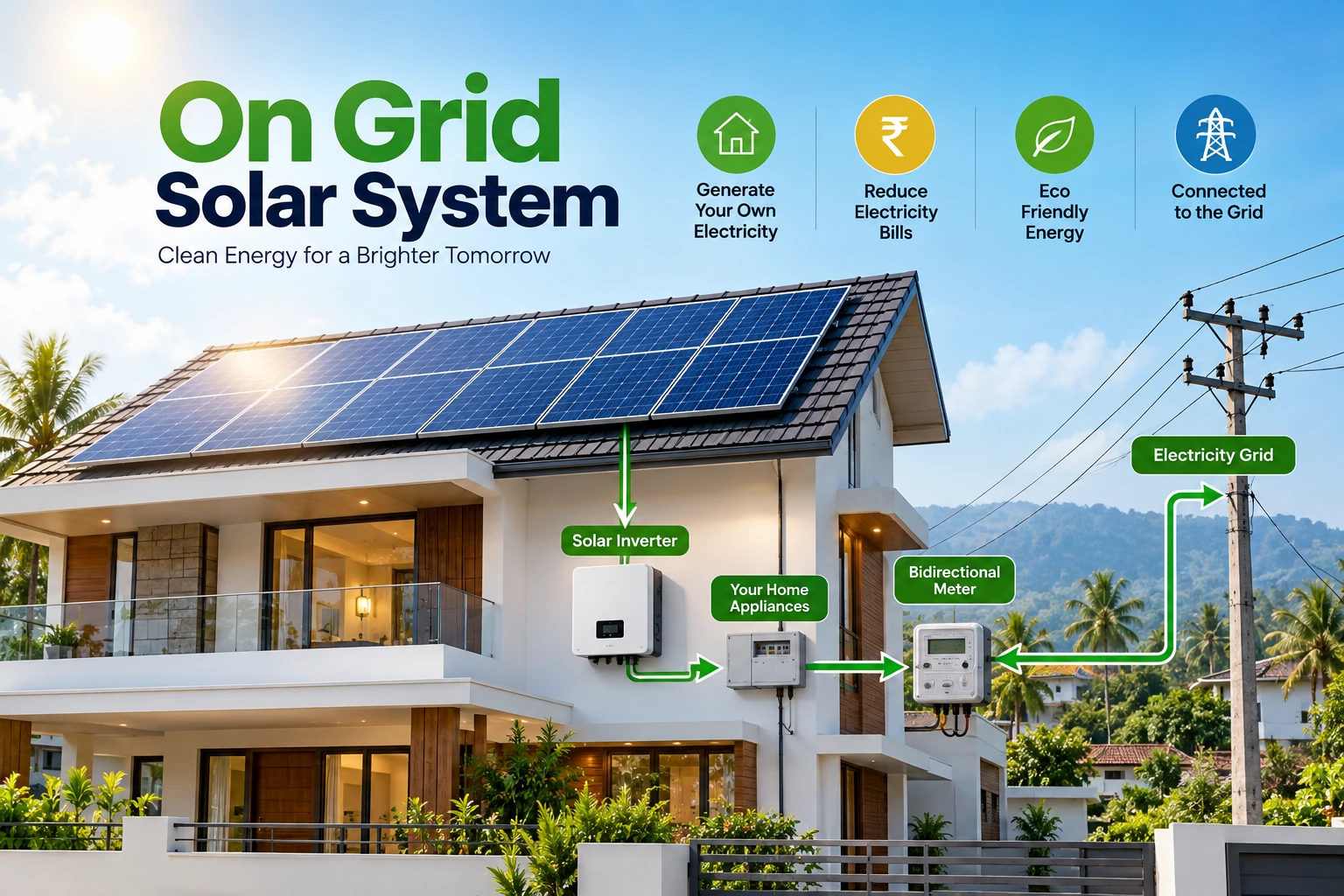
An on grid solar system is one of the most popular solar power solutions for homes, offices, shops, and commercial buildings. It allows you to generate electricity from sunlight and use it directly in your property while remaining connected to the electricity grid.
For households and businesses looking to reduce their electricity bills without investing in a large battery backup system, an on grid solar system can be a practical and cost-effective option.
What Is an On Grid Solar System?
An on grid solar system, also called a grid-connected solar system, is a solar power setup connected directly to the electricity grid.
The system uses solar panels to generate electricity during the daytime. The electricity can be used by the appliances and equipment in the building. If the solar panels generate more electricity than the property consumes, the surplus can be exported to the electricity grid, depending on the applicable utility rules and metering arrangement.
When solar generation is not sufficient, electricity can be drawn from the grid as usual.
How Does an On Grid Solar System Work?
An on grid solar system generally consists of:
-
Solar panels
-
Grid-connected solar inverter
-
Mounting structure
-
DC and AC cables
-
Protection devices
-
Metering equipment
-
Grid connection
The basic process is simple:
Sunlight → Solar Panels → Inverter → Electrical Loads → Grid
During sunny hours, the solar panels produce DC electricity. The inverter converts this into AC electricity that can be used by normal electrical appliances.
If excess electricity is generated, it can be exported to the grid according to the applicable net-metering or other approved metering mechanism.
Benefits of an On Grid Solar System
1. Reduce Electricity Bills
One of the main reasons people choose an on grid solar system is to reduce their dependence on grid electricity and lower their monthly electricity expenses.
The amount of savings depends on factors such as system size, electricity consumption, solar generation, tariff structure, and local regulations.
2. No Large Battery Bank Required
Unlike an off-grid solar system, an on grid system normally does not require a large battery bank for storing electricity.
This can reduce the initial system cost and eliminate the need for regular battery replacement.
3. Efficient Use of Solar Power
The electricity generated by the solar panels can be consumed directly by your home or business. This makes the system particularly suitable for properties that have significant daytime electricity consumption.
4. Suitable for Homes and Businesses
On grid solar systems can be installed for:
-
Independent houses
-
Villas
-
Apartments where permitted
-
Offices
-
Shops
-
Schools
-
Hospitals
-
Commercial buildings
-
Industrial facilities
The appropriate system capacity depends on electricity consumption, available roof area and other site conditions.
5. Environmentally Friendly
Solar energy is a renewable source of energy. Generating electricity from solar panels can help reduce dependence on conventional electricity sources and support cleaner energy use.
On Grid vs Off Grid Solar System
The biggest difference between an on grid and off grid solar system is the connection to the electricity grid and the role of batteries.
| Feature | On Grid Solar | Off Grid Solar |
|---|---|---|
| Grid connection | Yes | No |
| Battery required | Usually no | Usually yes |
| Electricity bill reduction | Yes | Yes |
| Backup during grid outage | Generally no | Yes, with suitable battery system |
| Initial cost | Generally lower | Generally higher |
| Suitable for | Grid-connected properties | Areas with limited/no grid supply |
An important point to remember is that a standard on grid solar system generally does not provide electricity during a grid outage, because the inverter is designed to disconnect from the grid for safety.
If backup power is important, a hybrid solar system with battery storage may be a better option.
Is an On Grid Solar System Suitable for Kerala?
Kerala receives substantial sunlight throughout the year, making solar energy a useful option for residential and commercial properties.
For homeowners and businesses in Kerala, an on grid solar system can be considered when the objective is to generate solar electricity and reduce grid electricity consumption.
Before installation, factors such as roof orientation, available roof area, shading, electricity consumption and the applicable electricity connection requirements should be evaluated.
How Many Solar Panels Do You Need?
The required number of solar panels depends on the desired system capacity and the wattage of the selected panels.
For example, a typical residential solar installation may use a system in the range of a few kilowatts, while larger commercial buildings may require significantly higher capacity.
The correct system size should be determined after evaluating:
-
Monthly electricity consumption
-
Electricity bills
-
Available roof area
-
Roof condition
-
Shading
-
Solar panel specifications
-
Inverter capacity
-
Expected solar generation
A professional site assessment can help determine the most suitable configuration.
On Grid Solar System Installation Process
A typical installation involves several steps:
Step 1: Electricity Consumption Assessment
Your electricity bills and consumption pattern are reviewed to estimate the appropriate solar capacity.
Step 2: Site Survey
The installation team checks the roof area, structural conditions, shading and available space.
Step 3: System Design
The solar panels, inverter, mounting structure and other components are selected according to the project requirements.
Step 4: Installation
The mounting structure and solar panels are installed, followed by inverter, cabling and required protection equipment.
Step 5: Electrical and Grid Connection
The system is connected according to the applicable electricity utility requirements and approved procedures.
Step 6: Testing and Commissioning
The system is tested to ensure that the solar panels, inverter, protection equipment and metering arrangement are functioning correctly.
How Much Does an On Grid Solar System Cost?
The cost of an on grid solar system depends on several factors, including:
-
Solar system capacity
-
Solar panel brand and technology
-
Inverter brand
-
Mounting structure
-
Installation requirements
-
Electrical protection equipment
-
Roof type
-
Project location
-
Applicable taxes and other charges
Instead of choosing a system based only on the lowest quotation, it is important to compare panel specifications, inverter quality, warranty, installation standards and after-sales support.
How to Choose the Right On Grid Solar Company
Choosing the right solar company is an important part of the installation process.
Before making a decision, consider:
-
Experience in solar installation
-
Quality of solar panels and inverters
-
Installation workmanship
-
Warranty and service support
-
Proper site assessment
-
Transparent quotation
-
Documentation and grid-connection assistance
-
After-sales service
A reliable solar installer should explain the expected generation, system components, installation process and maintenance requirements clearly before installation.
Maintenance of an On Grid Solar System
Solar systems generally require relatively low maintenance, but periodic inspection can help maintain performance.
Important maintenance activities include:
-
Cleaning solar panels when required
-
Checking cables and electrical connections
-
Monitoring inverter performance
-
Inspecting mounting structures
-
Checking for shading or obstructions
-
Reviewing system generation
The exact maintenance requirements depend on the system design and installation environment.
Why Choose Allsun Nature for an On Grid Solar System?
Allsun Nature provides solar solutions for residential, commercial and other applications. The company can help customers evaluate their energy requirements, select an appropriate solar system and plan the installation.
From solar panel selection and system design to installation and support, working with an experienced solar company can make the transition to solar energy easier.
If you are planning to install an on grid solar system in Kerala, start with a proper site assessment and electricity consumption analysis before selecting your system.
Conclusion
An on grid solar system can be an effective way to generate renewable electricity and reduce dependence on conventional grid power. Its relatively simple configuration, lack of a large battery bank and ability to work alongside the existing electricity connection make it a popular choice for many homes and businesses.
However, the right system size and configuration depend on your electricity consumption, property conditions and applicable grid regulations.
If you are considering solar installation for your home or business, consult a professional solar company to determine whether an on grid solar system is the right solution for your requirements.
Frequently Asked Questions
Recent Blogs
EV Charging Stations Cost: What Factors Affect the Total Price?
Oct 22, 2026
Home Solar Installation: How to Maintain Your System for Long-Term Performance
Oct 21, 2026
Solar Companies: What Homeowners Should Know Before Going Solar
Oct 17, 2026
Can a Home Solar Panel System Reduce Your Electricity Bill to Zero?
Oct 15, 2026
Can You Upgrade an Existing On-Grid Solar System to a Hybrid System?
Oct 14, 2026
Does Roof Direction Affect Solar Panel Performance?
Oct 13, 2026
Best Solar Panels for Small Rooftops: How to Maximise Solar Power
Oct 12, 2026
Solar Energy for Home: How Everyday Appliance Habits Influence Solar Savings
Oct 10, 2026
What Happens to Excess Solar Power Generated by an Industrial Solar System?
Oct 09, 2026
Can an Off-Grid Solar System Power Your Entire Home?
Oct 08, 2026Switch to Solar Today!
Save up to 90% on electricity bills with Allsun Nature's customized rooftop solar solutions.
Get Free Quote