


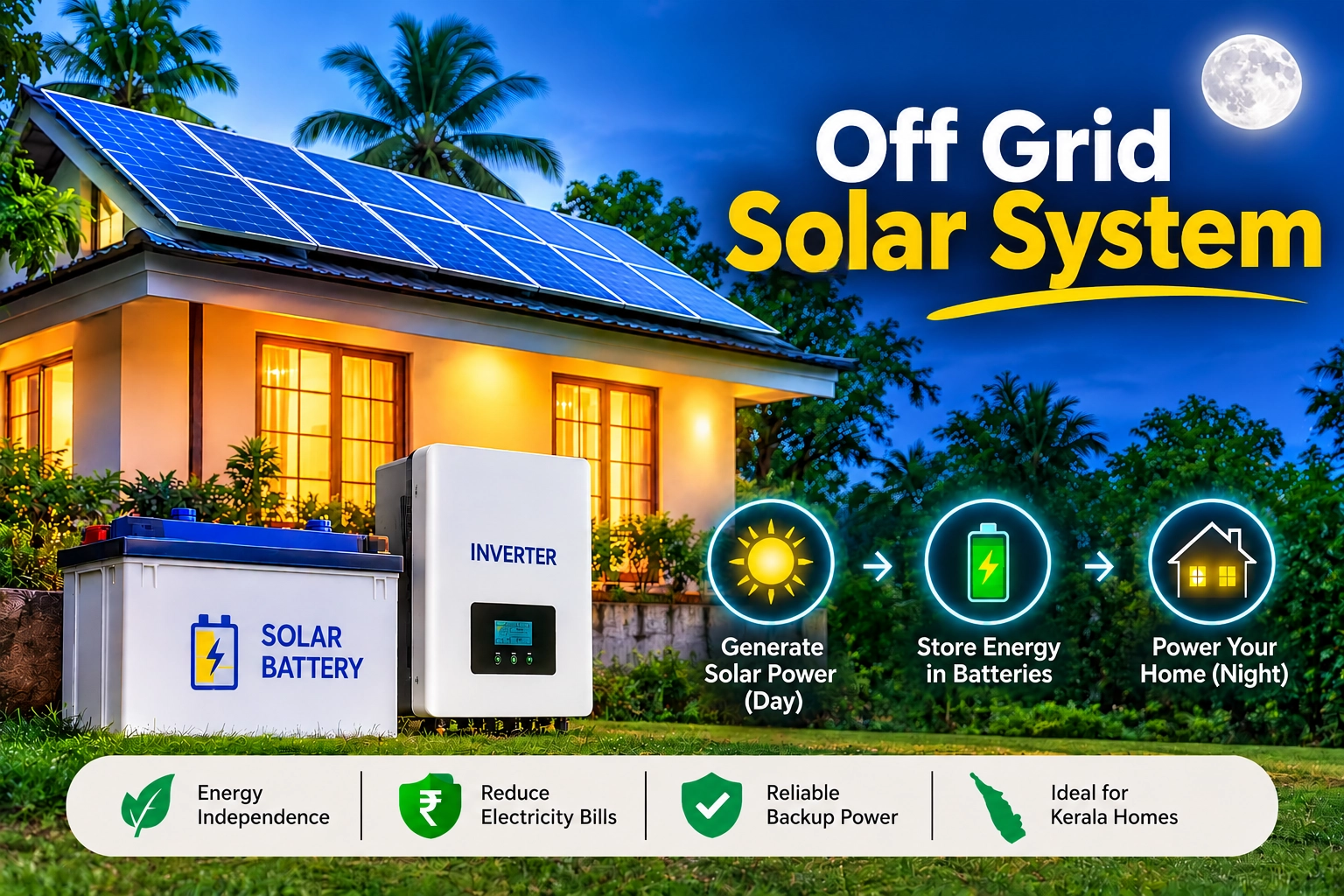
An off grid solar system provides electricity without depending on the conventional power grid. It is a practical solution for homes, remote properties and locations where uninterrupted electricity is important. However, solar panels generate electricity mainly during daylight hours, which means energy storage is essential for using solar power at night.
Solar batteries make this possible by storing the electricity generated during sunny hours and supplying it when solar production is low or unavailable. Understanding how battery storage works, how much capacity a household needs and how to choose the right components can help homeowners make better decisions when planning an independent energy system.
1. Why Battery Storage Is Important in Solar Energy Systems
Solar panels convert sunlight into electricity, but their energy production changes throughout the day. During sunny afternoons, a system may generate more electricity than a household immediately requires. After sunset, solar generation stops, even though appliances such as lights, fans, refrigerators and other essential equipment continue to need power.
An Off Grid Solar System uses batteries to manage this difference between electricity generation and consumption. Instead of wasting surplus solar energy, the system stores it for later use. This allows homeowners to use solar generated electricity during evenings, nights and periods of reduced sunlight.
Battery storage is especially useful in areas where power interruptions are common or where grid electricity is unavailable. It helps households maintain access to essential electrical appliances without depending entirely on conventional electricity sources.
2. How Solar Batteries Store Electricity
Solar batteries store electricity through electrochemical processes. When solar panels generate electricity, the energy is directed towards the battery through a charge controller or an integrated inverter system.
During charging, electrical energy is converted into chemical energy and stored inside the battery. When the household needs electricity, the battery releases this stored energy, which is then converted into usable AC electricity through an inverter.
In an Off Grid Solar System, the battery works as an energy reserve. It collects surplus electricity when solar production is higher than household consumption and supplies power when sunlight is unavailable.
The amount of electricity a battery can store depends on its capacity, generally measured in kilowatt hours (kWh). A higher capacity battery can provide more backup energy, but its actual performance also depends on the appliances connected, battery technology, temperature and operating conditions.
3. What Happens to Solar Energy During the Day?
The daytime operation of an Off Grid Solar System involves managing solar generation, household consumption and battery charging.
During the morning, solar panels begin producing electricity as sunlight increases. The generated power can operate household appliances while any additional energy is directed towards charging the battery.
During peak sunlight hours, solar production may exceed the household's immediate requirements. This surplus electricity is used to recharge the battery, helping prepare for evening and night time consumption.
By late afternoon, solar generation gradually decreases. Depending on the battery's charge level and household electricity demand, stored energy may begin supporting appliances before sunset.
This energy management process helps homeowners use more of the electricity generated by their own solar panels rather than depending on another electricity source.
4. How Batteries Supply Electricity at Night
Once sunlight disappears, solar panels stop generating meaningful electricity. The inverter then uses the energy stored in the battery to supply electricity to the home's electrical appliances.
In a properly designed Off Grid Solar System, the battery and inverter work together to provide the required power. The inverter converts the battery's DC electricity into AC electricity, which is used by most household appliances.
For example, a family may use stored solar energy to operate LED lights, ceiling fans, television, Wi-Fi routers and other essential devices throughout the night. The available backup time depends on the total electricity consumption and the usable battery capacity.
If a household uses more electricity than planned, the battery may discharge earlier than expected. Therefore, managing night time consumption is an important part of maintaining a reliable solar backup.
5. Choosing the Right Battery Capacity for Your Home
Battery capacity should be selected according to actual electricity requirements rather than simply choosing the largest battery available.
Before purchasing an Off Grid Solar System, homeowners should identify the appliances they want to operate during night time and power cuts. Each appliance has a different wattage and operating duration.
For example, consider a household using:
Four LED lights of 10 watts for 5 hours
Two fans of 60 watts for 8 hours
One television of 100 watts for 3 hours
A Wi-Fi router of 12 watts for 8 hours
The approximate energy consumption of these appliances would be:
This is only an illustrative calculation. Actual consumption may differ depending on appliance efficiency, usage patterns and inverter losses.
Battery capacity should also include a suitable allowance for conversion losses, reserve energy and unexpected consumption. A professional system design can help determine the battery size required for comfortable night time operation.
6. Types of Batteries Used in Solar Systems
Different battery technologies offer different advantages in terms of cost, lifespan, efficiency and maintenance.
Lithium batteries: Lithium batteries, particularly lithium iron phosphate (LiFePO4), are popular for modern solar storage applications. They generally offer a longer cycle life, higher usable capacity and faster charging compared with many traditional battery options. They are also relatively compact, making them suitable for residential installations.
Lead acid batteries: These batteries have been used in backup power systems for many years. They may have a lower initial purchase cost, but they generally require more maintenance, have a shorter lifespan and offer a lower usable capacity compared with many lithium battery options.
When selecting batteries for an Off Grid Solar System, homeowners should consider the total cost over the battery's lifetime rather than comparing only the initial price. Battery warranty, safety features, charging compatibility and service availability are also important.
7. What Happens During Cloudy and Rainy Weather?
Solar energy production can decrease during cloudy weather, heavy rain and extended periods of reduced sunlight. This makes battery planning particularly important for homes in Kerala, where monsoon conditions may affect solar generation for several days.
A well designed Off Grid Solar System should account for seasonal changes in sunlight and the household's energy requirements. Depending on the system configuration, stored battery energy may be supported by additional solar generation, a compatible backup generator or another approved charging source.
Homeowners should avoid assuming that a battery charged fully on a sunny day will always provide sufficient backup during multiple cloudy days. The system should be designed around realistic weather conditions, electricity usage and the required backup duration.
Reducing unnecessary appliance usage during prolonged cloudy periods can also help conserve stored energy.
8. Understanding the Role of the Solar Inverter
The inverter is another important component of a battery based solar system. It manages the flow of electricity between solar panels, batteries and household appliances.
In an Off Grid Solar System, the inverter must be capable of operating independently from the electricity grid. It converts DC power from solar panels and batteries into AC electricity for household use.
A suitable inverter should support the required appliance load, battery voltage, charging capacity and future energy requirements. High power appliances such as pumps, refrigerators and air conditioners may require additional consideration because they can draw higher starting power.
Choosing an inverter that matches the battery and solar panel configuration is essential for smooth system operation.
9. Can Solar Batteries Reduce Electricity Expenses?
A battery based solar setup can reduce dependence on grid electricity, especially when a household uses stored solar energy during evening hours.
However, the savings depend on several factors, including system cost, battery lifespan, daily electricity consumption, solar generation and maintenance expenses.
An Off Grid Solar System is particularly valuable for properties where grid connectivity is unavailable or unreliable. In these situations, its benefits extend beyond electricity bill savings to include power availability, convenience and energy independence.
Homeowners should compare the long term value of the system with their current electricity expenses and backup power requirements before making a purchase decision.
10. Important Factors Before Installing a Battery Based Solar System
Before investing in an Off Grid Solar System, homeowners should evaluate a few important factors to avoid unnecessary expenses and performance issues.
Daily electricity consumption: Understand how much power your household uses during the day and night.
Battery backup duration: Decide whether you need backup for a few hours, the entire night or multiple days.
Solar panel capacity: Ensure the panels can generate enough electricity to operate appliances and recharge batteries.
Battery quality: Choose batteries with suitable safety protection, warranty coverage and charging compatibility.
Future requirements: Consider whether you may add new appliances or increase electricity consumption later.
Installation quality: Proper wiring, ventilation, safety protection and system configuration are essential for reliable performance.
Selecting the Best Solar Panels is only one part of building an efficient system. Batteries, inverters, electrical protection equipment and professional installation all contribute to its overall performance.
11. Solar Subsidy Kerala and Battery Based Systems
Homeowners exploring solar installations may also want to understand the available government subsidy programmes. In Kerala, residential rooftop solar subsidy eligibility generally depends on the applicable scheme, approved system configuration and installation requirements.
However, subsidy benefits should not be assumed to apply equally to every type of solar installation. An Off Grid Solar System with battery storage may have different eligibility conditions from a grid connected rooftop solar system.
Before making a purchase, check the current government guidelines, eligible equipment, approved installation procedures and application requirements. Understanding the applicable solar subsidy kerala provisions can help homeowners make informed financial decisions and avoid relying on outdated subsidy information.
12. Why Professional Solar System Planning Matters
Battery storage involves more than connecting solar panels to a battery. The complete system must be designed to balance generation, energy storage, inverter capacity and electricity consumption.
A reliable installer should assess the property's available roof space, sunlight exposure, appliance requirements, backup expectations and budget. They should also explain battery performance, warranty terms, safety precautions and maintenance requirements clearly.
When searching for the best solar company in kerala, homeowners should evaluate the company's experience, product quality, installation standards, after sales support and ability to recommend a system based on actual requirements.
A professionally designed Off Grid Solar System can help prevent battery overloading, insufficient backup, poor charging performance and unnecessary equipment expenses.
13. Getting the Best Performance from Your Battery
To make your solar battery last longer and perform consistently, homeowners should follow a few simple practices:
Avoid regularly discharging the battery beyond its recommended limit.
Keep battery connections and surrounding areas clean and properly maintained.
Follow the manufacturer's charging and operating instructions.
Monitor battery charge levels and electricity consumption.
Avoid connecting unnecessary high power appliances during low charge periods.
Arrange periodic inspections by qualified technicians.
Choosing the Best Solar Panels along with a reliable battery and inverter can improve the overall efficiency of the installation. Good system design and responsible energy usage are equally important for maintaining long term performance.
Conclusion
Solar batteries make it possible to use sunlight generated electricity even after sunset. They help households store surplus daytime energy, operate essential appliances at night and reduce dependence on conventional electricity sources.
An Off Grid Solar System can be a practical option for homeowners seeking reliable electricity, especially in locations with limited grid connectivity or frequent power interruptions. Choosing the right battery capacity, inverter, solar panels and installation team is essential for achieving dependable performance.
Before investing, assess your household's energy needs, backup expectations and long term budget. Working with the best solar company in kerala can help you select a suitable system, understand the available options and plan an installation that supports your home's electricity requirements.
Frequently Asked Questions
Recent Blogs

How Solar Panel Dealers in Kochi Make Solar Installation Easier
Nov 20, 2026
Solar Panel in Kerala: How Weather Conditions Affect Solar Power Generation
Nov 19, 2026
How to Improve Solar Panel Efficiency Throughout the Year
Nov 16, 2026
Solar Panel Dealers in Kozhikode: Understanding Quality, Warranty and Installation
Nov 14, 2026
Solar Panel Calicut: Important Factors to Consider Before Installing Solar Panels
Nov 12, 2026
On Grid Solar System: Understanding Electricity Generation and Consumption
Nov 11, 2026
Hybrid Solar System: Understanding Solar Panels, Batteries and Inverters
Nov 10, 2026
What to Expect When Working with Professional Solar Companies
Nov 09, 2026
Solar Products in Trivandrum for Homes and Businesses: Types, Uses and Benefits
Nov 07, 2026
Solar Panel Distributors in Kochi: What Homeowners and Businesses Should Know
Nov 06, 2026Switch to Solar Today!
Save up to 90% on electricity bills with Allsun Nature's customized rooftop solar solutions.
Get Free Quote