

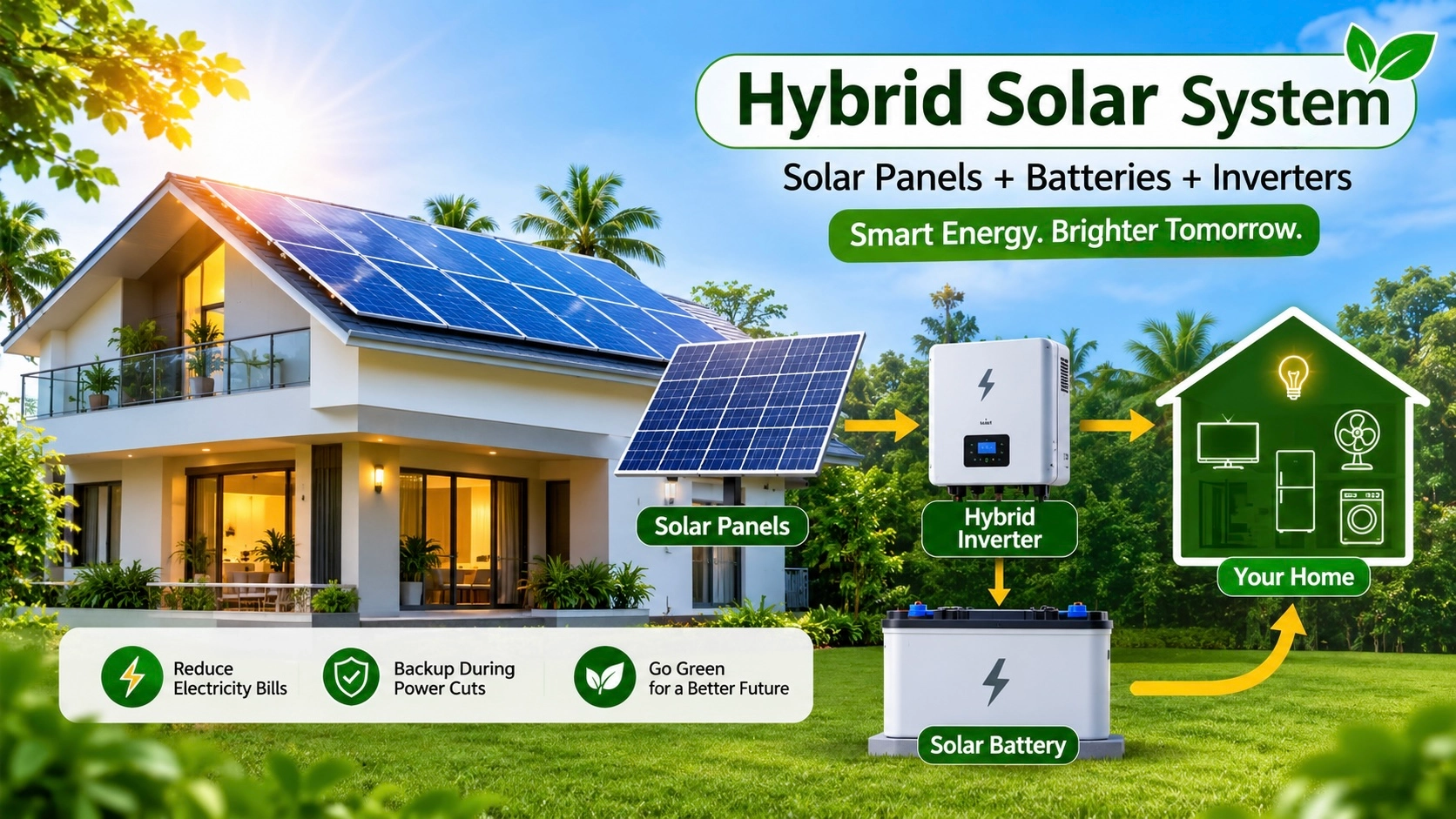
Choosing solar energy for your home is not just about installing panels on the rooftop. It is also important to understand the equipment that converts sunlight into usable electricity and makes power available when you need it. A well designed Hybrid Solar System brings together solar panels, batteries and an inverter to provide a more flexible energy solution for residential and commercial properties.
For homeowners in Kerala, where electricity consumption, changing weather conditions and occasional power interruptions can influence daily life, understanding these components can help when planning a solar installation. Each part has a specific function, and all three need to work together for the system to perform efficiently.
What Is a Hybrid Solar System?
A Hybrid Solar System combines solar panels, battery storage and an inverter, with a connection to the electricity grid in most common installations. It generates electricity from sunlight, uses solar power to meet the property's energy requirements and stores excess energy in batteries for later use.
Unlike a conventional grid-connected system that generally depends on the electricity grid, a hybrid setup can provide backup power during grid interruptions when it is correctly designed and configured.
The system can also manage electricity from different sources depending on solar production, battery charge and household demand. This flexibility makes it a practical option for people looking to balance energy savings with backup power.
1. Solar Panels: The Starting Point of Solar Electricity
Solar panels are the primary energy-generating component. They capture sunlight and convert it into direct current (DC) electricity through photovoltaic cells. These cells are usually made from semiconductor materials that respond to sunlight.
The amount of electricity produced depends on several factors, including:
Sunlight availability: Strong sunlight generally supports higher electricity generation.
Panel efficiency: Efficient panels can produce more electricity from a given roof area.
Installation direction: Proper panel orientation helps maximise exposure to sunlight.
Shading: Trees, nearby buildings and other obstructions can reduce output.
Temperature and maintenance: Heat, dust and dirt can influence overall performance.
For a Solar Panel For Home installation, selecting the right panel capacity is important. The number of panels should be based on electricity consumption, available rooftop space and the expected energy requirements of the household.
In Kerala, proper installation planning is particularly useful because rooftops may experience seasonal rain, strong sunlight and occasional shading. A professional site assessment helps identify the most suitable arrangement.
2. Solar Batteries: Storing Electricity for Later Use
Solar panels produce electricity mainly during daylight hours, but household energy requirements continue throughout the evening and night. This is where battery storage becomes valuable.
A solar battery stores surplus electricity generated by the panels. The stored energy can then be used when solar production is low or when the electricity grid is unavailable, depending on the system configuration.
There are different battery technologies available for solar installations.
Lithium-Ion Batteries
Lithium-ion batteries are commonly used in modern solar installations because of their high energy density, efficient charging and discharging, and relatively long service life. Lithium iron phosphate (LFP) is one commonly used chemistry for stationary energy storage.
Lead-Acid Batteries
Lead-acid batteries have been used in backup power applications for many years. They may have a lower initial purchase cost, but their usable capacity, maintenance requirements and overall lifespan should be considered before choosing them.
How to Choose the Right Solar Battery
The right battery depends on how much electricity you want to store and how long you need backup power.
Consider these factors before selecting one:
Daily electricity consumption during backup hours.
Total wattage of appliances that need backup.
Desired backup duration.
Battery capacity and usable energy.
Charging and discharging efficiency.
Warranty and expected battery lifespan.
For example, a household that needs to operate only essential lights, fans and internet equipment during a power cut will have different battery requirements from a home that wants to run several heavy appliances.
A properly sized battery helps avoid unnecessary expenses while providing the required backup.
3. Solar Inverters: Converting Electricity into Usable Power
Solar panels generate DC electricity, whereas most household appliances operate using alternating current (AC). The inverter performs the important job of converting DC electricity into AC electricity.
In a hybrid installation, the inverter does more than just convert electricity. It also manages the flow of energy between solar panels, batteries, household appliances and the electricity grid.
Its main functions include:
Converting solar-generated DC electricity into AC power.
Managing battery charging and discharging.
Supplying electricity to connected household loads.
Coordinating available power from solar, battery and grid sources.
Managing backup operation during grid interruptions.
The inverter's capacity should match the expected electrical load and the specifications of the solar panels and battery. Choosing an unsuitable inverter can affect system performance and the appliances that can operate simultaneously.
4. How Do Solar Panels, Batteries and Inverters Work Together?
The three main components have different responsibilities, but their coordination makes the installation effective.
Here is how the process generally works:
During Sunny Days
Solar panels generate electricity from sunlight. The inverter converts the generated DC power into usable AC electricity for the property. Any available surplus energy can charge the battery or be exported to the grid, depending on the system configuration and applicable regulations.
During the Evening
When sunlight is no longer available, the panels stop producing meaningful electricity. The system can use stored battery energy to supply connected appliances. If the battery reaches its configured limit, grid electricity may be used where available.
During Power Cuts
When the electricity grid fails, a properly configured hybrid inverter can switch to backup operation and supply selected circuits using solar generation and stored battery energy. The backup capacity depends on inverter specifications, battery charge and connected appliance loads.
Understanding these operating conditions makes it easier to decide whether a hybrid installation suits your household.
5. Important Factors to Consider Before Installing a Hybrid Solar System
Before investing in a Hybrid Solar System, it is useful to evaluate your property's actual electricity requirements instead of selecting equipment based only on advertised capacity.
Here are some important considerations:
Analyse Your Electricity Bills
Review your recent electricity bills to understand monthly consumption and identify periods of higher usage. This provides a starting point for calculating the required solar capacity.
Calculate Your Backup Requirements
Prepare a list of appliances you want to operate during power cuts. Consider their wattage and the number of hours they need to run. This helps determine the appropriate battery and inverter capacity.
Check Your Rooftop Space
Available roof area, orientation, shading and structural condition can influence the number and arrangement of solar panels.
Understand Equipment Warranties
Check the warranties offered for panels, inverters and batteries. Also understand the availability of maintenance support and replacement services.
Choose Professional Installation
Electrical connections, inverter configuration, battery placement and safety arrangements require proper technical planning. Working with experienced Solar Companies can help ensure that the installation meets the property's requirements.
6. Is a Hybrid Solar System Suitable for Kerala Homes?
Kerala receives sunlight throughout much of the year, making solar energy a useful option for many residential properties. However, seasonal monsoon conditions can affect daily electricity generation, so the system should be planned with realistic production expectations.
A Hybrid Solar System can be particularly useful for households that want to reduce their dependence on grid electricity while maintaining backup power for essential appliances.
It can also support different energy requirements, from smaller residential properties to larger homes and selected commercial buildings. The ideal design depends on consumption patterns, available rooftop space, battery requirements and budget.
When comparing installation options, homeowners should look beyond the initial price. Equipment quality, system design, installation standards and after-sales assistance all influence long-term value.
Choosing the best solar company in kerala should involve checking technical experience, product quality, installation practices and customer support rather than relying on price alone.
7. Maintenance Tips to Keep Your Solar System Performing Well
Solar installations generally require less routine maintenance than many conventional power systems. However, periodic inspection helps maintain performance and identify potential issues.
Some useful practices include:
Keep solar panels clean and free from excessive dust or dirt.
Check the inverter display for warning messages or unusual readings.
Monitor battery charge levels and system performance.
Arrange professional inspections of electrical connections.
Keep the inverter and battery installation area properly ventilated.
Follow the manufacturer's maintenance and safety recommendations.
Avoid attempting electrical repairs or opening battery and inverter enclosures without qualified technical assistance.
Conclusion
Solar energy involves more than simply generating electricity from sunlight. Solar panels, batteries and inverters each play an important role in producing, storing and distributing power according to your property's requirements.
A properly planned Hybrid Solar System brings these components together to support everyday electricity consumption, improve energy flexibility and provide backup during grid interruptions.
Before choosing an installation, take time to understand your electricity usage, backup expectations, rooftop conditions and equipment requirements. Working with an experienced solar installation provider can help you make a more informed decision.
If you are planning to install a solar solution for your home or business, Allsun Nature can help you explore suitable options based on your energy requirements. Choosing the best solar company in kerala means looking for a solution that combines reliable equipment, proper installation and dependable support.
Frequently Asked Questions
Recent Blogs
How Solar Panel Dealers in Kochi Make Solar Installation Easier
Nov 20, 2026
Solar Panel in Kerala: How Weather Conditions Affect Solar Power Generation
Nov 19, 2026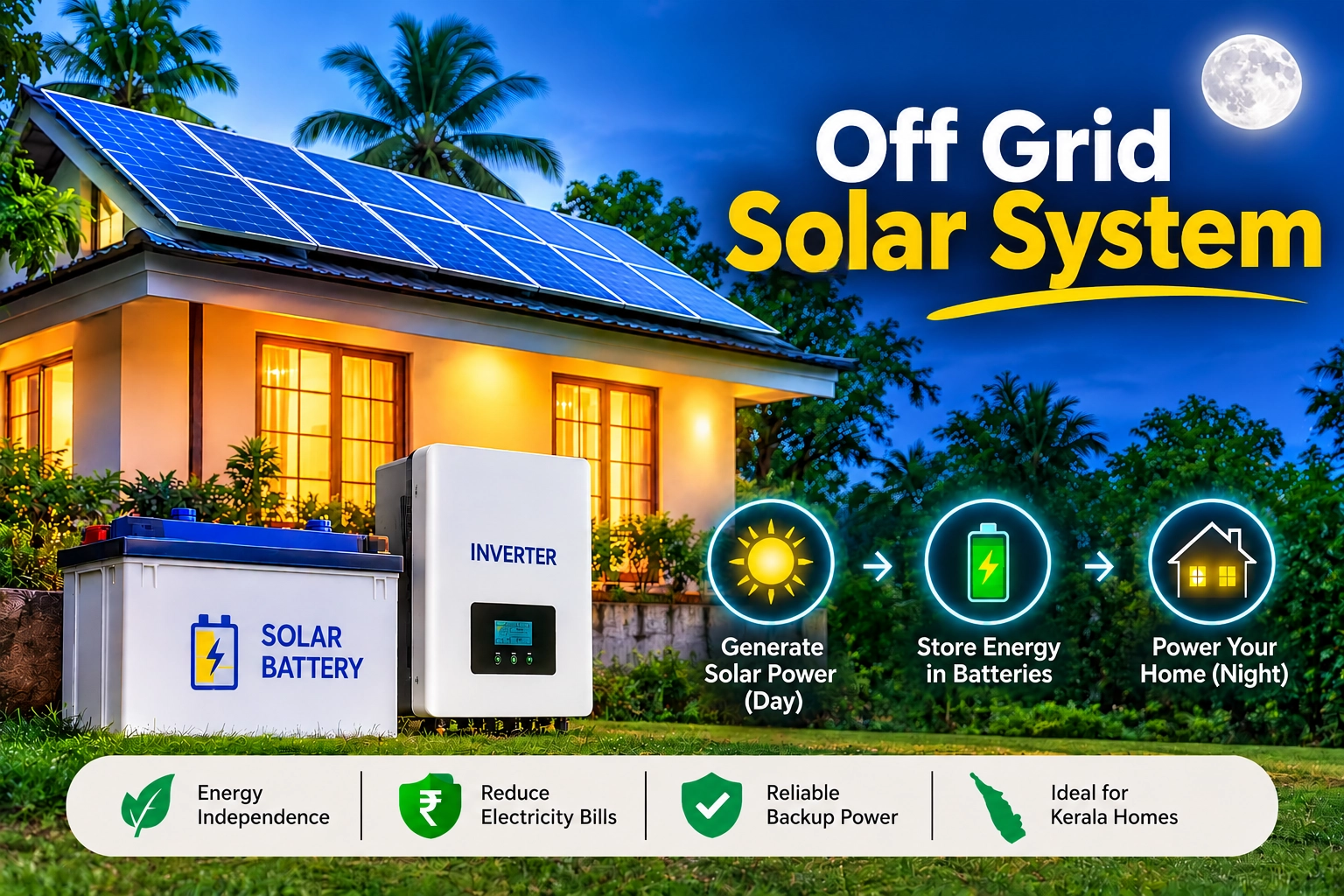
Off Grid Solar System: How Solar Batteries Store Energy for Night Time Use
Nov 18, 2026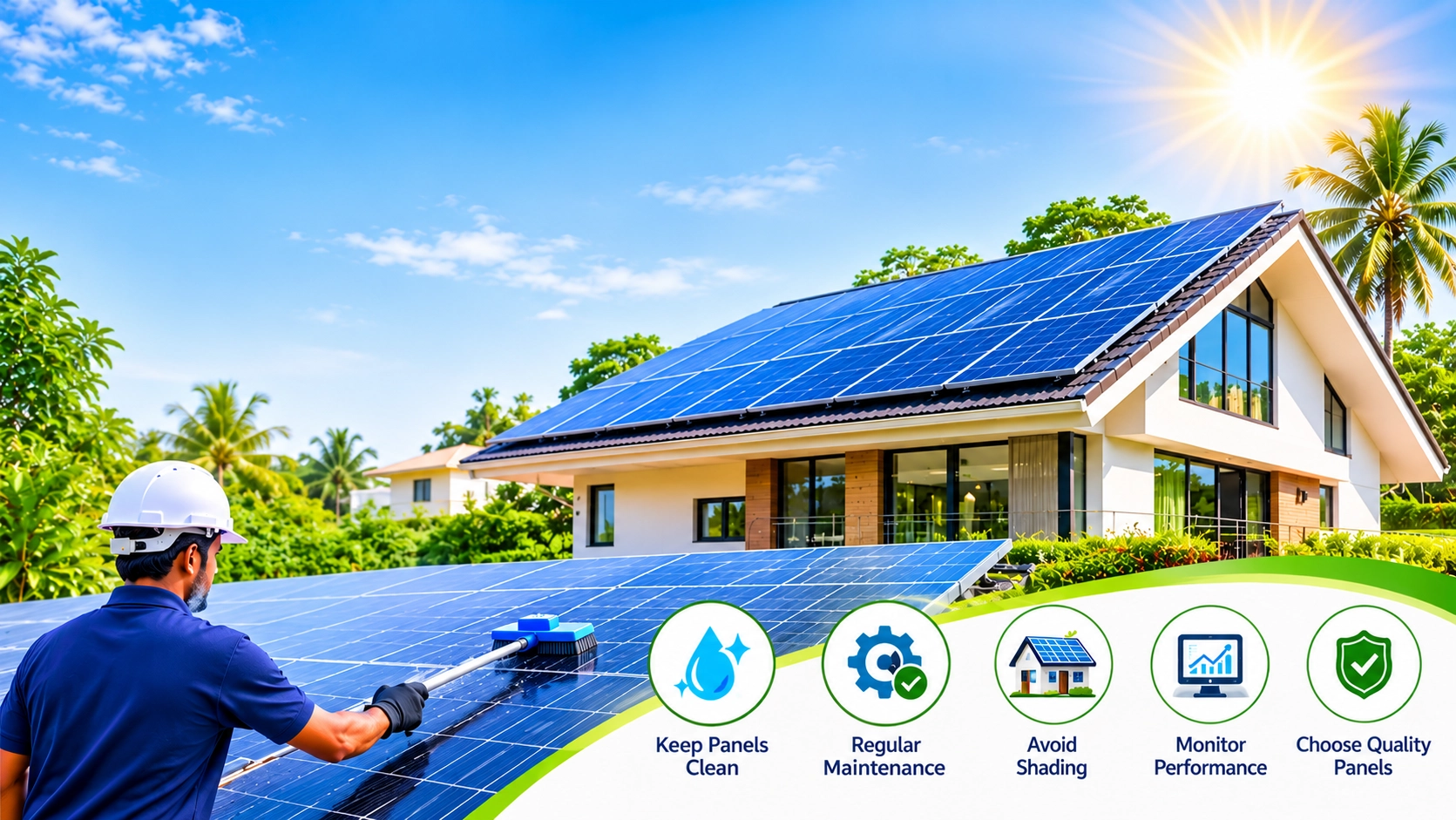
How to Improve Solar Panel Efficiency Throughout the Year
Nov 16, 2026
Solar Panel Dealers in Kozhikode: Understanding Quality, Warranty and Installation
Nov 14, 2026
Solar Panel Calicut: Important Factors to Consider Before Installing Solar Panels
Nov 12, 2026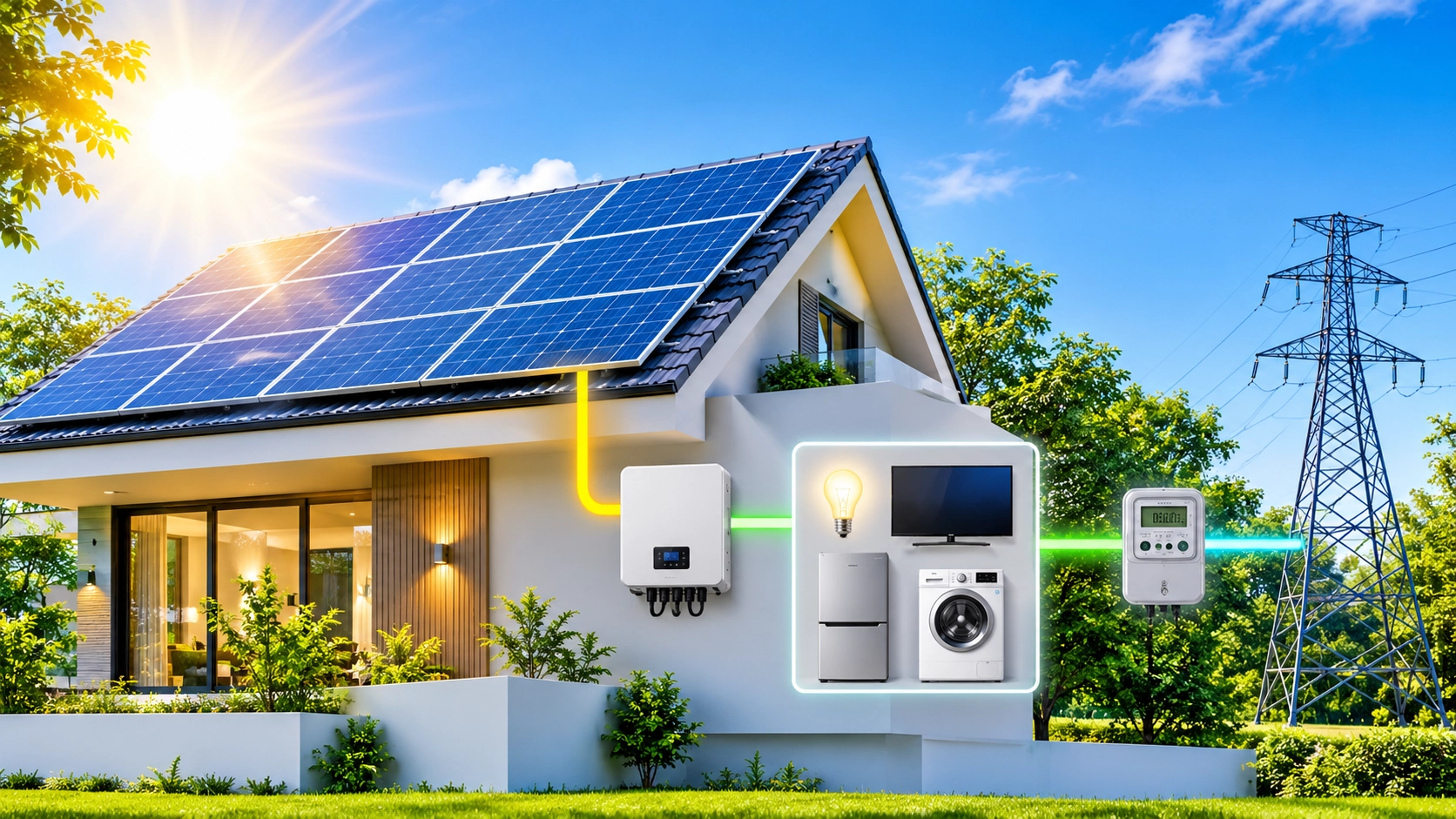
On Grid Solar System: Understanding Electricity Generation and Consumption
Nov 11, 2026
What to Expect When Working with Professional Solar Companies
Nov 09, 2026
Solar Products in Trivandrum for Homes and Businesses: Types, Uses and Benefits
Nov 07, 2026
Solar Panel Distributors in Kochi: What Homeowners and Businesses Should Know
Nov 06, 2026Switch to Solar Today!
Save up to 90% on electricity bills with Allsun Nature's customized rooftop solar solutions.
Get Free Quote